make preferable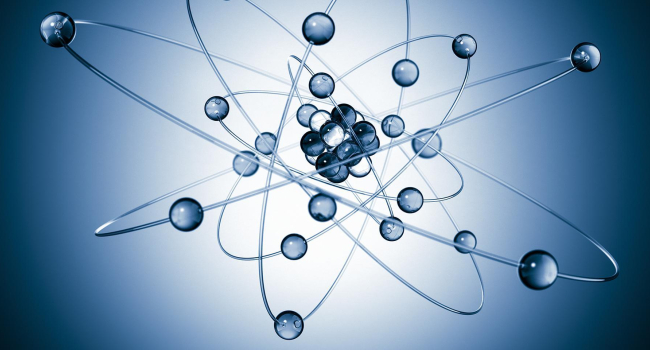
Protons and neutrons, the main building blocks of atomic nuclei, are hundreds of times heavier than the combined masses of the three quarks that make them up. The Higgs mechanism, discovered in 2012, accounts for only about 1–2 percent of nucleon mass. The remaining 98 percent seemed to arise “out of nowhere,” and until recently no one had been able to describe exactly how.
The Answer Lies in Quantum Chromodynamics
An international team of physicists from the Jefferson National Accelerator Facility (Jefferson Lab, USA) has published a study in the journal Symmetry that is regarded as the most complete explanation to date of how hadrons — the particles that participate in the strong interaction — acquire their mass.
According to quantum chromodynamics (QCD), the mass of the proton is almost entirely the energy stored in the fields of quarks and gluons. Inside the proton, gluons can interact with one another, creating an extremely intricate dynamic that changes with distance.
At small distance scales (on the order of the proton’s size), quarks stop being “bare” and become surrounded by a cloud of virtual particles — they become “dressed.” In this state, each quark acquires a dynamical mass of about 400 MeV, and three such dressed quarks, interacting with one another, form a proton with a mass of nearly 1 GeV (938 MeV). This is precisely the source of the missing 98 percent of ordinary matter’s mass.
Thirty Years of Experiments and Definitive Proof
Since the 1990s, Jefferson Lab has been collecting data on the proton’s structure and its excited states using the CEBAF accelerator. Using the Schwinger continuum approach, researchers were able for the first time to align theoretical QCD calculations with real experimental observations across the full range of relevant distance scales.
The result is unequivocal: the dressing of quarks and the dynamics of the strong interaction fully account for the mass of the proton and other hadrons.
What Comes Next
Data from the earlier 6-GeV program covered the region where about 30 percent of the mass originates. The current 12-GeV program has already probed about half of the full range. Future experiments with even higher-energy beams will allow physicists to observe the entire picture and close the problem for good.
One of the study’s authors, Viktor Mokeev, emphasized that once the full picture is obtained, physicists will truly understand how almost massless quarks give rise to nearly all the mass of the visible Universe.
Summary
Ninety-eight percent of the mass of protons, neutrons, and therefore all ordinary matter in the Universe does not come from the Higgs field but from the pure energy of the strong interaction, when quarks become “dressed” with clouds of virtual gluons. Physicists at Jefferson Lab have demonstrated this experimentally and theoretically. One of the greatest mysteries of twentieth- and twenty-first-century physics has finally been solved.