make preferable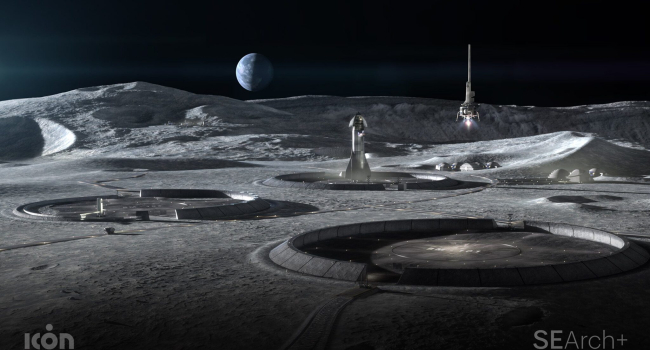
The U.S. space agency NASA intends to build a full-fledged village on the Moon for the permanent residence of astronauts by 2035. Acting NASA administrator Sean Duffy announced the plan at the International Astronautical Congress in Sydney, according to Daily Mail. This ambitious project aims to make the Moon a base for future missions to Mars.
A Lunar Village: Not Just a Station, but a Home
Duffy emphasized that NASA wants to create not just a research station but a village with all the conditions necessary for life. It would be:
- Autonomous: powered by nuclear reactors.
- Built from local materials: lunar regolith would be used for walls and structures.
- Designed for permanent habitation: to host astronauts on long-term expeditions.
He explained that the goal is to create a lunar village where people could live, which would serve as a stepping stone toward Mars.
Launch Plan: Artemis II in 2026
The first step is the Artemis II mission in February 2026. Four astronauts will embark on a crewed lunar flyby — the first in 50 years since Apollo. A landing is not yet planned, but the mission will prepare for Artemis III (2027–2028), which will return humans to the surface.
By 2035, the lunar village is expected to become a reality, integrating technologies from the Artemis program, including:
- Nuclear reactors for power.
- 3D printing with regolith for construction.
- Spacesuits and life-support systems tested on the ISS.
A Step Toward Mars
The lunar village will act as a testing ground for Mars. NASA plans to use experience gained on the Moon to establish bases on the Red Planet, where conditions are even harsher. Duffy noted that after the Moon, the agency intends to move forward with giant strides toward Mars. This is part of a strategy in which the Moon serves as a "training ground" for interplanetary flights.
Challenges and Prospects
The plan is ambitious but faces several obstacles:
- Funding: NASA’s 2026 budget remains uncertain.
- Technology: resource extraction on the Moon requires innovation.
- International partnerships: collaboration with ESA, JAXA, and others will be crucial.
However, the success of Artemis could inspire broader global efforts.
In Short…
NASA plans to establish a lunar village by 2035 — an autonomous settlement powered by nuclear energy and built from local regolith. This is a step toward Mars, following Artemis II in 2026. Duffy’s vision positions the Moon as humanity’s base, opening an era of interplanetary settlements.