make preferable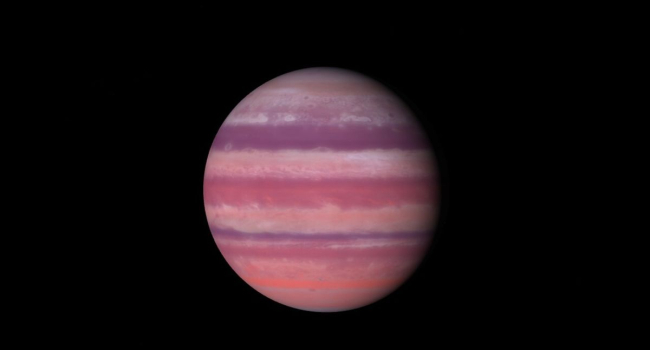
A team of astronomers has uncovered a massive new exoplanet, Kepler-139f, orbiting the star Kepler-139, located about 2,000 light-years from Earth. Despite its enormous mass — 35 times that of Earth — the planet had escaped detection until now due to the peculiar nature of its orbit. The discovery, published on May 2, 2025, in The Astrophysical Journal Letters, showcases how a combination of advanced methods led to the identification of this “hidden” world and clarified the structure of the Kepler-139 planetary system.
Kepler-139f: A Giant in Hiding
The Kepler-139 system was already known to host three rocky super-Earths and one gas giant, all previously discovered via NASA’s Kepler space telescope. However, Kepler-139f went unnoticed because it doesn’t transit its star from Earth’s vantage point — it doesn't pass in front of the star, and thus doesn't dim its light as seen from Earth. Kepler’s transit method, which led to nearly 3,000 planet discoveries in nine years, relies on such dimming to detect exoplanets — meaning planets with tilted or non-transiting orbits can easily be missed.
To find Kepler-139f, astronomers — including lead researcher Caleb Lammers of Princeton University — used a two-pronged approach:
- Radial Velocity (RV): measuring the slight wobble of the host star caused by the gravitational pull of orbiting planets.
- Transit Timing Variations (TTV): tracking tiny shifts in the timing of transits from known planets, caused by the gravitational influence of unseen companions.
“When you see transit timing variations that can’t be explained by the known planets,” Lammers explained, “that’s a sign there’s something else — an invisible object — disturbing the system.”
By combining RV and TTV data, the team located Kepler-139f between the outermost known super-Earth (Kepler-139c) and the previously identified gas giant (Kepler-139e). The planet, roughly the mass of Neptune, has an orbital period of 355 days and orbits about 1 AU (the same Earth–Sun distance) from its star.
Revising the System’s Blueprint
The discovery of Kepler-139f also resolved a longstanding mystery. The planet Kepler-139c was previously thought to have an unusually high density for its size — making it a potential outlier among sub-Neptune planets. However, it turns out that some of the gravitational effects attributed to Kepler-139c were actually caused by the newly discovered Kepler-139f.
With this correction, Kepler-139c’s density was revised downward, making it a more typical sub-Neptune planet. Meanwhile, the parameters for Kepler-139b and Kepler-139d remained unchanged.
Hidden Worlds and Future Exploration
Kepler-139f highlights a broader issue in exoplanet research: planetary systems likely contain more worlds than we can easily detect, especially in their outer regions. As Lammers noted, “Many planetary systems likely host invisible worlds — particularly in their distant orbits.”
Transit-based missions like Kepler and TESS are most effective at spotting close-in planets with frequent transits. However, more distant planets with tilted orbits, like Kepler-139f, require multi-method strategies such as RV and TTV.
Looking ahead, the European Space Agency’s PLATO mission (launching in 2026) will refine the detection of transiting planets and provide high-precision timing data, enhancing our ability to detect subtle TTV signals. Lammers believes PLATO will accelerate the discovery of non-transiting planets, thanks to its unprecedented precision and long observation baseline.
What Else Could Be Out There?
Kepler-139 remains a tantalizing target for astronomers. The gaps between the known orbits — particularly between Kepler-139b and Kepler-139c — suggest room for more planets. As Lammers explained, “The challenge isn’t just detecting non-transiting planets, it’s figuring out where to look.”
Ongoing ground-based RV monitoring and upcoming space missions will likely uncover additional planets in the system, helping astronomers build a more complete map of its architecture.
Conclusion
The discovery of Kepler-139f marks a major milestone in exoplanetary science, demonstrating the power of hybrid detection techniques. This giant world, hidden until now despite its immense size, redefines our understanding of the Kepler-139 system and proves that many massive, non-transiting exoplanets may still be out there.
As instruments like PLATO come online, astronomers anticipate a surge in discoveries that will bring us closer to understanding the true diversity of planetary systems — and perhaps even where life might arise in the vastness of space.