make preferable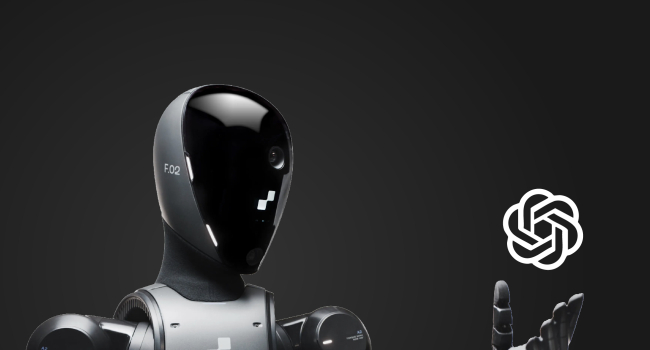
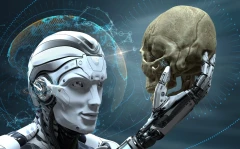
The company behind ChatGPT, OpenAI, is returning to robotics with renewed intensity. Recent hires of humanoid robotics specialists and job postings for developing control algorithms signal that the AI giant views robots as a pathway to artificial general intelligence (AGI). This is part of a global race where OpenAI competes with Tesla, Google, and startups like Figure. The plans were reported by The Information.
New Talent and Ambitious Plans
OpenAI is actively recruiting robotics experts, particularly those working on humanoids — robots that mimic the human form. In June 2025, Chengshu Li joined from Stanford University, where he developed benchmarks for robots capable of performing household tasks. According to LinkedIn, two more researchers from other robotics labs have already joined OpenAI, and a student from a third lab has also been hired.
Job postings highlight a focus on teleoperation and simulation. Teleoperation involves humans controlling robots while AI learns to mimic their movements. This requires expertise with tools such as Nvidia Isaac, which allows robots to be trained in virtual environments. Another position seeks a mechanical engineer for prototyping robots with touch and motion sensors. This suggests that OpenAI may be building its own humanoids or developing systems for mass production (up to 1 million units).
“Our robotics team is focused on creating general-purpose robots and advancing toward AGI in dynamic real-world conditions,” reads the job description.
From Past to Present: OpenAI’s Robotics Revival
OpenAI is not new to robotics. In 2019, the company created an algorithm that solved a Rubik’s Cube with a human-like robotic hand. However, in 2021 the project was paused so the company could concentrate on language models like GPT. Work resumed in 2024, and according to The Information (December 2024), OpenAI is now considering building its own humanoids.
Experts believe that AGI — AI surpassing human intelligence — is impossible without an understanding of the physical world. “They’ve hit the limit with GPT-5. Now they need to move into the physical world,” noted robotics researcher Stefanie Tellex from Brown University.
Competition and the Humanoid Market
OpenAI has entered a race led by startups like Figure, Agility, and Apptronik, which together have raised more than $5 billion since early 2024. According to Morgan Stanley, the humanoid market could reach $5 trillion by 2050. Major players such as Tesla (with Optimus) and Google are also investing heavily in this area.
New motors and components have made prototyping easier, while platforms like Nvidia Isaac have simplified robot training. However, humanoids are still limited to simple tasks, such as dancing, and struggle with unstructured environments — for instance, cleaning a messy room. Achieving this requires AI models capable of processing high-speed vision and motion data.
Tellex points out that OpenAI has no “magic advantage,” but their expertise in AI could provide momentum: “They need to build models that can see and act with high precision.”
Challenges and Prospects
Developing humanoids requires fresh ideas, especially as GPT-5 has fallen short of expectations. Experts believe AGI will demand algorithms that integrate AI with the physical world — from limb control to object manipulation. OpenAI might build its own robots, use off-the-shelf hardware, or partner with other companies, but details remain unclear.
Success in this field could revolutionize manufacturing, healthcare, and everyday life, but for now humanoids remain at the prototype stage.
In Brief
OpenAI is returning to robotics, hiring humanoid specialists, and focusing on AGI through interaction with the physical world. This is part of a global race backed by $5 billion in investments and a projected $5 trillion market by 2050. While challenges remain, OpenAI’s success could accelerate the era of general-purpose robots. The company that created ChatGPT now aims for AI that not only thinks but also acts.