make preferable
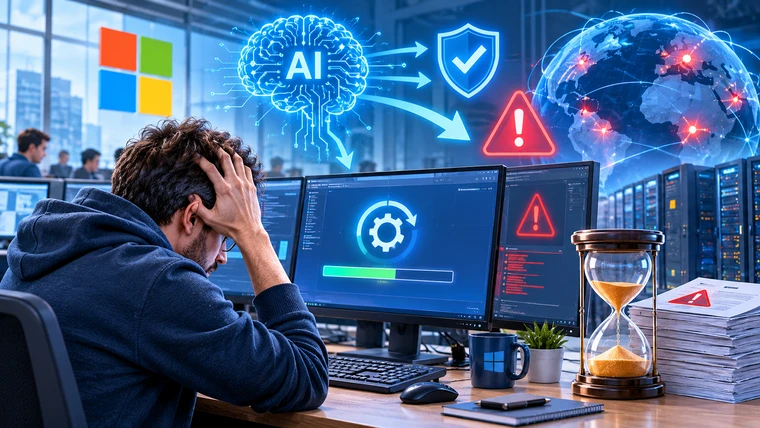
Companies are being forced to fix vulnerabilities faster than before: AI is helping find flaws that previously took specialists considerable time and resources to uncover. But rapidly updating systems carries risks of its own—faulty patches can cause service outages. Experts warn that today's disruptions may be just the beginning of a difficult transition to a new cybersecurity model.
The number of vulnerabilities has more than doubled
According to VulnCheck, more than 100,000 vulnerabilities had been confirmed in 2026 as of last week. That is already more than twice the total for all of 2025—48,000.
AI is shifting the balance of power between attackers and defenders. It makes it easier to find and exploit flaws that previously required time, technical expertise, and substantial resources to identify. As a result, companies must deal with a sharp increase in vulnerabilities without a corresponding increase in team sizes or budgets.
At the same time, VulnCheck estimates that hackers appear to target only about 1.4% of new vulnerabilities. This gives defenders an opportunity to identify a problem and apply a patch before malicious actors exploit it.
However, response speed is becoming critical. The faster vulnerability discovery tools emerge, the less time organizations have to test and safely deploy patches.
Patches can also disrupt systems
Companies face a difficult choice: install updates quickly to close newly discovered security gaps, or test them thoroughly, risking leaving systems vulnerable for longer.
Republican Senator Mike Rounds warned that patches can have “downstream effects,” including service disruptions. He said the consequences could also affect other systems that depend on the software being updated.
Democratic Senator Mark Warner, the top Democrat on the Senate Intelligence Committee, also cautioned that the current situation is not the end of the story. He believes companies and government agencies are only beginning to navigate a period of instability.
Twenty CEO and co-founder Joe Lin said at the Axios Future of Defense summit that recent IT outages already offer a glimpse of how vulnerable the nation's digital infrastructure is as a whole.
Existing processes can no longer keep up
According to Cisco's chief security and trust officer, Anthony Grieco, organizations will have to rethink how they test and deploy updates. Approaches that have provided an acceptable balance between security and stability for years may not withstand the new pace of vulnerability discovery.
One possible response is to automate much of the patching process. But automation does not eliminate risk: an update still needs to be tested, and the vulnerable system must be protected while a permanent fix is prepared and safely deployed.
That is why companies are looking for ways to temporarily block attacks without forcing businesses to immediately install potentially disruptive updates. This could give specialists time to test patches and reduce the likelihood that protection against one threat will cause a new outage.
Temporary protection with AI
Cisco and OpenAI announced Shirudo, an open-source project that uses AI agents to create and test temporary defenses against newly discovered vulnerabilities. These measures are intended to help block exploitation attempts while organizations prepare permanent fixes.
According to the companies, the first Shirudo tool has already been tested against two recently identified critical vulnerabilities. During testing, it detected and blocked attempts to exploit them.
This does not yet mean that temporary defenses can replace full updates or are guaranteed to prevent all attacks. But the project illustrates the direction cybersecurity is taking: not just finding flaws and releasing patches faster, but also automatically creating an interim barrier between the discovery of a vulnerability and its remediation.
The main challenge in the near term is learning to respond to vulnerabilities at the pace set by AI without turning the patches themselves into a source of new disruptions.