




 make preferable
Amazon is revisiting the concept of a home robot, despite the modest performance of its first attempt, Astro. The company is assembling a team to develop a fundamentally new device designed to autonomously navigate living spaces and interact with humans. Published job listings by Amazon evidence the project's preparation, CNBC reports.
The new robot will mark the company’s next step into personal robotics. However, the Astro experience proved that bringing such a device to the mass market is far more complex than building a working prototype. Introduced at $1,450, Astro never became a widely available product; Amazon distributed it on an invitation-only basis, reaching just a few thousand buyers throughout its run.
Amazon Seeks Specialists for a New Robotics Team
The company’s plans came to light through hiring notices. In one listing, Amazon described a future where robots are no longer confined to sci-fi movies but become part of everyday life. The posting targeted engineers to work on a device capable of navigating a constantly changing home environment and autonomously executing tasks in the presence of family members.
Other listings offer a detailed look at the project. Specifically, Amazon was seeking a User Experience (UX) designer to define how people interact with the robot and perceive its presence at home. Another position relates to technical support: the company intends to provide on-site device maintenance and repair directly at customers' homes.
Judging by additional job posts, the project involves creating not only the robot itself but also the necessary operational infrastructure. This includes developing cloud services and telemetry data collection systems to support a growing network of robotic devices. Amazon has yet to disclose the future robot's appearance, estimated price, or market release timeline.
From Astro to the Sprout Humanoid
The new effort follows internal restructuring within Amazon’s robotics division. According to CNBC, in early 2026, a significant portion of the Astro team was reassigned to the new project. Additionally, the company recruited outside talent, including a roboticist from the Massachusetts Institute of Technology (MIT).
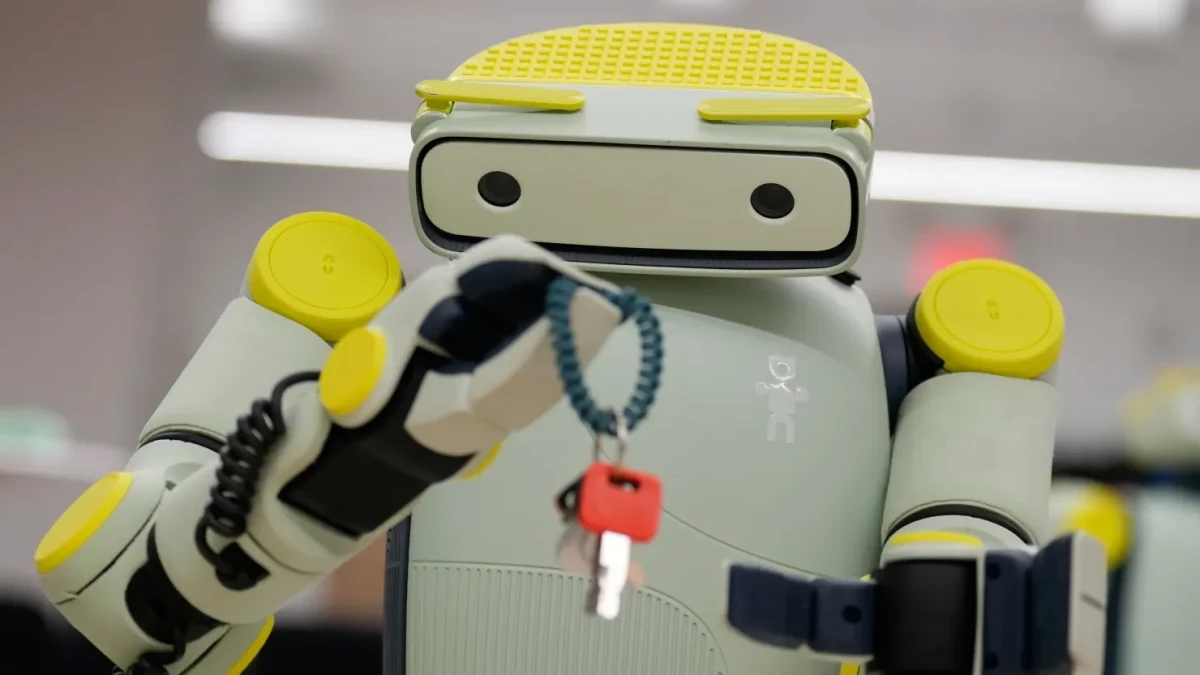
In March, Amazon acquired New York-based Fauna Robotics, developer of the humanoid robot Sprout, which stands about 107 centimeters (3.5 feet) tall. Following the deal, the company joined Amazon’s newly formed Personal Robotics Group, alongside employees from Lab126—the Amazon division behind Kindle and Echo.
Fauna Robotics has continued work on its original product. On March 24, the company announced it would keep selling the Sprout Creator Edition, rebranded as Fauna Robotics, an Amazon company.
Through this move, Amazon gained both a specialized team and an established development platform in humanoid robotics.
Why Amazon Is Doubling Down on Home Robots
Amazon believes personal robotics is approaching a tipping point where such devices can truly integrate into home environments.
Amazon spokesperson Brad Glasser explained that acquiring Fauna Robotics reflects the company's commitment to solving challenges currently holding the field back. According to Glasser, there remains a vast difference between a robot operating successfully in a laboratory and one capable of handling the daily unpredictability of a real living room.
Glasser also emphasized that Amazon continues to support Astro users. However, owners have expressed frustration with its capabilities—specifically noting that Alexa+ does not run on the robot.
Broader industry trends also favor the new project. iRobot co-founder Colin Angle noted that tools and technologies for building robots have advanced significantly in recent years. Comparing current developer capabilities with those available to the Astro team, he remarked that the technology stack back then was extremely primitive.
Investor interest is also climbing. According to PitchBook, venture funding for robotics and physical AI companies reached $33.4 billion in the first half of 2026 alone—surpassing the $28.7 billion raised throughout all of 2025.