




 make preferable
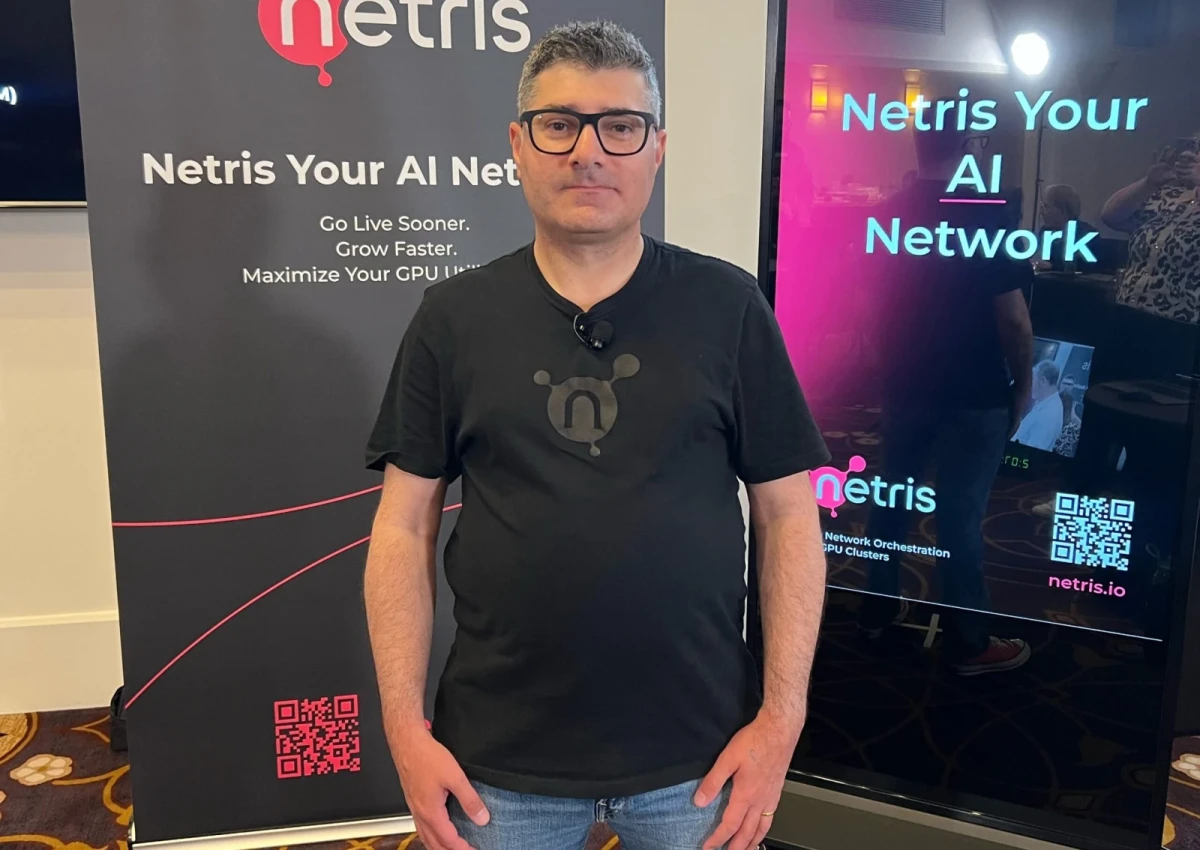
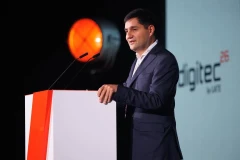
Artificial intelligence is becoming a source of new threats, but its spread also brings a number of benefits, opening up global competition and allowing more players to enter the market. This creates particularly important opportunities for small countries, including Armenia, which, with access to electricity, hardware and software solutions, could become a supplier of computing power to the global market. Netris CEO Alex Saroyan made these remarks while speaking at DigiConf.
“One person’s problem becomes another’s opportunity. Some people will use AI to create something harmful, and that will certainly happen. But many others will use the capabilities of artificial intelligence to solve that same problem. Ultimately, the world will find a balance,” he said.
AI as a Tool for Leveling the Playing Field Between Countries
Saroyan believes AI is becoming a powerful tool for leveling the playing field. It enables more countries and creators to carry out projects that were previously beyond their reach and find solutions to a wide range of challenges.
Saroyan explained that AI factories are changing the very model of competition between countries. He compared Armenia’s opportunities in this field with an attempt to enter the global aircraft manufacturing market: it is much harder for a small country to compete with giants such as Boeing, as doing so requires enormous manufacturing and technological resources.
The situation is different in AI. A country with access to electricity can build data centers, obtain the necessary hardware and use software solutions that keep the entire infrastructure running. International technology companies, including Dell, Schneider and Netris, are involved in this process.
“An AI factory changes the rules of the game for every country. If you have access to energy, you can build data centers, obtain hardware and the software you need. And the output is tokens,” Saroyan said.
According to Saroyan, this is precisely what gives Armenia an opportunity to compete internationally. However, access to energy alone does not guarantee success: the country needs to put the other elements of its infrastructure in place properly and ensure cooperation with technology partners.
“Having access to a fundamental resource—energy—gives you a competitive advantage. Provided that all the other components are set up correctly,” the head of Netris concluded.
What Kind of Specialists Armenia Needs to Train
Discussing workforce training for the new technology sector, Saroyan suggested focusing not only on narrowly defined applied professions, but above all on foundational knowledge and engineering education. According to Saroyan, training centers need to cultivate engineering thinking in a broad sense, encompassing computer science, mathematics and the fundamental natural sciences. He noted that Armenia has traditionally been strong in mathematics and fundamental disciplines, and that this kind of education underpins many technological achievements.
As an example, he cited the developers of complex components of Netris technologies. Although the company does not build AI models, its specialists develop networking solutions and algorithms. Some of the most complex proprietary technology components were created by Armenian engineers, while others were developed by their American colleagues in the United States. “What these people have in common is a very strong grounding in the fundamentals. They know computer science well, understand how bits and bytes work, can see the big picture and connect science with business,” Saroyan explained.
He emphasized that engineering begins with understanding the customer’s actual needs. For example, if a client wants to sell tokens to its users, developers need to understand the business objective and then translate it into specific technological solutions. This requires both a deep understanding of business and substantial technological knowledge. In Saroyan’s view, the ability to connect fundamental science with practical business challenges is one of the most valuable skills Armenia should invest in developing.
Energy as Armenia’s Competitive Advantage
Saroyan identified access to electricity as another crucial condition for developing AI infrastructure. He said that experience working with 60 clusters shows that, for most new cloud platforms, energy resources are becoming one of the scarcest and most difficult requirements to secure. In this context, Armenia’s more favorable access to energy could become a significant advantage.
He stressed that this involves producing a new digital product, a process comparable to manufacturing physical goods. Electricity, hardware and software are converted into computing power, which in turn produces tokens. The market is not limited to domestic consumption: the resulting product can find demand among users around the world.