make preferable
By 2030, more than 40% of all network traffic could be related to artificial intelligence. The main burden on infrastructure, however, will come not from user requests but from interactions between autonomous AI agents. This will require a transition to distributed intelligent networks and could open up new revenue streams for telecommunications operators, from supporting AI infrastructure to providing specialized services.
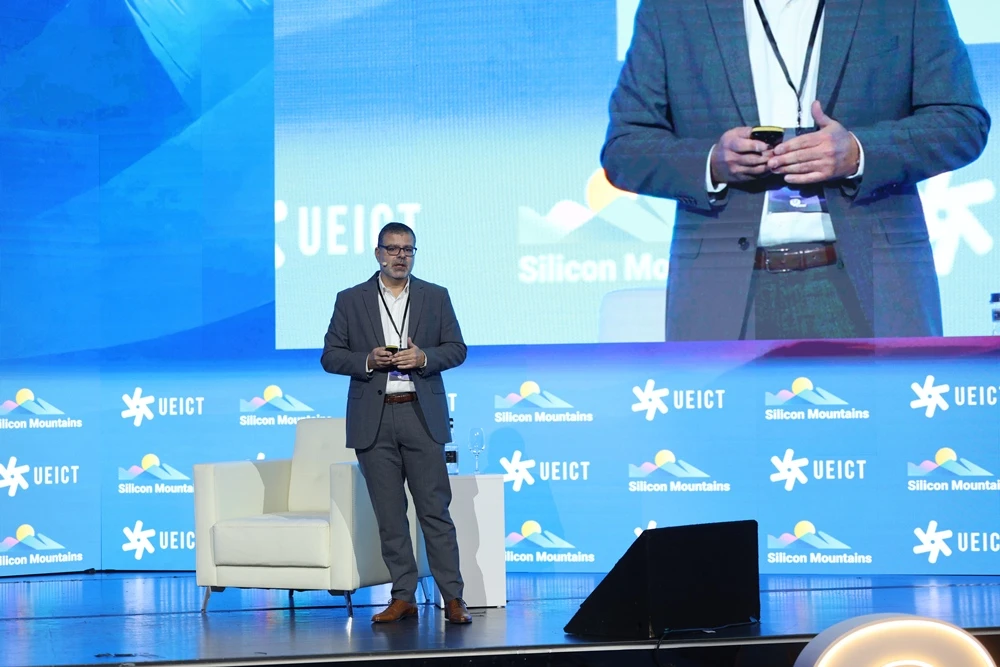
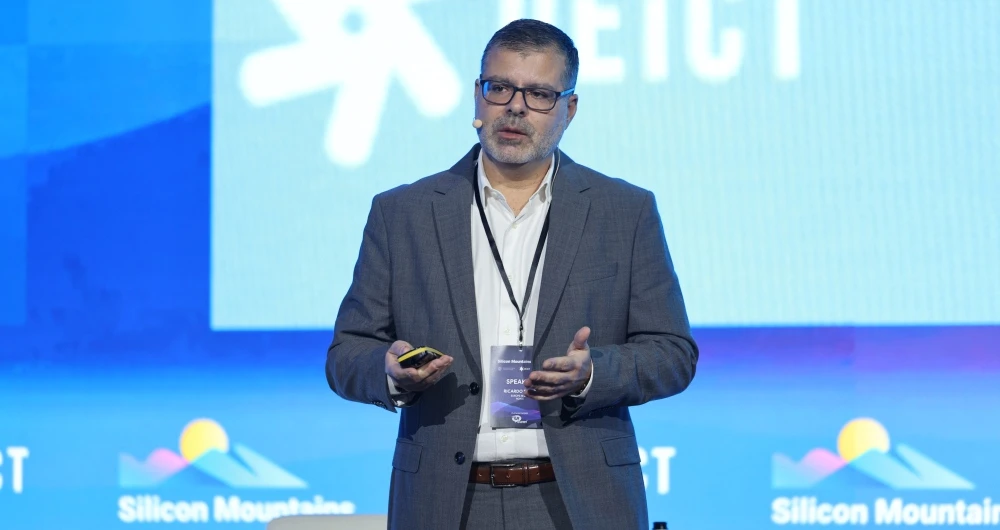
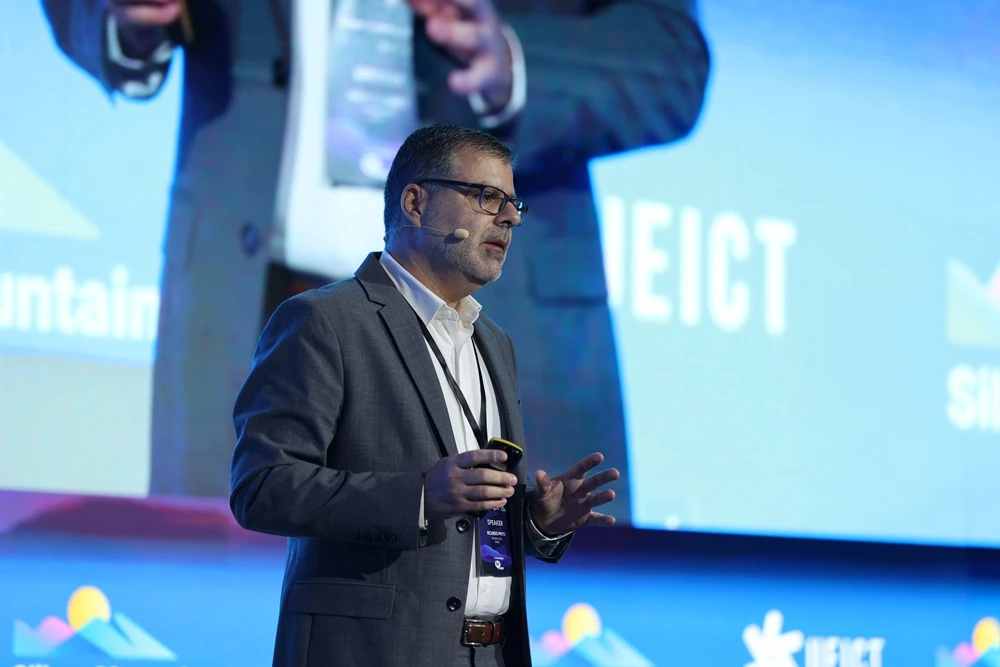
These forecasts were presented by Ricardo Pinto, Nokia's CTO for Network Infrastructure in Europe, at the Silicon Mountains 2026 technology summit in Yerevan. In his presentation, “From Connectivity to Intelligence: Building an AI-Powered Future,” he explained how the development of AI will change the requirements for telecommunications networks and what role operators could play in the new technology ecosystem.
AI agents will become the main consumers of network resources
According to Pinto, the spread of agentic artificial intelligence will be one of the main drivers of change in network infrastructure. While interaction with AI today primarily involves direct user requests, autonomous agents that independently solve problems and interact with one another and with various digital systems will perform an increasing share of operations in the future.
The scale of this transition is illustrated by Gartner research cited by the speaker: according to the estimate he presented, AI agents will eventually account for 86% of token consumption, while direct human interaction will account for around 14%. This means that a substantial share of the future load on networks will be generated not by user activity but by the continuous operation of intelligent systems.
Another area that will place greater demands on infrastructure is physical AI, particularly robotics and computer vision systems. These applications require extremely low data transmission latency, in some cases on the order of just a few milliseconds.
According to research conducted by Pinto, by 2027, 80% of CIOs will consider edge computing and related services necessary to support AI inference—the use of already trained models to process new data.
Computing will therefore increasingly move closer to users and devices rather than being concentrated exclusively in large, centralized data centers.
The future lies in distributed AI infrastructure
One of the key concepts Nokia associates with this transition is the AI Grid—a distributed network of interconnected computing and intelligence resources.
Pinto predicts that rather than relying solely on large, centralized AI factories, the industry will develop distributed infrastructure connecting data centers and edge computing sites. This will allow AI workloads to be placed wherever they can be processed most efficiently in terms of speed, cost, and the requirements of specific applications.
This architecture will be particularly important for tasks requiring minimal latency, reliable operation, and data protection. Security, privacy, and technological sovereignty will therefore be important prerequisites for the development of the AI Grid.
According to the Nokia representative, the last factor is particularly relevant to Europe, where national AI infrastructures are being developed. Control over computing resources and data is becoming a prerequisite for independence in critical technologies.
However, Pinto emphasized that not only services and computing platforms but also the networks themselves must become intelligent. They will increasingly use AI to analyze traffic loads, adapt to changing conditions, and automate management.
In the longer term, the industry must move toward higher levels of autonomy. While the speaker estimates that autonomous networks currently average around level L2, the strategic goal is to reach levels L4 and L5, which involve substantially more autonomous infrastructure management.
Another promising area is AI-RAN, which involves integrating artificial intelligence directly into radio access networks. As an example of how this concept is developing, Pinto mentioned Nokia's collaboration with Nvidia and leading telecommunications operators.
More than 20% of AI inference capacity could be hosted by telecom operators
The speaker paid particular attention to the economic implications of AI development for the telecommunications sector. In his view, operators face a fundamental question: how can they generate economic returns from infrastructure that will handle an increasing share of the digital economy's workload? “We will be building networks for artificial intelligence, but who will reap the economic benefits?” Pinto asked.
One area capable of generating new revenue for operators is providing connectivity between data centers. As the number of computing facilities grows, so will the need for high-performance connections between them.
Even greater opportunities could emerge in AI inference. Delivering intelligent services to end users and businesses will require distributed computing capacity located closer to customers. Pinto cited research suggesting that telecommunications service providers could eventually host more than 20% of the capacity used to support AI inference.
Operators have several advantages in this regard: national infrastructure, distributed sites, and experience working with government bodies and corporate customers. In addition, as security and data sovereignty requirements increase, telecommunications companies could become partners in hosting and delivering trusted AI services.
The Nokia representative predicts that operators will eventually be able to move beyond traditional telecommunications services to offer intelligent connectivity, host equipment and computing resources at their own sites, and provide trusted AI services for businesses.
Their role could thus change: rather than simply providing data transmission links, they could become full-fledged participants in the market for AI infrastructure and intelligent services.
AI could generate more than 40% of traffic by 2030
Responding to a question from Artak Aleksanyan about whether the sharp increase in traffic could trigger a crisis in the telecommunications industry, Pinto noted that the transition to new technological models would be gradual. At the same time, he expects exponential growth in AI-related traffic.
He estimates that AI could account for more than 40% of all network traffic by 2030.
This forecast presents telecommunications companies with both a technological and an economic challenge: they will need to adapt their networks to a fundamentally new workload structure while finding ways to generate revenue from the growing AI economy.
As Pinto noted, while the telecommunications industry previously connected people and devices, its next task will be to connect intelligent systems.