make preferable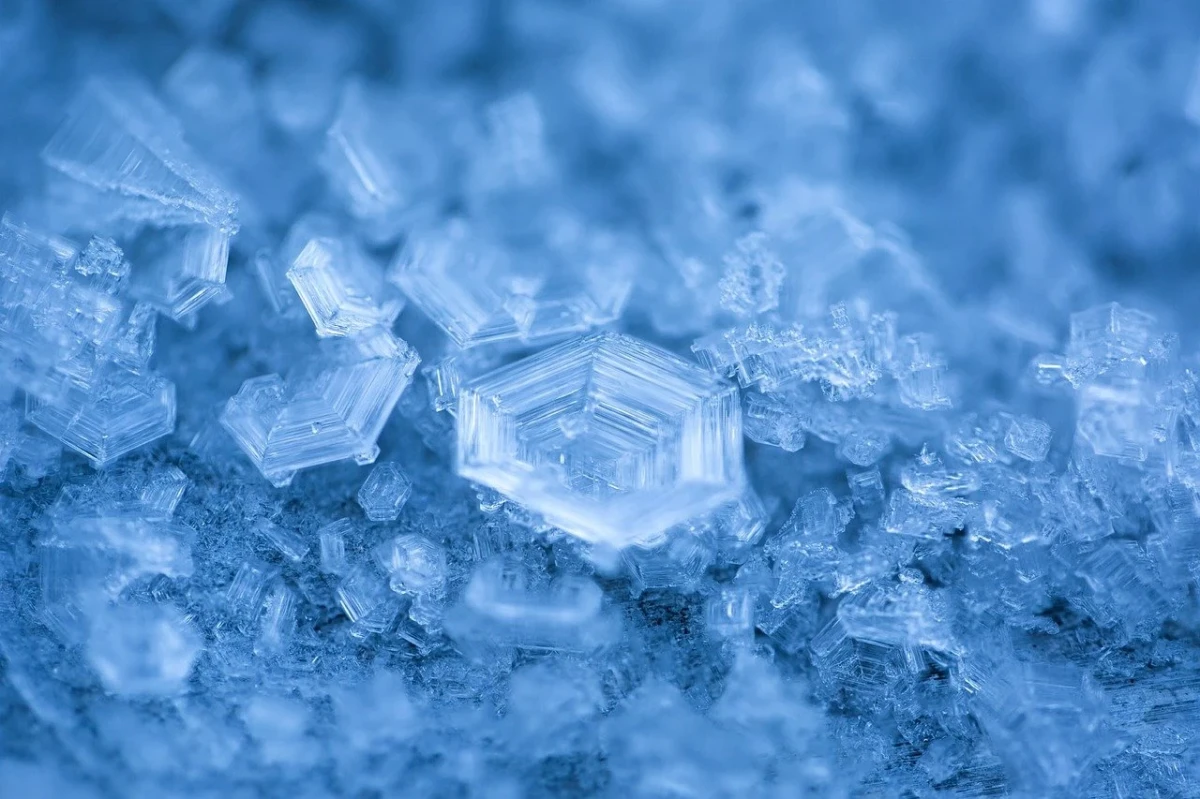
Scientists have directly observed for the first time how, upon cooling, water transitions not into ordinary ice but into a glass-like amorphous state. Unlike ice, where molecules arrange themselves into an ordered crystalline structure, in the amorphous state they remain randomly arranged. The study showed that this transition does not occur at one specific point but extends across a range of temperatures.
Water was found to be “trapped” between molecules
The study was conducted by a team led by Raffaele Mezzenga from ETH Zurich together with the Australian Nuclear Science and Technology Organisation. The results were published in the journal Nature Communications.
To prevent the water from turning into ordinary crystalline ice, the scientists placed it in extremely thin layers only a few nanometers thick. The water was confined between molecules of phytantriol, a fatty alcohol that remains stable at low temperatures.
Under these conditions, the water molecules were unable to arrange themselves into a crystalline structure. The scientists were able to track what was happening using X-ray scattering and neutron spectroscopy.
The transition into “glass” turned out to be gradual
As the temperature dropped from about −63 to −20 degrees, the motion of the water molecules gradually slowed down. The transition itself into the amorphous, glass-like state occurred over a range of approximately −74 to −64 degrees.
This became one of the most interesting findings of the work. The researchers expected to see a sharper transition, but the water did not turn into an amorphous solid at any single temperature point. The process instead stretched across an entire temperature range.
Amorphous ice is not some rare laboratory curiosity. It is believed that water may exist in this state in comets and interstellar space. However, directly observing how water transitions into this state in the laboratory has been possible only in a limited number of experiments.
Why water sometimes freezes without crystals
Ordinary ice forms when water molecules arrange themselves into an ordered crystalline structure. Such a process can alter or destroy the structure of the surrounding material. If crystals do not form, however, water can transition into an amorphous state while retaining a much more disordered arrangement of molecules.
That is why understanding this process is of interest not only for fundamental physics. Controlled freezing without the formation of large crystals may be useful for the cryopreservation of cells and tissues, as well as for food-freezing technologies. Similar issues also arise in pharmaceuticals, where some drugs and vaccines must be frozen without allowing them to lose their properties.
The new results make it possible to describe the behavior of supercooled water more precisely and may help explain why in nature it sometimes freezes in an amorphous form. The study also shows that the transformation of water into “glass” is a more complex and extended process than previously thought.