make preferable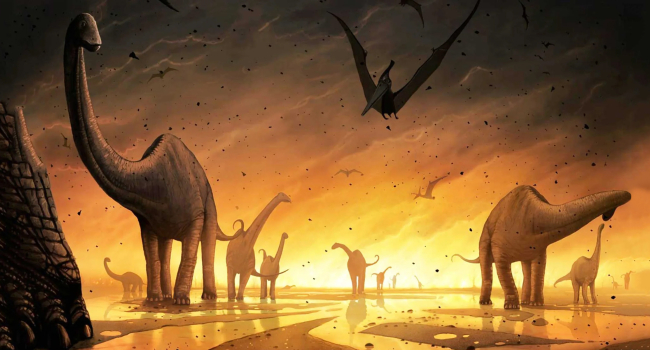
New research suggests that the demise of the dinosaurs 66 million years ago began not with a years-long "nuclear winter," but with a brief yet catastrophic heat pulse. Fine dust particles from the asteroid impact may have amplified the global thermal flash so powerfully that exposed animals died within hours.
How it happened
An asteroid about 10 kilometres across struck the Yucatán Peninsula, forming the Chicxulub crater. The impact vaporized vast quantities of rock. Some of this material condensed into tiny droplets—spherules—that scattered across the planet and then re‑entered the atmosphere at several kilometres per second. As the spherules decelerated, their kinetic energy was converted into heat, generating an intense pulse of thermal radiation.
Earlier models suggested that this effect resembled a global "broiler": it could have been lethal for thin‑skinned animals but not intense enough to ignite vegetation worldwide.
The role of dust
The new study indicates that previous calculations overlooked a critical factor—a thick layer of fine silicate dust formed from vaporised rock. Traces of this dust were found in 2023 at the Tanis fossil site in North Dakota, as well as at the Cretaceous–Palaeogene boundary in the Raton Basin on the Colorado–New Mexico border.
According to lead author Brandon Johnson of Purdue University, the dust acted like an insulating blanket: it prevented heat radiation from escaping into space and redirected more energy toward Earth's surface. As a result, the heat pulse may have been roughly 3.5 times more intense than models that only accounted for falling spherules.
"We are entering a regime where, essentially, you could have wiped out almost everything within the first hour or two," Johnson noted.
Consequences for life
The radiation likely did not directly ignite thick tree trunks, but it exceeded the ignition threshold for grass, lichens, and pine needles—which could have served as "kindling" for larger fires. Exposed land animals, according to calculations, received a thermal dose roughly 17 times higher than what is considered lethal for humans.
Those that sheltered underground or in water had the best chances of survival. After the heat pulse, the same dust could have blocked sunlight for years, triggering a prolonged "impact winter"—long considered the primary cause of the mass extinction.
An important caveat
So far, direct evidence of widespread wildfires confirming this hypothesis has only been found in North America. Palaeontologist Alfio Alessandro Chiarenza of University College London, who was not involved in the study, notes that global evidence has yet to be discovered.
The work was published on 28 July in the journal JGR Biogeosciences.
In brief
New modelling shows that dust from the Chicxulub asteroid may have intensified the heat pulse by roughly 3.5 times. Exposed animals received a radiation dose 17 times higher than the lethal limit for humans and may have perished within hours. The dust could also have triggered global fires and a subsequent "impact winter." So far, evidence of extensive fires has only been found in North America. The study was published in the journal JGR Biogeosciences.