make preferable
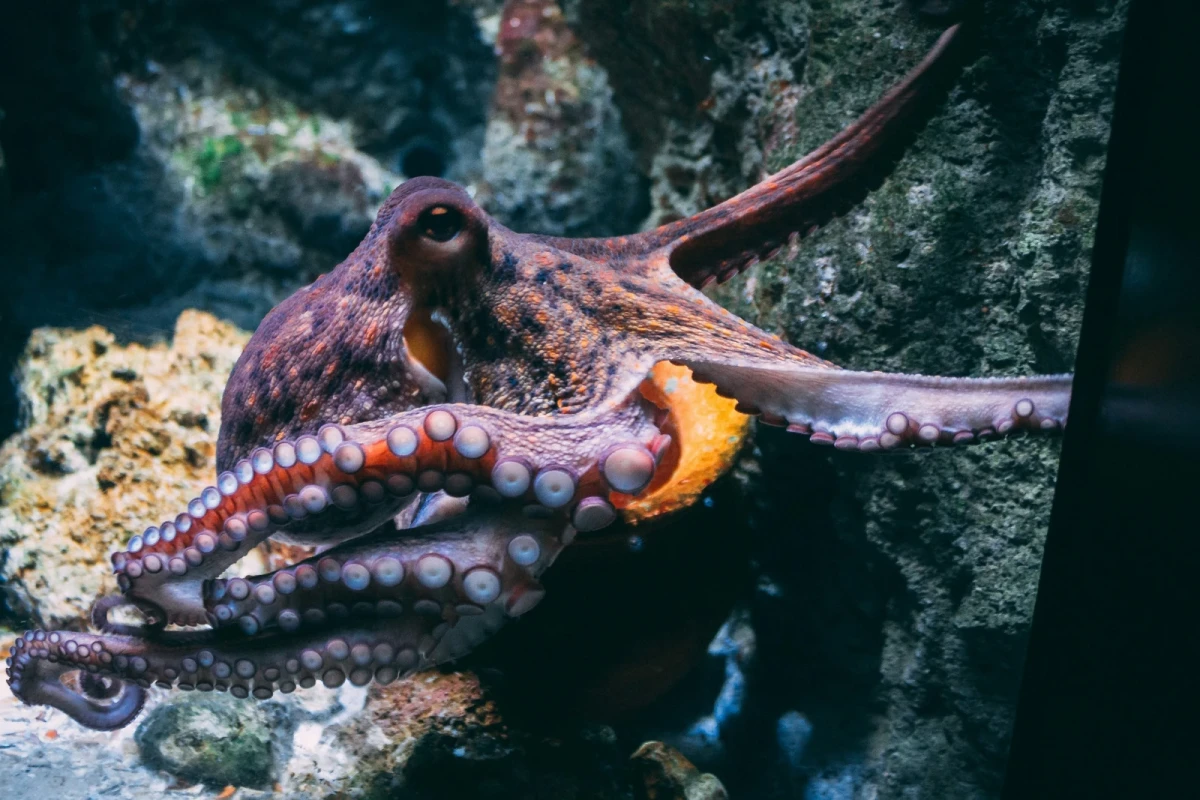
Octopuses can escape from aquariums, slip into narrow crevices, and squeeze through openings that at first glance seem too small even for their heads. For the first time, scientists have systematically studied exactly how these animals overcome such obstacles and discovered that their escapes follow a specific sequence of actions. The findings were published in the Journal of Experimental Biology.
Researchers led by biologist Michael Kuba of the University of Naples Federico II observed seven octopuses of two species: three common octopuses (Octopus vulgaris) and four Mexican four-eyed octopuses (Octopus maya).
For the experiment, the scientists measured the distance between each animal's eyes. They used this measurement as a proxy for the size of the most rigid part of an octopus's body—the cartilaginous structure surrounding its brain. The researchers then placed the animals in acrylic boxes with openings slightly smaller or larger than this distance and observed their attempts to escape.
Three Steps If the Opening Is Wide Enough
Common octopuses were found to use two different strategies depending on the size of the opening. If it is wider than the distance between their eyes, the animals escape in three successive movements.
First, the octopus pushes one or two arms through the opening, then threads several more through after them. It then braces the arms already outside against the walls of the box to pull its head and the rest of its body through the opening. The entire process takes just a few seconds.
If the opening is narrower, the octopus adds another stage: it first pushes all its arms through, then compresses its head and bulky mantle to squeeze the rest of its body through. The size of the opening thus determines how complex the escape will be: the animal has to change its sequence of movements when the gap becomes narrower.
A Flexible Body Helps Overcome Constraints
Octopuses' ability to squeeze through tight spaces is explained by their anatomy. Their bodies consist mainly of soft muscles that allow them to change shape and pass through very small openings. However, octopuses do have rigid structures that limit how much they can compress their bodies.
According to evolutionary biologist Robyn Crook of San Francisco State University, although the ability to enter tight spaces has long been one of these animals' best-known traits, the strategies they use have received very little systematic study.
Michael Kuba notes that squeezing through small openings is more than just an unusual trick for octopuses. It helps them reach hidden prey, enter shelters, and escape predators. The findings offer a better understanding of how octopuses coordinate their arm movements and use their bodies' flexibility to overcome physical obstacles.