make preferable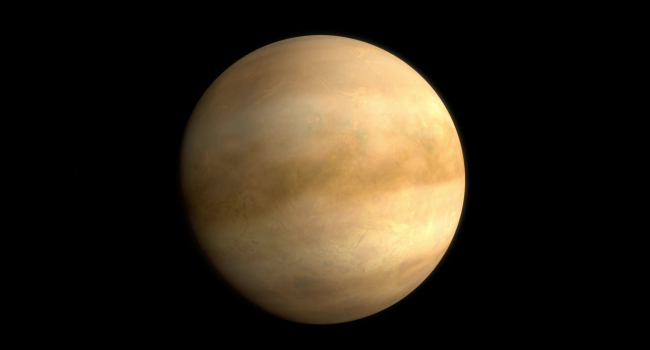
Scientists analyzing archival data from NASA’s Magellan mission have identified signs of a large underground tunnel on Venus formed by volcanic activity. If confirmed, it would be only the second verified lava tube on the planet — similar structures have previously been observed on the Moon and Mars. The discovery challenges the long-standing view of Venus as a geologically dead world.
What Researchers Found in the Magellan Data
The Magellan mission (1990–1992) mapped Venus’s surface using radar, as the planet’s dense clouds block optical observations. By measuring the return time of radar signals, scientists were able to create detailed topographic maps.
During a new analysis, a team led by Lorenzo Bruzzone of the University of Trento (Italy) focused on chains of localized surface collapses known as “skylights,” which occur when the سقf of an underground channel gives way, forming openings.
One such chain lies on the western slope of Nyx Mons, one of the planet’s largest volcanic formations. The radar signature of the area closely matches those associated with collapsed lava tube roofs on Mars and the Moon.
Researchers estimate that the subterranean channel could extend for dozens of kilometers, though only part of the structure has been confirmed so far.
“Our knowledge of Venus is still limited, and until now we have not been able to directly observe processes occurring beneath the surface of Earth’s twin,” said co-author Lorenzo Bruzzone.
“The identification of a volcanic cavity is particularly significant because it allows us to confirm theories that for many years remained only hypotheses,” he added.
Why It Matters
Until recently, Venus was believed to have long lost its tectonic and volcanic activity. However, growing evidence in recent years suggests otherwise: fresh lava flows, unusually hot regions, and potentially active volcanoes have all been detected.
The newly identified tunnel is another indication that Venus’s interior remained active much longer than previously thought. Lava tubes like this could serve as natural shelters from the planet’s extreme surface conditions — temperatures around 460 °C (860 °F) and pressure roughly 92 times that of Earth — making them intriguing targets for future missions.
How the Discovery Can Be Confirmed
Existing Magellan data has limited resolution, leaving the full picture unclear. Future missions equipped with more powerful radar systems will help verify the tunnel’s size, shape, and stability.
Several spacecraft are set to visit Venus in the coming years:
- DAVINCI+ (NASA): a descent probe designed to analyze the atmosphere.
- VERITAS (NASA): a high-resolution orbital radar mission.
- EnVision (ESA): equipped with the Subsurface Radar Sounder (SRS), capable of probing hundreds of meters below the surface even without visible openings.
“Our discovery is only the beginning of a long and exciting journey of exploration,” Bruzzone emphasized.
The study was published on February 9, 2026, in the journal Nature Communications.
In Brief
Scientists have found evidence in Magellan mission data of a large underground lava tunnel on the western slope of Nyx Mons. It would be only the second structure of its kind on Venus and an important sign of relatively recent volcanic activity. Upcoming radar missions — EnVision, VERITAS, and DAVINCI+ — are expected to confirm and further investigate the formation. The finding reshapes our understanding of Earth’s “sister planet” and opens new avenues for exploration.