make preferable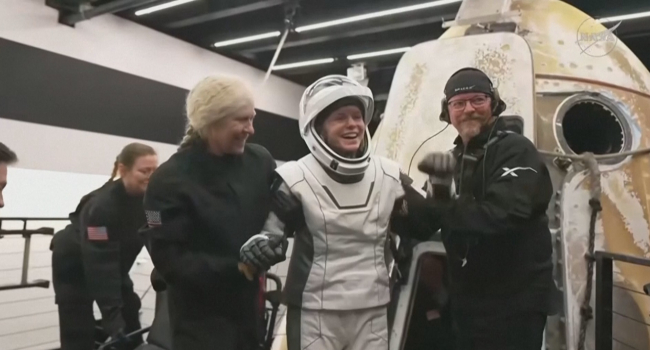
In January 2026, NASA for the first time in the history of the International Space Station returned the Crew-11 mission crew to Earth ahead of schedule for medical reasons. Four astronauts, Mike Fincke and Zena Cardman from NASA, Kimiya Yui from Japan, and Oleg Platonov from Roscosmos, splashed down in the Pacific Ocean off the coast of San Diego on January 15. The mission lasted 167 days instead of the planned six months. This case raises an important question: how astronaut health is maintained in space and why such an evacuation has been so rare.
Medical selection and preparation
Before flight, astronauts undergo extremely strict medical screening. Conditions that could worsen in microgravity are excluded, psychological stability is assessed, and health is monitored throughout their careers. On board the ISS, each crew has an assigned Crew Medical Officer, sometimes a physician, sometimes a specialist with advanced training in space medicine. This person conducts examinations, administers medications, and consults with Earth via telemedicine.
Statistical models predicted a medical emergency roughly once every three years. However, in 25 years of continuous habitation of the station, serious incidents have been remarkably rare.
What health problems arise in space
A 2015 study showed that medication use on the ISS is relatively low, about 10 doses of over the counter drugs per astronaut per week. Most are for ordinary conditions.
Skin problems are the most common complaint. Dryness, rashes, hypersensitivity, and slow wound healing occur about 25 times more often than on Earth. The main causes are dry, cold air, low humidity, and hygiene limited to wet wipes.
Nasal congestion and headaches appear in almost everyone at the beginning of a mission. Without gravity, fluids shift toward the head, causing what is known as “space sniffles,” facial swelling, reduced appetite, and sleep problems.
Sleep disturbances are widespread because of 16 sunrises and sunsets per day, equipment noise, cramped conditions, and stress. Astronauts sleep one to two hours less than on Earth on average.
Musculoskeletal injuries have been recorded 219 times over the entire US program. Most are minor cuts to the hands when moving between modules. Paradoxically, the main source of injuries is daily exercise, which is necessary to combat bone loss of up to 1 percent per month in the legs, hips, and spine, as well as cardiovascular deconditioning.
Spacewalks add further risk, with about 0.26 injuries per EVA, often caused by elements of the spacesuit.
Unique space related conditions
Some problems occur only in space. Spaceflight Associated Neuro-ocular Syndrome, or SANS, affects up to 70 percent of astronauts on long missions. Fluid shifts toward the head change pressure in the eyes, flatten the optic nerve, and cause vision changes that can last for years.
One of the most striking cases occurred in 2020, when an ultrasound examination accidentally discovered a blood clot in an astronaut’s jugular vein. There were no symptoms. Doctors on Earth guided treatment for more than 90 days, including anticoagulants, delivery of medication by cargo spacecraft, and self-performed ultrasound under the supervision of radiologists. The astronaut completed the mission and returned without consequences.
Why the Crew-11 evacuation is so rare
The fact that the first medical evacuation happened only after 25 years shows how effective space medicine has been. At the same time, it is a reminder that space remains an extremely challenging environment for the human body. On future missions beyond low Earth orbit, medicine will have to become even more autonomous, moving toward Earth Independent Medical Operations, possibly with the help of artificial intelligence to support the Crew Medical Officer.
In brief
The first medical evacuation from the ISS in January 2026, during the Crew-11 mission, is an exceptionally rare event after 25 years of continuous habitation. Astronauts undergo strict selection, have a trained medical officer on board, and rely on telemedicine. The most common issues are skin problems, “space sniffles,” sleep disturbances, and exercise related injuries. Unique conditions include SANS, which affects vision, and rare events such as a jugular vein thrombosis that was successfully treated remotely. The evacuation emphasizes the priority of safety while also demonstrating the high effectiveness of space medicine. On future deep space missions, medical care will need to become even more autonomous.