make preferable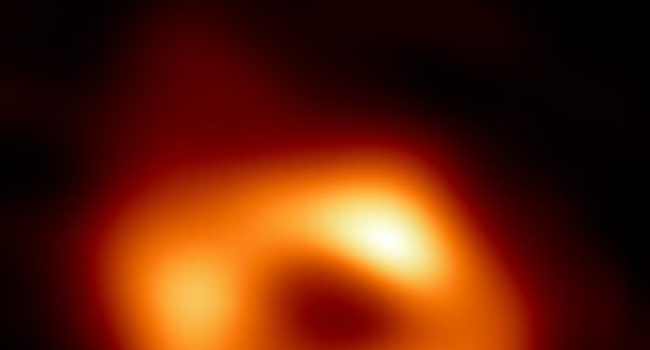
The international Event Horizon Telescope (EHT) collaboration is planning to capture the first-ever video of a black hole in March–April 2026. The target is the supermassive black hole at the center of the galaxy M87, the same object whose shadow was photographed for the first time in history in 2019. The Guardian reports that this new campaign aims to move from a static image to a dynamic record of how matter behaves around a black hole.
What They Plan to Observe
The black hole in M87 has a mass of about six billion Suns, and the size of its event horizon is comparable to the orbit of Neptune. Astronomers intend to observe the motion of its accretion disk, a rotating поток of gas and plasma that surrounds the event horizon and defines its visible boundary.
During March and April, the Event Horizon Telescope will continuously monitor this colossal object in order to obtain data that can be combined into a video sequence. The goal is to show how the disk rotates and evolves in time near the event horizon, the boundary beyond which neither light nor matter can escape.
A Planet-Sized Telescope
The EHT is not a single instrument but a global network of 12 radio telescopes spread across the Earth, from Antarctica to Spain and South Korea. By using very long baseline interferometry (VLBI), these observatories synchronize their measurements and effectively form a virtual telescope the size of the planet. This technique provides an angular resolution high enough to see details on the scale of a black hole’s event horizon.
It was this same method that made the historic 2019 image possible. The upcoming observing campaign will use even higher temporal and spatial resolution, allowing scientists to track how gas moves, accelerates, and is expelled in the form of powerful relativistic jets.
Questions Scientists Hope to Answer
Professor Heino Falcke and Professor Sera Markoff and their colleagues have emphasized that one of the main goals is to better understand how fast the black hole is spinning and how black holes generate their relativistic jets. These two problems remain among the most important open questions in modern astrophysics.
The rotation speed of a black hole is closely linked to how it grows and reaches such enormous masses. Understanding how jets are launched could explain why active galactic nuclei, including quasars, release such tremendous amounts of energy and influence the evolution of entire galaxies.
In Brief
In March–April 2026, the Event Horizon Telescope network will attempt to record the first video of a black hole, focusing on the supermassive object at the center of galaxy M87. By capturing the motion of its accretion disk and associated jets, astronomers hope to learn more about the black hole’s rotation and the mechanisms behind relativistic outflows. This project will mark the next major step after the iconic 2019 image and could provide unprecedented insight into the most extreme objects in the Universe.