make preferable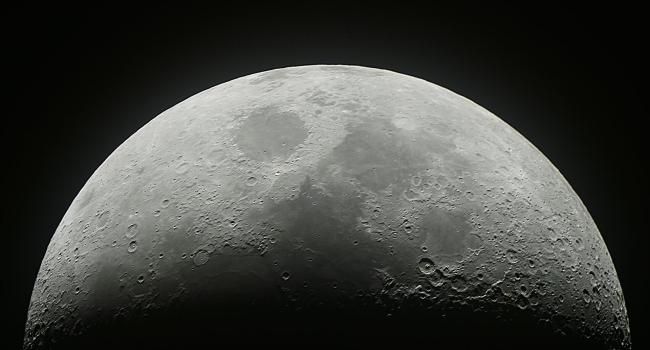
NASA and the US Department of Energy have officially confirmed the continuation of their joint work on the Fission Surface Power project, a compact nuclear fission reactor that is intended to be deployed on the surface of the Moon. ScienceAlert reported this development.
Why the Moon needs a nuclear reactor
The main goal of the project is to provide future lunar bases with a stable and long term source of energy. Although solar panels have many advantages, they also have serious limitations. They do not operate during the two week long lunar night, depend on the angle of incoming sunlight, and require regular maintenance. A nuclear reactor, by contrast, can generate constant power regardless of the time of day or the position of the Sun.
According to current plans, the system should produce at least 40 kilowatts of electrical power. This is roughly enough to supply about 30 average homes on Earth for a period of 10 years. Such an energy output would support residential modules, scientific instruments, life support systems, and lunar rovers.
NASA Administrator Jared Isaacman stated that this agreement would make it possible to deepen cooperation between NASA and the Department of Energy and to create the technologies needed for a new era of space exploration.
Engineering challenges
Developing a reactor for the Moon involves a number of serious challenges that do not exist for nuclear power plants on Earth.
First, the absence of an atmosphere makes traditional water based cooling and heat removal through steam impossible. Engineers will need to use alternative systems such as solid state heat conduction or liquid metals like sodium or sodium potassium alloys. This significantly complicates the design and increases reliability requirements.
Second, lunar dust is highly abrasive, electrically charged by the solar wind, and easily sticks to surfaces. It can clog moving parts, interfere with heat dissipation, and damage equipment.
Third, radiation protection is critical. The reactor must be safe for astronauts who may be operating only a few tens of meters away. At the same time, the shielding must be lightweight and should not require frequent maintenance.
Fourth, transportation and deployment are major constraints. The reactor must be compact enough to fit inside a launch vehicle and simple enough to be deployed on the lunar surface.
The preliminary design phase has already been completed. The project is now moving into the stage of building demonstration and flight models. A fully completed reactor is expected to undergo ground testing and then be delivered to the Moon by 2030.
Prospects and significance of the project
A nuclear reactor is considered a key element for a long term human presence on the Moon. Without a stable and powerful energy source, it is impossible to speak realistically about permanent bases, large scale resource extraction, or preparation for missions to Mars. The Fission Surface Power project could become the first step toward creating an energy infrastructure beyond Earth.
At the same time, NASA emphasizes that this is a long term objective. The reactor will not appear on the Moon in the near future, as several more years of development, testing, and regulatory work are still required.
In brief
NASA and the US Department of Energy are continuing work on a nuclear fission reactor for the Moon under the Fission Surface Power project. The system is expected to generate at least 40 kilowatts of power for 10 years and to operate independently of sunlight. By 2030, the development and ground testing are planned to be completed. The main challenges include cooling without an atmosphere, dealing with lunar dust, and ensuring radiation safety. This project represents a crucial step toward permanent lunar bases and preparation for deep space missions.