make preferable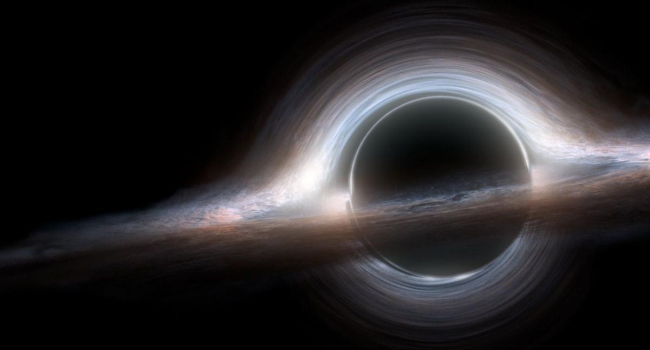
An international team of astrophysicists has presented the most detailed computer simulations to date of how stellar-mass black holes accrete matter. The results of the study have been published in The Astrophysical Journal.
The region surrounding a black hole’s event horizon is one of the most chaotic environments in the Universe. Matter there simultaneously rushes inward toward the horizon while being expelled outward in the form of powerful relativistic jets and bursts of radiation. Because of the extreme complexity of these processes, involving the curvature of spacetime and the interaction of light, plasma, and magnetic fields, accurately modeling such systems has long remained a major challenge.
A New Approach Without Simplifications
Unlike earlier models, which relied on simplifying assumptions due to limited computing power, the new study employs the full set of relevant physics without compromise. Using two supercomputers, the researchers integrated astronomical observational data, black hole spin parameters, and magnetic field structures.
The model simultaneously incorporates Einstein’s general theory of relativity, plasma physics, magnetohydrodynamics, and radiative transfer. This made it possible, for the first time, to accurately reproduce key processes occurring within accretion flows.
The simulations show that rapidly rotating black holes develop dense accretion disks that absorb a significant fraction of the radiation. Energy is released not directly, but through powerful winds and narrow relativistic jets shaped by magnetic fields. A funnel-like structure forms in which matter falls inward at enormous speed, while radiation escapes in a tightly collimated beam that is visible only from certain viewing angles.
The Role of Magnetic Fields
Special attention was given to the configuration of magnetic fields, which not only guide gas toward the event horizon but also determine how much matter and energy are returned to space in the form of outflows.
The lead author of the study, Lichun Zhang of the Center for Computational Astrophysics at the Flatiron Institute and the Institute for Advanced Study, explained that this work represents the first time researchers have been able to observe what happens when all key physical processes involved in black hole accretion are modeled accurately.
Implications for Observations
The new results are expected to improve the interpretation of telescope data, including helping to explain the nature of the so-called little red dots, mysterious early-Universe objects discovered by the James Webb Space Telescope. These compact sources emit less X-ray radiation than expected, which may be linked to super-Eddington accretion and shielding outflows.
In the future, the team plans to adapt the model to supermassive black holes, including Sagittarius A star at the center of the Milky Way.
In Brief
At the end of 2025, the most realistic simulations of accretion onto stellar-mass black holes were published, incorporating all key physical effects without simplifications. They reveal the central role of magnetic fields in shaping jets, winds, and funnel-like structures, explain the stability of accretion disks, and shed light on the enigmatic little red dots. This represents a major advance in modeling extreme astrophysical environments, with strong prospects for application to supermassive black holes.