make preferable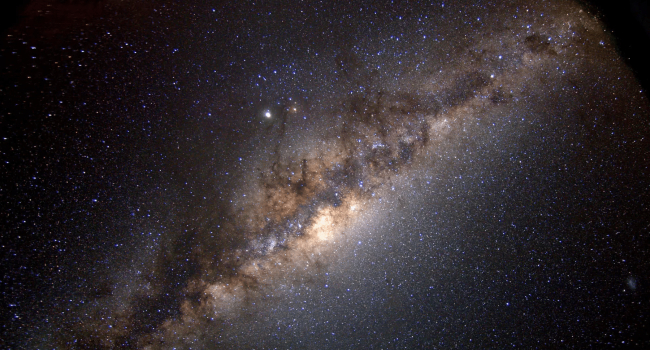
There are hundreds of thousands of photos of the Milky Way online — a beautiful spiral with a bright core and graceful arms. But the truth is, we still only see our galaxy roughly, like a person trying to draw their own house while sitting inside it with no windows. We live in a disk about 100,000 light-years across, surrounded by dust, gas, and billions of stars that block our view. Still, over the past century, astronomers have gathered enough indirect clues to create a fairly accurate map.
From Galileo to Hubble: The First Steps
- Galileo (1610) — pointed his telescope at the “milky” band and saw that it was made up of countless stars.
- Immanuel Kant (18th century) — suggested we are inside a rotating disk.
- William Herschel — tried mapping stars around the Sun but didn’t account for dust, which dims the light of distant objects.
- 1920s, Edwin Hubble — proved that the Andromeda Nebula is a separate galaxy, making it clear that the Milky Way is just one galaxy among many, and we live inside it like ants in a soup bowl.
Why a Photo Is Impossible
- Dust: it absorbs and scatters visible light, so the far side of the galaxy is completely hidden from us.
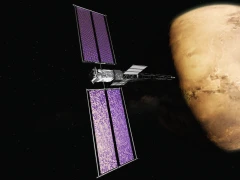
- Scale: the Milky Way has 100–400 billion stars. Even the Gaia space telescope, which has measured almost 2 billion stars since 2013, covers only about 1% of the galaxy.
How Astronomers Map the Milky Way
- Globular clusters orbit the galactic center, helping to pinpoint its location — roughly 25,000 light-years from us.
- Stars and gas motions reveal the mass and shape of the core — it’s elongated, bar-shaped, possibly even peanut-shaped.
- Infrared and radio telescopes see through dust, confirming the central bar and the two main spiral arms.
- Star-forming regions highlight the arms: they are only about 10% denser than their surroundings, but bright due to young, hot stars.
The Current Model
- The Milky Way is a barred spiral galaxy with two major arms (Scutum–Centaurus and Perseus) and possibly two smaller ones (Sagittarius and Norma).
- The central bar has an elongated, peanut-like shape.
- Details continue to be refined with new data from Gaia and radio telescopes.
In Short
We will never see the Milky Way in full — dust and our position inside the disk prevent it. Astronomers piece together the map using indirect evidence: globular clusters locate the center, star motions reveal the core’s shape, and infrared and radio emissions outline the arms. Today, we know it’s a barred spiral with two main arms and a central “peanut,” though the finer details are constantly updated with every new telescope observation.