make preferable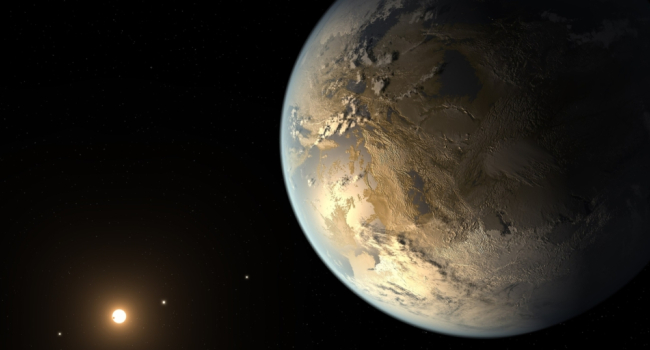
An international team of astronomers led by Rei Sawada of the University of Tokyo has proposed a new mechanism explaining why Earth and other terrestrial planets ended up “dry” and rocky. It turns out this is not a rare stroke of luck, but a fairly typical outcome for planetary systems around Sun-like stars. The study was published in Science Advances.
How Earth Lost Its Water Early On
Earth formed from planetesimals, a mixture of rock and ice. To become a rocky planet, it had to lose most of its water at an early stage. A key role was played by heating from the decay of short-lived radioactive isotopes, especially aluminum-26. Traces of this isotope have been found in ancient meteorites, indicating that it was abundant in the protoplanetary disk.
Previously, it was believed that such aluminum-26 could only have been delivered by a supernova exploding very nearby. However, calculations revealed a paradox: a supernova at the required distance would have completely destroyed the protoplanetary disk.
A New Mechanism: Isotope “Immersion”
Sawada and his colleagues proposed an “immersion” model. In this scenario, a supernova explodes at a safe distance, about 3.2 light-years away. The shock wave accelerates charged particles to cosmic-ray energies. These cosmic rays then penetrate the protoplanetary disk via two pathways:
- some isotopes, such as iron-60, are carried in as dust;
- others, including aluminum-26, are produced directly inside the disk through collisions between cosmic rays and stable atoms.
The model accurately reproduces the radioactive isotope composition observed in meteorites. Most importantly, such conditions are common.
How Many Earths Are There in the Universe?
According to the authors’ estimates, between 10 and 50 percent of Sun-like stars form in environments rich enough in radioactive isotopes. This means that dry, rocky planets with thin atmospheres and limited water inventories are not rare exceptions, but a standard outcome in the Milky Way. Such worlds are considered among the most promising candidates for hosting life.
In Brief
A new “immersion” mechanism for radioactive isotopes from distant supernovae explains why Earth became dry and rocky. These conditions occur around 10–50 percent of Sun-like stars, suggesting that planets similar to Earth are far more common in the galaxy than previously thought. The search for habitable worlds has received a significant new boost.