make preferable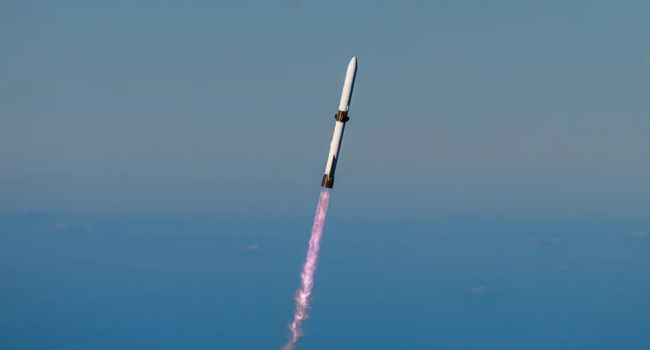
On November 11, 2025, NASA’s ESCAPADE mission — a pair of identical satellites designed to study the atmosphere of Mars — launched from Cape Canaveral, Florida. They ascended on Blue Origin’s New Glenn rocket, marking several important firsts. This was not just another mission to the Red Planet: it opened a new era of interplanetary travel, demonstrated the progress of the private space sector, and laid groundwork for future colonies. Here is why this flight became a true breakthrough.
First Mission to Mars in Five Years
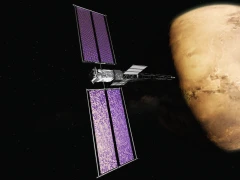
The last launch to Mars took place in July 2020, when the Perseverance rover and the Ingenuity helicopter lifted off atop an Atlas V. Since then, the Red Planet had awaited new visitors — and now they have arrived: the two ESCAPADE orbiters (Escape and Plasma Acceleration and Dynamics Explorers), nicknamed Blue and Gold after the colors of the University of California, Berkeley.
The mission is unique because it is the first time NASA has sent two satellites into Martian orbit at once. Each carries an identical set of instruments to create 3D maps of how the solar wind interacts with the planet’s magnetosphere. The results will help scientists understand how Mars lost its dense atmosphere and surface oceans four billion years ago — a key to understanding why it became a cold desert.
Robert Lillis, the principal investigator from UC Berkeley’s Space Sciences Laboratory, emphasized that ESCAPADE would provide a stereo perspective, offering two viewpoints at once to observe how the solar wind strips away the atmosphere in mere minutes.
A New Route: From Lagrange to Mars
ESCAPADE is not flying directly to Mars. The satellites will first travel to the Lagrange Point L2, about 1.5 million kilometers from Earth, where the gravitational forces of Earth and the Sun balance. There they will spend a year studying space weather. In 2026, a gravitational maneuver will accelerate them toward Mars, with arrival planned for September 2027.
This flexible trajectory solves the long-standing problem of launch windows. Earth and Mars align only once every 26 months, and delays caused by weather or technical issues can disrupt schedules. The new route allows spacecraft to be launched over several months like a queue headed for Mars. For future fleets numbering in the hundreds or thousands, this is revolutionary.
Rocket Lab Enters Interplanetary Space
The satellites were built by Rocket Lab, a California company previously known for its small Electron rockets designed for Earth orbit. ESCAPADE is its first interplanetary mission, although CAPSTONE in 2022 flew to the Moon. Rocket Lab is also working on a private mission to Venus’s clouds to search for life, as well as a concept for returning the Martian samples collected by Perseverance.
Peter Beck, Rocket Lab’s CEO, noted that the company is transitioning from Earth orbit to the Solar System.
New Glenn: First Operational Mission and a Successful Landing
New Glenn is Blue Origin’s first orbital rocket, created by a company founded by Jeff Bezos. This ninety-eight-meter vehicle can lift 45 tons to low Earth orbit, and its first stage is reusable for more than twenty-five flights. Before November 2025, only a test mission had flown — in January with the Blue Ring payload — which ended with an unsuccessful landing.
ESCAPADE was the first mission carrying customer payloads. The rocket executed its trajectory flawlessly, and the first stage successfully landed on the Jacklyn platform in the Atlantic — only the second such landing in history after SpaceX. Ariane Cornell of Blue Origin stated that the company considered itself open for business and saw this as a new chapter for the space industry.
In Short
The ESCAPADE launch on New Glenn on November 11, 2025, is a breakthrough: the first mission to Mars in five years, the first pair of satellites heading to Martian orbit together, and a flexible L2-assisted route suitable for future fleets. Rocket Lab made its interplanetary debut, and New Glenn completed its first operational mission with a successful booster landing. The mission will help reveal how Mars lost its atmosphere, paving the way for future colonization. Space is becoming more accessible.