make preferable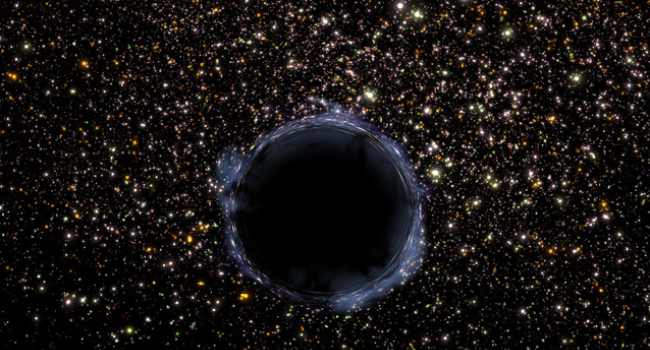
Dark matter may have formed even before the Big Bang, during an early phase of the Universe's expansion. This hypothesis was proposed by researchers from the University of Texas at Austin. Published in Physical Review Letters (PRL), this theory, called warm inflation, offers a new perspective on the origin of the mysterious substance that constitutes a significant part of the cosmos.
Traditional and New Approaches
According to widely accepted theories, the Universe began with the Big Bang, followed by cosmic inflation—a rapid expansion of space. However, alternative theories suggest that inflation could have started even before the Big Bang.
In the warm inflation model, scientists propose that during this phase, the Universe resembled a "hot bath" of particles and radiation. Weak interactions within this environment could have led to the formation of dark matter particles.
Key Findings of the New Study
- Warm Inflation and Dark Matter: The study suggests that dark matter could have successfully formed during inflation despite the exponential expansion of space, challenging most other models.
- Mathematical Precision: The developed model allows for precise calculations of the amount of dark matter, consistent with current astronomical observations.
The uniqueness of this model lies in the fact that dark matter is successfully created during inflation. In most other models, everything formed in this period vanishes due to the Universe's exponential expansion, said Katherine Freese, a theoretical astrophysicist and co-author of the study.
Future observations of relic radiation, such as CMB-S4 experiments, could confirm our theory of warm inflation, according to another co-author, Gabriele Montefalcone.
If the warm inflation theory is validated, it could transform our understanding of the early Universe's evolution and propose a new mechanism for the formation of dark matter.