make preferable
Researchers from Northern Arizona University have developed a unique method for identifying long-period comets well before they approach Earth. These objects, which remain invisible since their last pass near the Sun, leave behind meteor streams that have become the key to their detection. Details of the work are published in The Planetary Science Journal (PSJ).
How Does It Work?
Long-period comets, as they orbit the Sun, often remain out of observational reach for hundreds of years. This makes them potentially dangerous, as even a collision with a small object could lead to catastrophic consequences, including a global climate crisis on Earth.
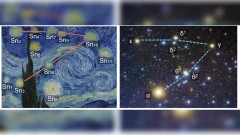
To address this issue, scientists focused on analyzing 17 known meteor streams formed by the remnants of long-period comets. Using mathematical modeling, they created "synthetic comets"—hypothetical objects with trajectories matching the meteor stream data.
By comparing these models with historical data, the researchers accurately determined the potential locations of real comets, their speeds, and directions of movement. This breakthrough allows astronomers to target telescopes at specific areas of the sky to search for potentially hazardous objects in advance.
Prospects and Future Research
The method has already proven effective on a limited sample, but the researchers plan to significantly expand their study. In the near future, they aim to analyze an additional 247 meteor streams using data from the upcoming Survey of Space and Time project. This initiative, launching in the next few years, will provide more detailed information on the dynamics of meteor streams and their parent comets.