make preferable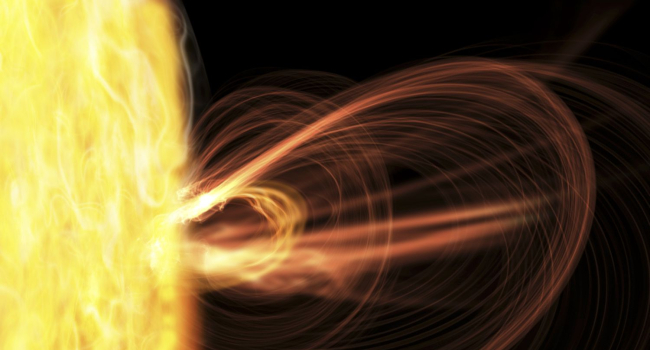
On July 14, a powerful X-class flare was recorded on the Sun, which was the most powerful of the recent ones. NASA's Solar Dynamics Observatory captured the spectacular sight of the flare on the spot, codenamed AR3738.
The eruption caused brief radio outages in Australia, Southeast Asia and Japan. This phenomenon often occurs after powerful solar flares due to the intense flux of X-rays and extreme ultraviolet radiation emitted during these events.
Radiation from solar flares ionizes the upper atmosphere. This ionization creates a denser medium for radio signals to propagate, making long-distance communication difficult. As the radio waves interact with the electrons in the ionized layers, they lose energy due to collisions, which can decay or completely absorb the signals.
Solar flares are eruptions on the Sun's surface that emit powerful bursts of electromagnetic radiation. They are caused by the release of magnetic energy accumulated in the solar atmosphere.
Depending on the size of the flare, they are classified into several classes, the most powerful of which are Class X flares. Then there are M, C, B and A class flares, each 10 times weaker than the last. Class A flares have no discernible effect on Earth. For each class, numbers from 1 to 10 (and higher for Class X flares) describe the relative strength of the flare.
The last solar flare reached magnitude X-1.27 on July 14, according to Space Weather Live.