make preferable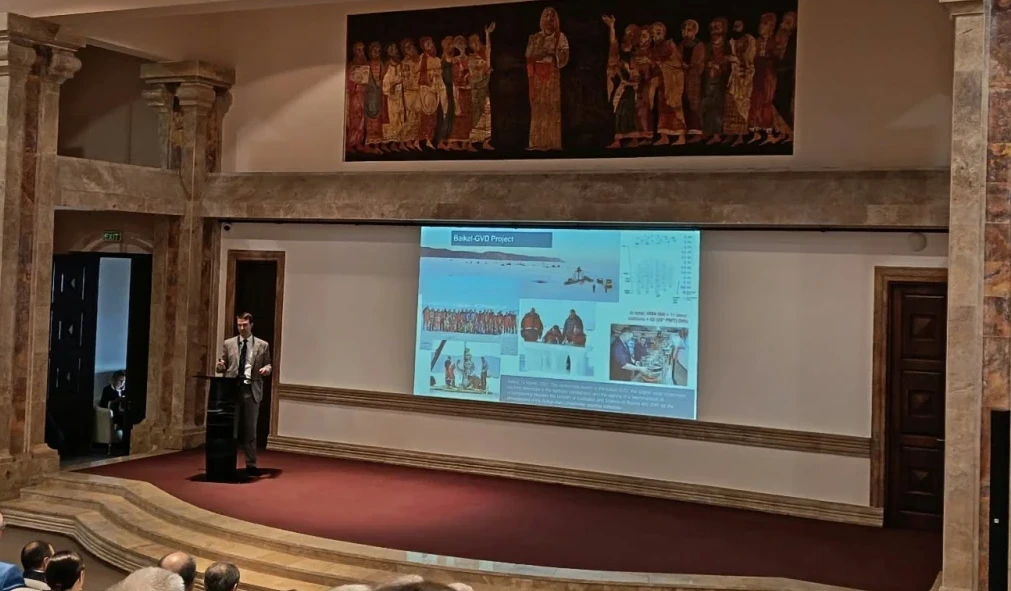
Grigory Trubnikov, Director of the Joint Institute for Nuclear Research (JINR), proposed increasing the number of Armenian staff members at the institute to about five new specialists per year. According to him, 11 representatives of Armenia currently work in Dubna, whereas in the best years their number reached 20. Trubnikov believes that young researchers should come to JINR for several years, gain experience and scientific qualifications, and then return to Armenia to lead their own projects.
This proposal was voiced during the JINR Days in Armenia, dedicated to the institute’s 70th anniversary. According to Trubnikov, cooperation between Dubna and Armenian scientific organizations is now going through a period of recovery after the downturn of 2020–2023, but joint publications and projects alone are no longer enough — the institute needs a new generation of researchers.
Scientific cooperation needs to be “renewed”
JINR and Armenian scientific organizations continue active cooperation despite the decline of recent years — against the backdrop of the COVID pandemic and other difficulties. According to Trubnikov, joint publications have already returned to pre-pandemic levels: more than 300 are published annually, and if joint work with CERN and other scientific centers is taken into account, the number exceeds 1,000.
At the same time, the number of Armenian employees at JINR is noticeably below the historical maximum. There are currently 11 of them, including five candidates of sciences and five doctors of sciences. In the best years, up to 20 representatives of Armenia worked in Dubna.
Trubnikov proposed sending about five new employees to JINR every year. In his view, this is not about permanent relocation: a researcher could spend two or three years at the institute, gain qualifications, work on international projects, and then return to Armenia to lead their own area of research or laboratory.
“Defend their dissertation, gain qualifications, be ready to lead a laboratory or a team — help create the conditions here together, return, and advance science in Armenia,” is how the JINR director described the proposed model.
According to him, the financial opportunities for such cooperation exist, and the necessary joint projects are already in place. Now the main task is to increase the human resource base.
JINR is expanding its scientific agenda
The need for new specialists is also linked to the fact that JINR itself is gradually moving beyond the boundaries of traditional high-energy physics.
Today, life sciences, materials science, chemistry, information sciences, and computational methods are developing at the institute. Trubnikov named these areas among the priorities for further cooperation with Armenia.
As an example, he cited JINR’s infrastructure for working with large volumes of scientific data. The institute has a major computing complex, and Yerevan is already connected to this distributed infrastructure: researchers from Yerevan State University, the A. Alikhanyan National Science Laboratory, and other organizations can send computational tasks to Dubna.
There is also joint work in environmental monitoring. Scientists are studying environmental pollution by heavy metals and radioactive substances, and they are also using JINR equipment to analyze samples collected in Armenia.
A separate area is seismology. In Armenia, inclinometers have been installed that record changes associated with seismic activity. A similar network is gradually being created in other regions as well. According to Trubnikov, researchers hope to better understand the processes that occur before and after earthquakes, although the possibility of using such measurements for advance earthquake warning remains a subject of scientific research.
In Dubna, they are searching for element 119 and studying cosmic radiation
One of the main scientific projects Trubnikov spoke about remains the attempt to synthesize the 119th chemical element. The experiment began in early June at the G. N. Flerov Laboratory of Nuclear Reactions, which was headed for many years by Yuri Oganessian.
According to the JINR director, researchers have already managed to achieve unprecedented experimental precision — about 150 times higher than that of previous facilities of this type. However, the decay chain of the nuclei of element 119 has not yet been detected.
Scientists are also considering the possibility that the element following oganesson may in fact be unattainable. But if element 119 exists and can be produced, the experiment will continue Oganessian’s work, which played an important role in expanding the periodic table.
Another major project is related to the study of neutrinos. A giant neutrino telescope operates in Lake Baikal: its detector is placed in the water at a depth of about 1.5 km, and the overall size of the installation approaches one cubic kilometer. It records neutrinos of cosmic origin, including particles that may carry information about processes in active galactic nuclei.
Last year, China officially joined the project. Together with Chinese partners, new detecting elements have already been installed in Baikal, and a possible expansion of the installation to 30 cubic kilometers is now under discussion.
At the same time, the telescope is viewed not only as a tool of fundamental physics. According to Trubnikov, the installation also makes it possible to obtain data on Baikal’s seismic activity, radioactive processes in the Earth’s crust, and the properties of water.
From fundamental physics to medicine and industry
A significant portion of the projects presented by Trubnikov is related to applied research.
At JINR, a detector is being developed that can monitor the state of nuclear reactor fuel using the antineutrino flux. The device is placed under the reactor and makes it possible to obtain information about the fuel composition without direct interference in the reactor’s operation.
The radiobiology field is also developing. Experiments are being conducted at JINR related to the impact of cosmic radiation on biological objects. Together with Russian space and biomedical organizations, the institute is preparing new studies, including for future space missions.
At the same time, a medical proton accelerator is being created in Dubna. Its diameter is about 4 meters and its mass is about 130 tons. According to Trubnikov, the installation is intended to be used both for biological research and, in the future, for work with cancer patients.
Another new JINR program is designed for the next five to seven years and is dedicated to radiochemistry and radiobiology. The institute plans to create a multifunctional complex with a new accelerator for producing radionuclides and developing radiopharmaceuticals. Organizations from Russia, Vietnam, South Africa, and Cuba are already participating in the project; JINR also expects the participation of Armenia, Kazakhstan, and Uzbekistan.
This expansion of topics is also changing Armenia’s potential role in cooperation with Dubna. If earlier the main ties were built around particle physics and information technology, Armenian universities and research institutes now have more opportunities to join projects in biology, chemistry, materials science, medicine, and computing.
Seven decades of cooperation
Trubnikov also devoted a significant part of his speech to the history of relations between JINR and Armenia. The institute’s archive has preserved correspondence from 1960 between JINR director Dmitry Blokhintsev and one of the founders of the Armenian scientific school, Artem Alikhanyan. The letters discussed Dubna’s participation in creating scientific infrastructure in Yerevan.
JINR took part in the design and construction of the Yerevan ring accelerator ARUS, launched in 1967. Later, the cooperation continued in other experiments, and Armenian researchers regularly came to Dubna.
These ties also played an important role in the 1990s. According to Trubnikov, cooperation with JINR helped Armenia preserve scientific contacts and establish channels of interaction with international research centers, including CERN.
Today, JINR wants to use this historical foundation for the next stage of cooperation. Dubna already has infrastructure, funding, and international projects, while Armenia has scientific schools and young researchers. Trubnikov considers the main problem to be the lack of new personnel who could connect these two systems.
That is why the proposal to send several new Armenian specialists to JINR every year looks not so much like an expansion of the existing program as an attempt to change the very model of cooperation: scientists should not simply participate in individual experiments, but pass through an international scientific environment, gain experience, and return with it to Armenian universities and research centers. For Dubna, this is simultaneously a way to preserve long-standing ties with Armenia and to form a new generation of participants in major international scientific projects.