make preferable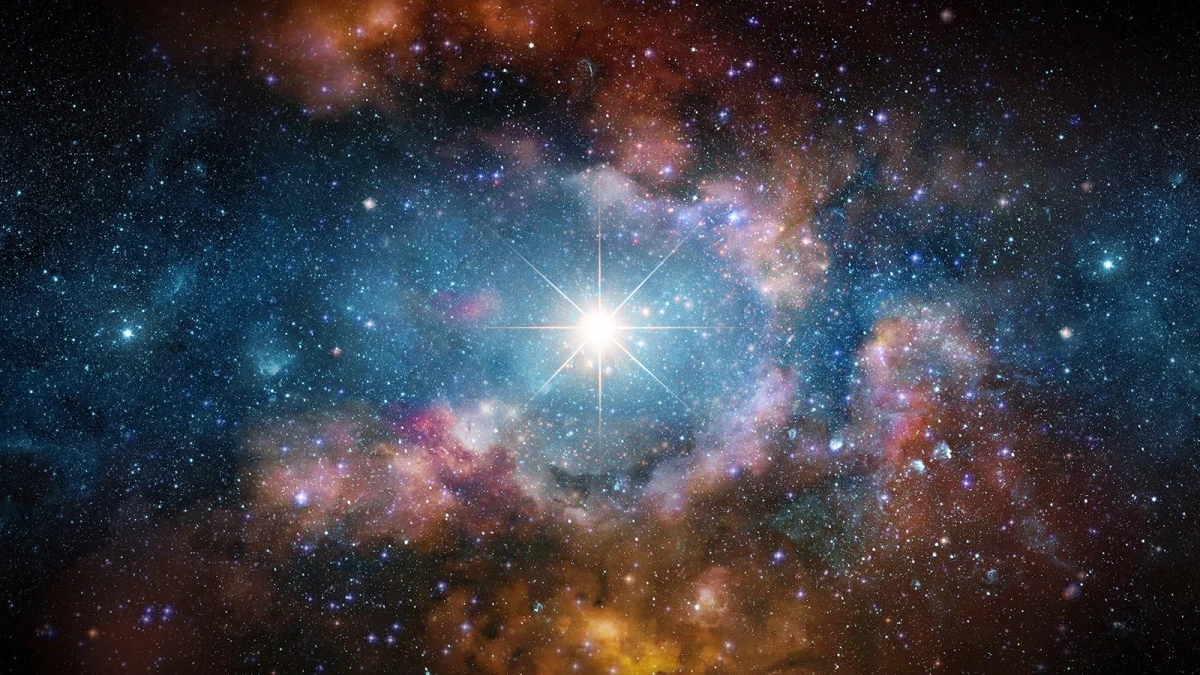
We are used to imagining the Universe as an infinite space that extends in all directions. But astronomers have no proof either that it is truly infinite or that it ever comes to an end. Moreover, even if space turns out to be flat — and that is exactly how it appears in our observations — this still does not mean that the Universe is infinite, Sciencedaily.com reports.
It may be finite, closed in on itself, and yet have no edge at all. And space could, in principle, be flat while at the same time arranged in such a way that, by moving constantly in one direction, you could eventually return to your starting point.
The problem is that we see only part of the Universe. And perhaps we will never see the rest.
We do not observe the entire Universe
The boundary of the observable Universe is not merely the limit of modern telescopes’ capabilities. It is defined by a fundamental restriction: there is a region of space from which information has not yet had time to reach us, or may never be able to do so.
That is why beyond the cosmic horizon there could be anything at all — including simply a continuation of the familiar Universe, with other galaxies, stars, and planets.
The simplest hypothesis says exactly that: space continues as far as the imagination can reach. But the question remains — how far?
And this is where a problem begins that cannot be solved by ordinary observation.
We cannot simply fly to the edge of the Universe and see what lies beyond it. In fact, it is possible that no boundary exists at all.
And that is not a contradiction.
A finite Universe does not have to have an edge
Earth has a finite surface area, but on the surface itself there is no place where the land suddenly ends and the “edge of the planet” begins.
You can walk along Earth’s surface in one direction for as long as you like and eventually return to where you started.
The same, in principle, is possible with space. It may have a finite volume yet no boundary.
To imagine such a geometry, it is enough to start with an ordinary plane. On a flat sheet of paper, the sum of a triangle’s angles is 180 degrees, and parallel lines do not intersect.
Now imagine Earth’s surface. If you draw a huge triangle on it, the sum of its angles will be greater than 180 degrees. And two lines that in a certain sense start out parallel may meet at the North Pole.
This makes it possible to determine the curvature of space without leaving space itself.
A similar experiment can be carried out with the Universe — only instead of a gigantic triangle, astronomers use light that has been traveling toward us for billions of years.
The cosmic microwave background reveals the shape of space
One of the main tools here is the cosmic microwave background radiation — the oldest light left over from the early Universe.
It emerged roughly when the Universe had cooled enough for light to stop constantly interacting with dense, hot plasma and begin to travel freely.
There are tiny temperature irregularities in the cosmic microwave background. Their properties allow scientists to test how light traveled through space and how curved that space is.
This is where an important detail appears.
If space had strong positive or negative curvature, light would travel along different paths. As a result, the characteristic structures in the cosmic microwave background would look different to us — their apparent size would change.
But the observed structures have approximately the scale expected for a flat geometry of space.
That is why astronomers say that the Universe appears flat to a very high degree of precision.
And here a seeming paradox arises: if the Universe is flat, shouldn’t it be infinite?
No.
Flat does not mean infinite
Imagine that we are trying to determine Earth’s shape while staying within a small city.
On such scales, the planet’s surface looks almost perfectly flat. If you construct a small triangle, its angles will add up to almost exactly 180 degrees. If you draw two lines, they will not noticeably converge.
But that does not make Earth flat.
It is simply that the region of measurement is too small compared with the scale of the planet’s curvature.
Something similar may be happening with the Universe.
The region we observe is enormous — we are talking about tens of billions of light-years — but theoretically the entire Universe may be much larger. If its curvature shows itself only on scales exceeding the observable region, we are simply unable to see it.
In that case, space may turn out to be finite and ultimately close back in on itself.
Theoretically, traveling constantly in one direction could one day bring you back to your starting point — much as a journey across Earth can return a person to where they began.
True, cosmic expansion makes such an experiment practically impossible: many regions of the Universe are already beyond our cosmic horizon.
But even that is not the strangest possibility yet.
The Universe may be flat — and still close back on itself
Here it is necessary to distinguish between geometry and topology.
Geometry describes the local properties of space: curvature, distances, angles, and the behavior of lines.
Topology answers a different question: how space is arranged as a whole and which of its parts are connected to one another.
For clarity, imagine an ordinary sheet of paper. Its geometry is flat. Now roll it into a cylinder and join the opposite edges.
Locally, the surface will remain flat. A small triangle within it will still behave like an ordinary Euclidean triangle. Parallel lines will remain parallel.
But now one of the directions of space is closed into a loop.
In other words, space can look flat in each individual region and at the same time have a finite, closed structure overall.
In mathematics, there are many such constructions. A cylinder, a torus, a Möbius strip, and a Klein bottle help illustrate just how unusual the ways of connecting space can be.
For three-dimensional space, mathematicians have found 17 different flat topologies that can have zero curvature. Among them are far less intuitive constructions, such as Hantzsche–Wendt space.
For physics, this means one important thing: measuring curvature by itself still does not answer the question of the Universe’s global shape.
Astronomers are looking for signs that the Universe is closed
If space really does connect back to itself, then in theory this should leave observable traces.
For example, the same object might be visible from different directions. Its light could travel around the Universe along different paths and reach us as if it were coming from several different sources.
Such searches are also being carried out using the cosmic microwave background. If the Universe is closed on a relatively small scale, identical structures in the ancient radiation could repeat across different parts of the sky.
So far, no convincing evidence of such a “cosmic echo” has been found.
Within the limits of available observations, space appears geometrically flat, and there are no signs that it closes back on itself.
But this is still not a final answer.
If the scale of such a topological structure is far greater than the observable Universe, its traces may simply lie beyond our ability to detect them.
There may be no final answer
That is why the question “Is the Universe infinite?” turns out to be much more complicated than it seems.
It may be infinite and continue forever. It may be finite but have no edge. It may possess curvature that cannot be noticed within the region available to us. Or space may remain locally flat but be globally closed and connected back to itself.
And all of these options may be compatible with what we observe today.
Finally, there are also far more exotic cosmological scenarios in which our observable Universe is only one region of a much larger structure, potentially including other “bubbles” of spacetime.
But here we run up against a fundamental boundary of science: the observable Universe may turn out to be only part of the reality that is, in principle, accessible to us.
We can measure its geometry ever more precisely, study the oldest light, and search for repeating structures. But if the global shape of space reveals itself only beyond our cosmic horizon, no telescope will be able to simply look there.
And so it is entirely possible that one of the most fundamental questions about the Universe — whether it is actually finite — will forever remain a question not about what lies far away, but about what we are fundamentally unable to see.