make preferable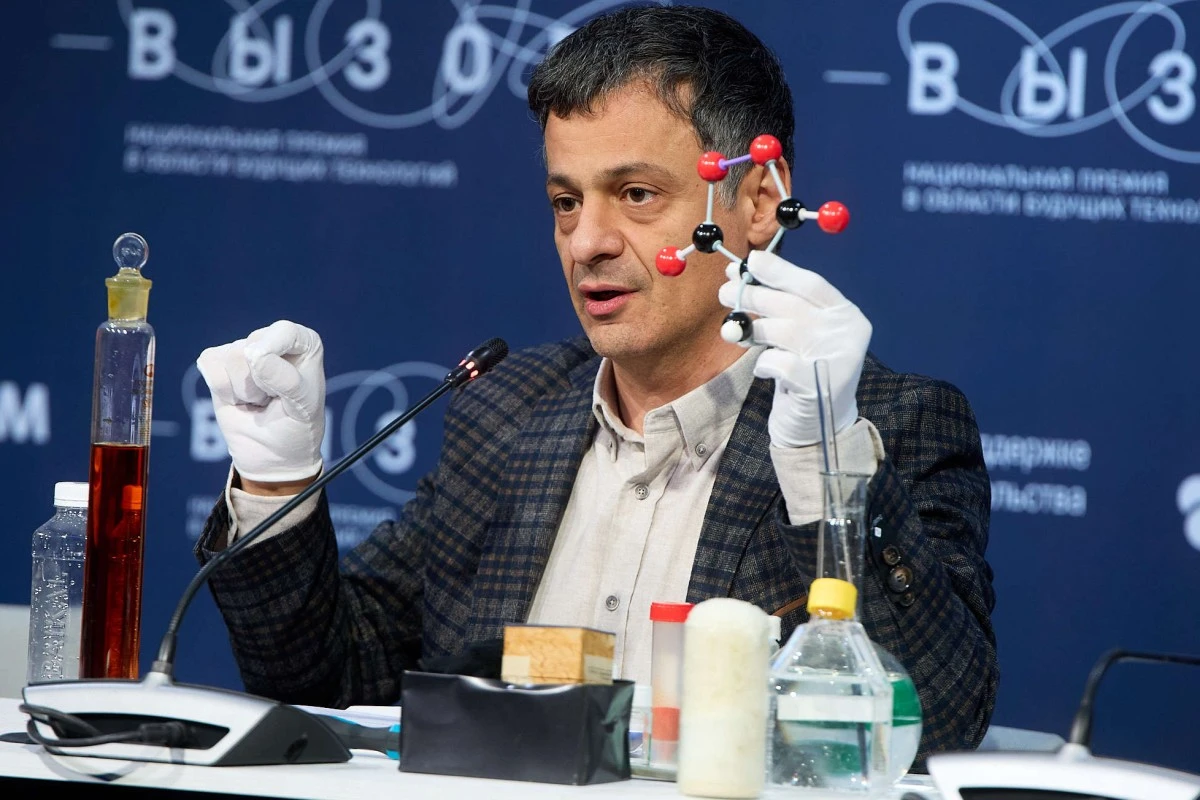
The development of artificial intelligence is a major technological revolution that is moving humanity into a new stage of history. Speaking at the round table “AI in Science and Industry: Challenges and Opportunities,” organized as part of the JINR Days in Armenia, Skoltech professor Artem Oganov said this.
According to him, AI will take over a significant share of routine problem-solving work, while the ability to pose new questions, develop scientific ideas, and turn knowledge into technologies and products will become increasingly valuable.
“This is a major revolution, a new technology that is moving humanity into a new stage of history. Of course, there will also be some element of evil, as with any major technology: 80% is good, 20% is evil,” Oganov said.
The New Role of Humans in the Scientific Process
According to Oganov, the development of AI is changing the very notion of the scientist’s role. He noted that until recently he himself viewed a scientist primarily as a person who solves problems. Oganov said that he used to argue constantly with his teachers, who believed that formulating the problem was the most important part of scientific work. He acknowledges that both sides were right to some extent in that debate. However, he believes that the emergence of AI has significantly changed the balance between posing problems and solving them.
Today, obtaining an answer to a complex problem can take significantly less time than before. As an example, Oganov points to AlphaFold: problems that researchers might have worked on for decades can be solved by the system in 88 hours. As a result, answers themselves are becoming “cheaper” — increasingly accessible — while the value of a correctly formulated question, on the contrary, is growing.
In the professor’s view, solving many problems is to a significant extent technical and routine in nature. Even in the case of people with outstanding problem-solving abilities, a substantial part of this activity is not necessarily creative. It is precisely this component of scientific work that AI is gradually capable of taking over.
Under these conditions, Oganov believes, the importance of human curiosity is increasing — the ability to ask fundamental questions about the nature of the surrounding world. He sees the childlike urge to keep asking “why” as one of the key human traits.
According to him, this curiosity disappears with age in many people, yet preserving it will be of fundamental importance for the society of the future. Oganov regards the disappearance of the ability to ask questions as one of the negative consequences of human development, since scientific inquiry begins precisely with a fundamental question.
Post-Revolutionary Man
The professor suggests that in the future society will have a particular need for people capable not only of obtaining scientific results, but also of seeing their further implications. As an example, he cites Max Planck: the initial result concerning the need to quantize energy in order to describe the spectrum of a black body became the foundation for a far more sweeping change in ideas about nature. According to Oganov, this is no longer merely about solving a specific problem, but about the ability to understand that the result obtained requires a new description of the world.
It is precisely such specialists, capable of developing new understanding and shaping new scientific ideas, who, in Oganov’s opinion, will remain in demand regardless of the development of artificial intelligence. He links this ability with creativity and human potential.
A separate category of scientists of the future, the professor believes, will consist of specialists capable of translating scientific knowledge and ideas into practical application — creating technologies, products, and instruments on their basis.
Oganov does not expect science to disappear under the influence of artificial intelligence. On the contrary, he believes its center of gravity will change: from solving problems, which AI is performing ever more efficiently, scientific activity will shift toward posing new questions, developing ideas, and putting them into practice. He sees this scenario as positive and as grounds for optimism.