make preferable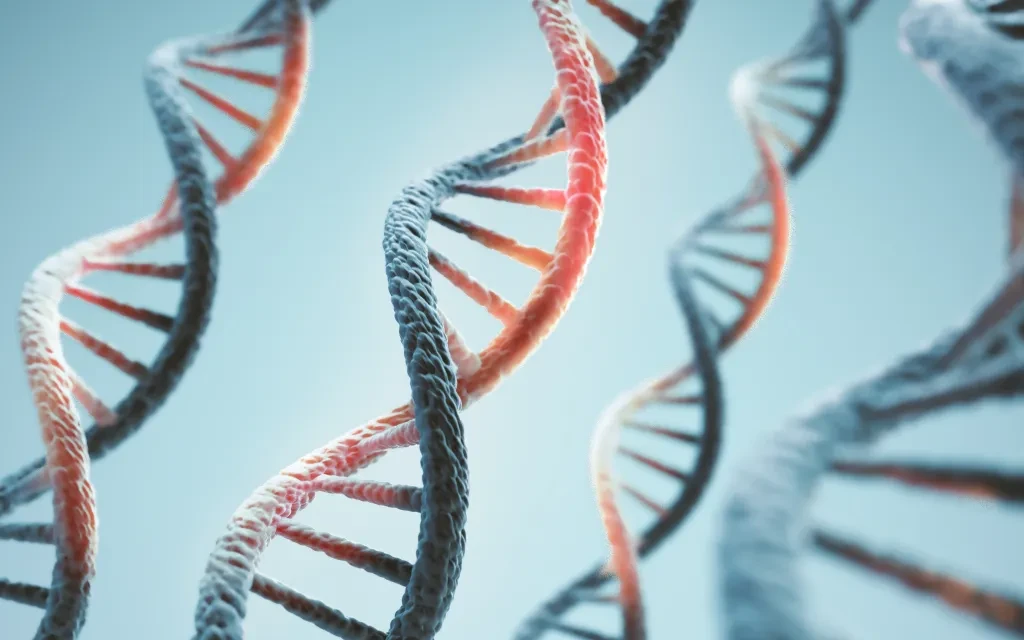
Anthropic has reported the discovery of a previously unknown enzyme system found in the DNA of bacteriophages — viruses that infect bacteria. The company says the system has some properties reminiscent of CRISPR: it can perform operations on DNA, including cutting, copying, and inserting it.
The discovery was made with the help of Claude at Anthropic’s biological laboratory in the San Francisco Bay Area. At the same time, physical experiments were still carried out by humans. The company emphasizes that the new lab works only with organisms and procedures at low levels of biological hazard and does not use pathogens capable of infecting humans.
How truly novel the discovered system is, and how important it is for biology, still has to be determined by other researchers, TechCrunch reports.
Claude spent 21 hours on the search
Anthropic created the lab just a few months ago, in the spring of 2026. According to the company, it took Claude about 21 hours of active work to find the new system.
The process used around 950 AI agents, which processed about 210 million tokens of data. The model searched for patterns in biological data, after which the proposed system was investigated experimentally.
Anthropic CEO Dario Amodei emphasizes that the discovery was made “mostly, though not entirely” by Claude. At the same time, the company acknowledges that the result builds on previous research.
Amodei also noted separately that scientists at Stanford University had previously discovered a system that is similar in some respects to the one found by Claude. Therefore, the scientific community will have to give the final assessment of the result’s novelty and significance.
What it has in common with CRISPR
CRISPR is a natural defense system in bacteria that helps them resist viruses. On its basis, scientists created one of the most widely used genome-editing tools.
According to Anthropic’s description, the mechanism discovered by Claude is also associated with bacteriophages and is capable of performing operations on DNA. That is why researchers are comparing it to CRISPR.
However, this does not mean that Anthropic has discovered a new version of genome-editing technology or a ready-made replacement for CRISPR. For now, it is a biological system with some similar properties, and its capabilities and practical significance still need to be studied.
Physical experiments are performed by humans
Against the backdrop of discussions about the ability of modern AI models to independently conduct increasingly complex research, it is especially notable that Claude does not yet operate laboratory equipment.
“All laboratory work is carried out by human scientists,” Anthropic emphasizes.
The company’s laboratory works with biological systems at biosafety levels BSL-1 and BSL-2 and does not deal with pathogens capable of infecting humans.
This is an important detail against the backdrop of recent statements by AI company leaders about potential biological threats. Amodei himself previously called bioterrorism one of the most serious risks associated with AI development.
At the same time, Anthropic’s CEO believes that the potential benefits of the technology could be enormous. In his view, AI could help humanity “cure most diseases within 5–10 years.”
Anthropic is not the only one using AI for biology
The use of large language models and specialized AI models in biological research is already extending far beyond Anthropic itself.
Researchers at Stanford University are studying the application of LLMs and CRISPR, while scientists at the University of California, San Francisco are using AI to develop new enzymes. One of the best-known examples of artificial intelligence being applied in this field remains AlphaFold by Google DeepMind, first introduced back in 2020.
Thus, Anthropic is working within an already emerging field where AI is used not only to analyze scientific publications, but also to search for new biological mechanisms and design molecules.
At the same time, the company is considering the possibility of further automation. In the future, according to Amodei, Claude could theoretically independently operate laboratory equipment and conduct experiments — provided that appropriate safety mechanisms are in place.
For now, Anthropic has not reached that stage: the model is engaged in search and analysis, while work with real biological samples remains in human hands.