make preferable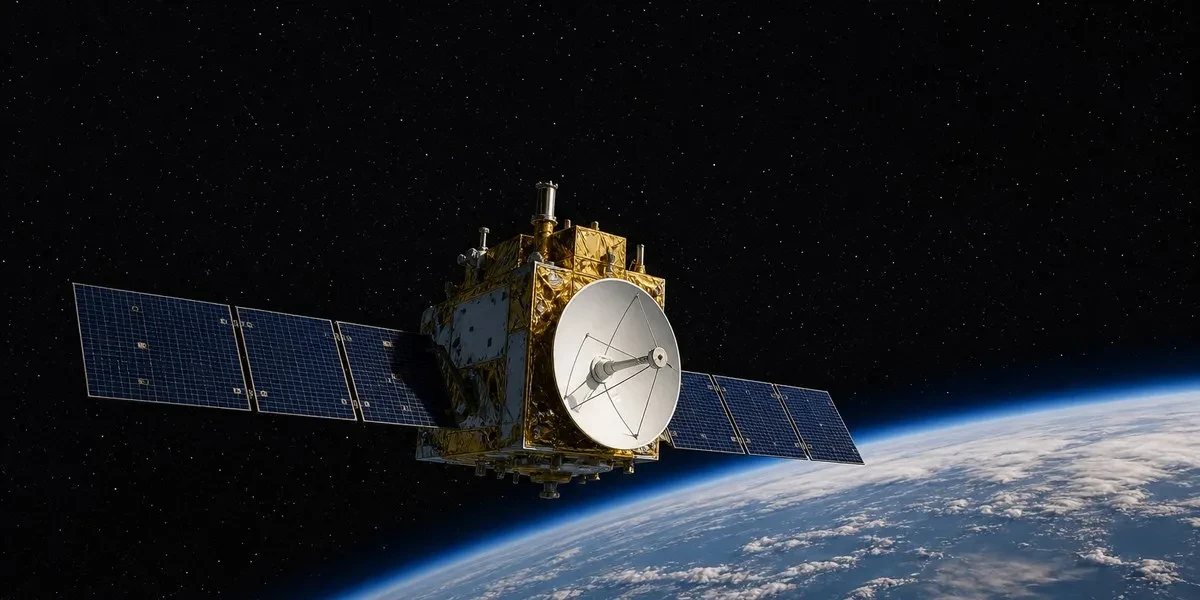
Chinese researchers have disclosed information about a previously unknown satellite-to-satellite refueling operation in high Earth orbit. This development could alter the balance of power in the global space race by making it possible to significantly extend the service life of satellites operating far above Earth’s surface.
A quiet milestone in orbit
In a paper under peer review in the Journal of Deep Space Exploration, a team of scientists from China’s state-funded Deep Space Exploration Laboratory reported that the country had “for the first time successfully carried out room-temperature refueling of a BeiDou satellite in high orbit,” according to a South China Morning Post report published on Saturday. The researchers did not specify exactly when the operation took place or which satellites were involved, but according to SCMP, scientific papers suggest that it may have occurred in early 2025.
This disclosure fits into an emerging pattern of Chinese activity in orbital servicing that has drawn international attention. In mid-2025, two Chinese satellites — Shijian-21 and Shijian-25 — were observed conducting rendezvous maneuvers in geosynchronous orbit at an altitude of about 35,000 kilometers above Earth; analysts interpreted the activity as a likely demonstration of in-space refueling. Earlier, in 2022, Shijian-21 had already been used to tow the decommissioned BeiDou-2 satellite to a graveyard orbit.
Strategic and military implications
The ability to refuel satellites in high orbit could allow China to extend the operational life of its navigation, communications, and reconnaissance spacecraft — assets with both civilian and military applications. The U.S. Space Force has taken note of China’s growing counterspace capabilities, noting that the country is targeting 140 orbital launches in 2026.
No country has previously demonstrated a confirmed satellite-to-satellite refueling at such altitudes; earlier on-orbit servicing efforts, including those carried out by Northrop Grumman, were life-extension missions rather than actual fuel transfer.
The path toward cryogenic fuels
Although room-temperature fuel transfer marks the first achievement of its kind, the researchers emphasized the need for further development. They highlighted the importance of creating technologies for transferring cryogenic fuels — substances at extremely low temperatures that provide greater efficiency for large spacecraft and deep-space missions. China’s BeiDou system currently includes 56 trackable active satellites, and the China Satellite Navigation Office announced earlier this year plans to upgrade the constellation in orbit.
The study’s findings are currently under peer review and have not yet undergone independent verification.