make preferable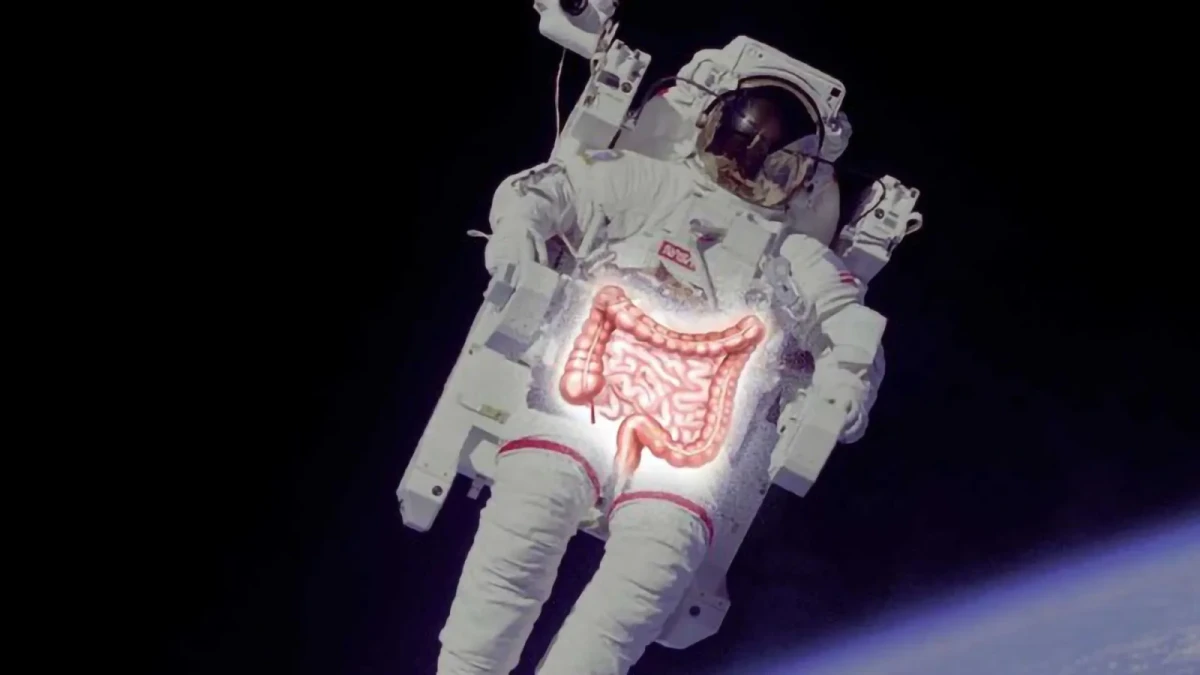
The human body begins to noticeably alter how the intestines function within the first weeks after reaching orbit. A study by researchers from the University of Copenhagen in collaboration with NASA showed that under microgravity conditions, gut bacteria in astronauts begin breaking down proteins more actively. This may be linked to slower movement of food through the intestines and could explain why constipation occurs so often during spaceflight.
The researchers analyzed blood samples from 52 astronauts who spent several months aboard the International Space Station. Based on the composition of metabolites in the blood, the scientists were able to identify changes indicating a restructuring of the processes taking place in the gut, according to Sciencedaily.com.
Gut bacteria begin processing more protein
Under normal conditions, gut bacteria largely process dietary fiber. However, when available fiber becomes insufficient, microorganisms begin breaking down proteins more actively.
This process is called protein fermentation and is not unusual in itself. But in astronauts, the researchers found signs that it intensifies within just a few weeks after the start of spaceflight and persists until their return to Earth.
The scientists suggest that the reason may be related to the absence of normal gravity.
On Earth, gravity together with intestinal contractions helps move food through the digestive tract. In microgravity, this process may slow down. If intestinal contents remain in the body longer, bacteria have more time to process protein.
“The absence of gravity in space likely causes food to move more slowly through the intestines, and this is consistent with our observation of signs of increased protein fermentation. This may also help explain constipation in astronauts,” says study co-author Henrik Roager.
Changes in the gut may affect more than just digestion
The researchers studied metabolites — small molecules that circulate in the blood and make it possible to indirectly assess the processes taking place in the body.
Some of the substances formed during protein fermentation can pass from the gut into the bloodstream and affect other organs. Therefore, changes in the activity of gut bacteria potentially have consequences far beyond the digestive system.
Of particular interest is the gut-brain connection. Some products of protein fermentation have previously been linked to adverse health effects, including possible changes in mood and the ability to concentrate.
At the same time, the new study primarily shows a link between spaceflight and changes in gut metabolism. Additional research will be needed to determine the specific health consequences of these changes for astronauts.
For flights to Mars, the problem will have to be addressed in advance
Astronauts spend months on the International Space Station, but future missions to Mars will be much longer. Therefore, even relatively small changes in how the body functions could become an important medical issue during long-duration space missions.
The researchers suggest that one preventive approach could be changing the diet — in particular, increasing the amount of dietary fiber or using prebiotics. Another possible approach is stimulating peristalsis, that is, the natural contractions of the intestines that move their contents along.
The faster food passes through the intestines, the less time remains for excessive protein fermentation.
“When planning longer space journeys, such as to Mars, measures may be needed to reduce the negative impact of spaceflight on the gut,” notes the study’s lead author, Georgia La Barbera.
Space data may prove useful for patients on Earth
The authors believe that the findings may also be useful for medicine on Earth.
Similar problems arise in people who spend long periods in bed. Due to low mobility, their intestinal function may also slow down and constipation may occur.
If further research confirms the link between slowed passage of intestinal contents and increased protein fermentation, the data obtained in space may help develop ways to prevent such disorders in bedridden patients.
Scientists found a pattern in data from 52 astronauts
The study was also unusual because of the scale of the collected material. The scientists used data from three studies conducted on the International Space Station and combined blood samples from 52 astronauts who participated in different missions over several years.
Usually, metabolism studies face large individual differences between people. In this case, data from different astronauts obtained during different space missions made it possible to identify the same pattern.
The scientists used untargeted metabolite analysis. Instead of searching for preselected substances, they examined a broad set of molecules in the blood and determined which of them changed during spaceflight.
In addition to signs of increased protein fermentation, the analysis showed minor changes associated with fish consumption and caffeine intake.
The study demonstrates that spaceflight can alter gut function fairly quickly. And the issue here may not be limited to an unpleasant symptom such as constipation: changes in the composition of the byproducts of gut bacteria potentially affect broader processes in the body. For future missions to Mars, this makes gut health yet another part of the life-support system that will have to be taken into account when preparing long-duration missions.