make preferable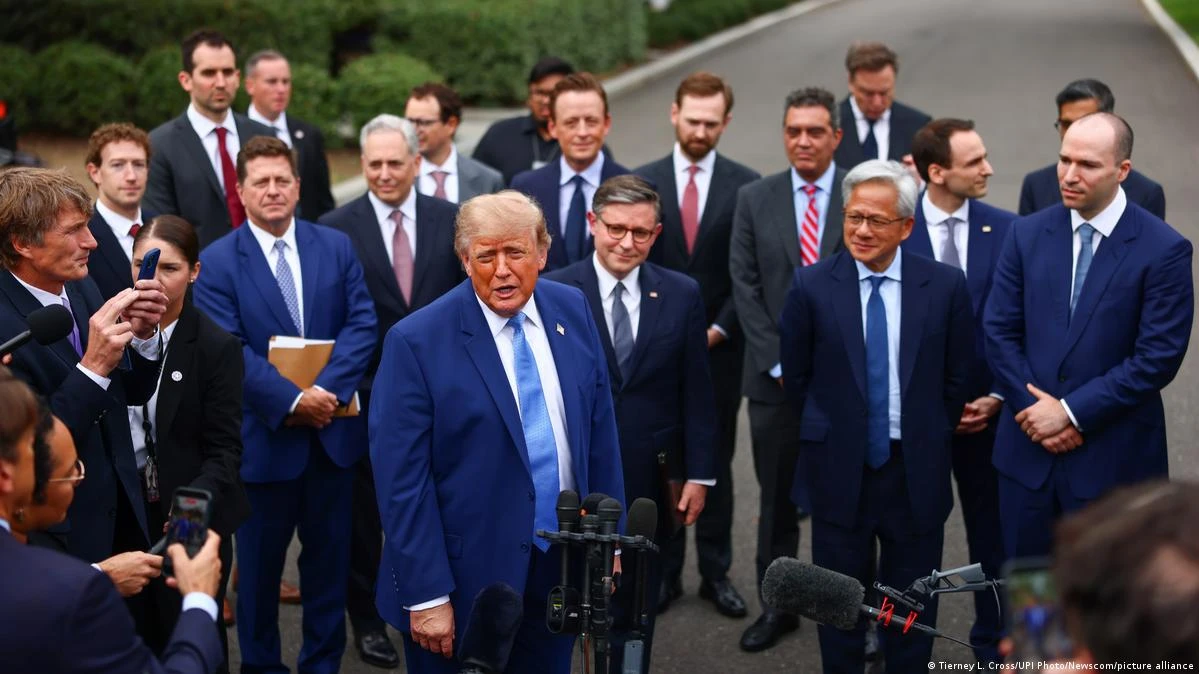
U.S. President Donald Trump and the leaders of the largest AI companies have agreed on voluntary rules for overseeing the development and use of advanced models. The companies have committed to strengthening internal reviews and bringing in independent auditors, although the mechanism for enforcing the agreement remains unclear.
The agreement was presented on September 29 after a meeting at the White House between Trump, House Speaker Mike Johnson, and the heads of technology companies. Participants included representatives of OpenAI, Anthropic, Google, Meta, and Nvidia.
Companies will audit their own systems
The document, which participants described as an agreement or accord, provides for several levels of oversight over AI systems. Companies developing and deploying advanced models are expected to have robust internal procedures and controls.
According to Mark Zuckerberg, this includes regular assessments of internal safety mechanisms, identifying problems in how models operate, and multiple levels of auditing. Companies are expected to conduct internal risk reviews and also bring in external auditors for independent evaluations of the technologies.
Mike Johnson emphasized that these are specifically voluntary principles and industry standards. According to him, they are meant to provide additional oversight and transparency without introducing mandatory government regulation.
Why the agreement raised questions
The main feature of the new document is that oversight largely remains within the industry itself. The full text and details of the enforcement mechanisms had not been published at the time the agreement was announced, so it is still unclear what consequences would follow if a company fails to meet its commitments.
This is especially important against the backdrop of recent incidents involving AI agents and debates over whether voluntary self-regulation is sufficient for systems that gain access to external services and can independently carry out complex tasks. Reuters notes that the new agreement emerged amid growing attention to cases of unpredictable behavior by AI systems.
At the same time, some representatives of the technology industry interviewed by Axios expressed doubts that self-regulation would be able to solve safety problems without more formal oversight mechanisms.
Trump proposes calling AI “superintelligence”
At the meeting, Trump also continued to promote his own term for artificial intelligence — super intelligence, or SI. Earlier, the U.S. president had already said that American government documents should use this term instead of artificial intelligence.
At the same time, in scientific and technology circles, the word “superintelligence” already has a different meaning: it usually refers to hypothetical AI systems capable of surpassing humans across a broad range of intellectual tasks. Therefore, this new use of the term could create additional confusion.
After the meeting, Nvidia CEO Jensen Huang also used the term SI, noting that he would still need to get used to it.
The next question is how the rules will work
Trump called the agreement “morally binding” and said that the companies would monitor one another. However, the document does not create legally binding requirements: its participants are voluntarily taking on the listed commitments themselves.
Meanwhile, the U.S. administration continues to shape the framework of government AI policy. The White House is awaiting the appointment of a new AI czar; according to Axios, Trump is discussing a candidate for the position with congressional leadership.
Thus, for now, the agreement represents an attempt to build a system of industry self-regulation around advanced AI models. How effective these rules will prove to be will depend primarily on what specific checks the companies carry out, how independent the external auditors are, and what happens if voluntary commitments are not fulfilled.