make preferable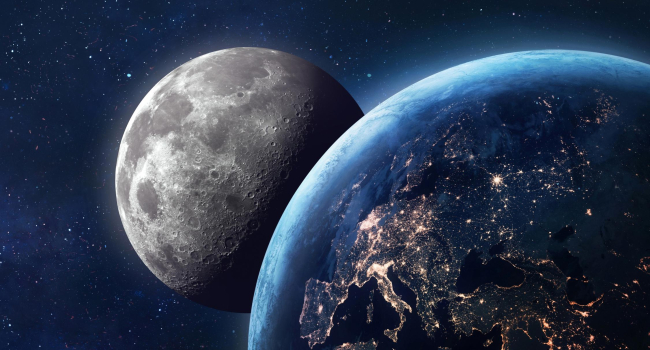
Time passes slightly faster on the Moon than on Earth, according to physicists at NASA's Jet Propulsion Laboratory at the California Institute of Technology. A paper describing the mathematical methods they used to carry out the calculations and their results was posted on the preprint server arXiv.
Several organizations and companies today are interested in exploration and economic activities on the Moon, which means that it is necessary to establish a standardized lunar time that allows the synchronization of activities on the surface of the Moon, as well as the activities of spacecraft that orbit our satellite or somewhere between the Moon and Earth.
According to scientists, as the general theory of relativity explains, time moves faster or slower depending on the distortions of gravity. The difference in size between the Moon and Earth means that there is a difference in gravity and in the way time flows on both objects: it moves faster on the Moon than on Earth. And in order to ensure smooth operation of communications, dockings and landings of ships that require high precision, it is necessary to carry out more accurate measurements of the time difference between the Earth and the Moon.
The California team used mathematics to calculate the time difference between the Earth and the Moon, and between both bodies and the solar system's barycenter.
According to their findings, time on the Moon moves 0.0000575 seconds faster per day (57.50 μs/day) than on Earth. Based on this number, other calculations can be made: for example, if a person lived on the Moon for 274 years, he would be 5.76 seconds older than if he lived on Earth all that time.
The researchers' work is only the first step in establishing standardized lunar time. However, meetings will need to be held between different organizations to develop agreements that will ensure that everyone involved in any lunar activity follows the same standardized time.