make preferable
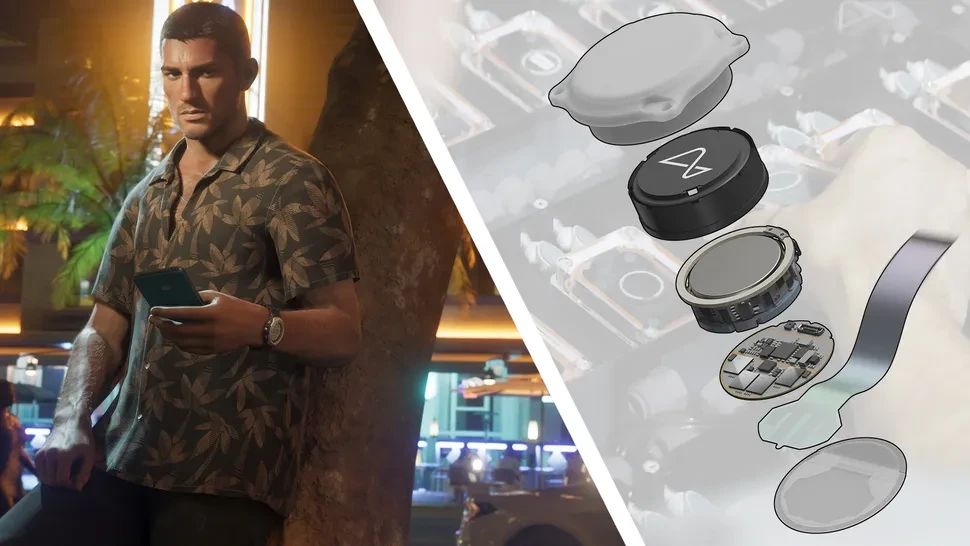
A participant in Neuralink's clinical trials demonstrated how he uses a brain implant to control a character in GTA 6: fighting, driving cars, shooting, and even piloting aircraft. Elon Musk's company released a short video of the experiment, showcasing the capabilities of a brain–computer interface in a video game. For the patient, who previously could mostly play simple games by tapping a tablet screen, this significantly expanded his options, TechRadar reports.
How a brain implant controls a video game
According to TechRadar, citing Neuralink's social media post, the video shows a trial participant playing through one of the missions in GTA 6. Data from the implant is overlaid on the gameplay footage.
Judging by the demonstration, the patient can perform complex in-game actions, including driving vehicles and taking part in shootouts. However, the system likely uses more than just brain signals: small physical movements, including finger taps, are visible in the recording.
Neuralink has not yet provided a detailed description of the experiment. The trial participant described the experience as unusual and said the implant had become a kind of portal to the world for him. Previously, his options were largely limited to games that required simple taps on an iPad screen.
Now he can interact with a much more complex gaming environment.
How thoughts become commands
Neuralink implants read signals from brain activity and learn to associate specific neural patterns with a person's intentions. To achieve this, the patient undergoes extensive training, during which the system identifies which signals correspond to particular actions.
For example, certain patterns of neural activity can be interpreted as a command to press a particular button. After training, the interface can convert the user's intentions into control signals for a computer.
Such technologies are especially important for people with severe motor impairments. They enable interaction with digital devices without the need to make conventional hand movements.
The GTA 6 demonstration shows that these systems could potentially go beyond simple cursor control or typing to enable more complex interaction with digital environments.
Why implants are not yet available to everyone
Despite the impressive results, Neuralink's technology remains experimental. As the company itself emphasizes, research is ongoing, and the implants have not yet been approved for widespread medical use. They are implanted only in volunteers participating in clinical trials.
Neuralink is not the only company working to develop brain interfaces. Others in the industry are pursuing similar developments, seeking ways to convert neural signals into commands for external devices.
The main value of these experiments is not the ability to play complex video games. They demonstrate how far technology can go in restoring a person's ability to interact with the world around them. If developers can make the implants reliable and safe enough for widespread medical use, they could give people with severe motor impairments much greater independence.