make preferable
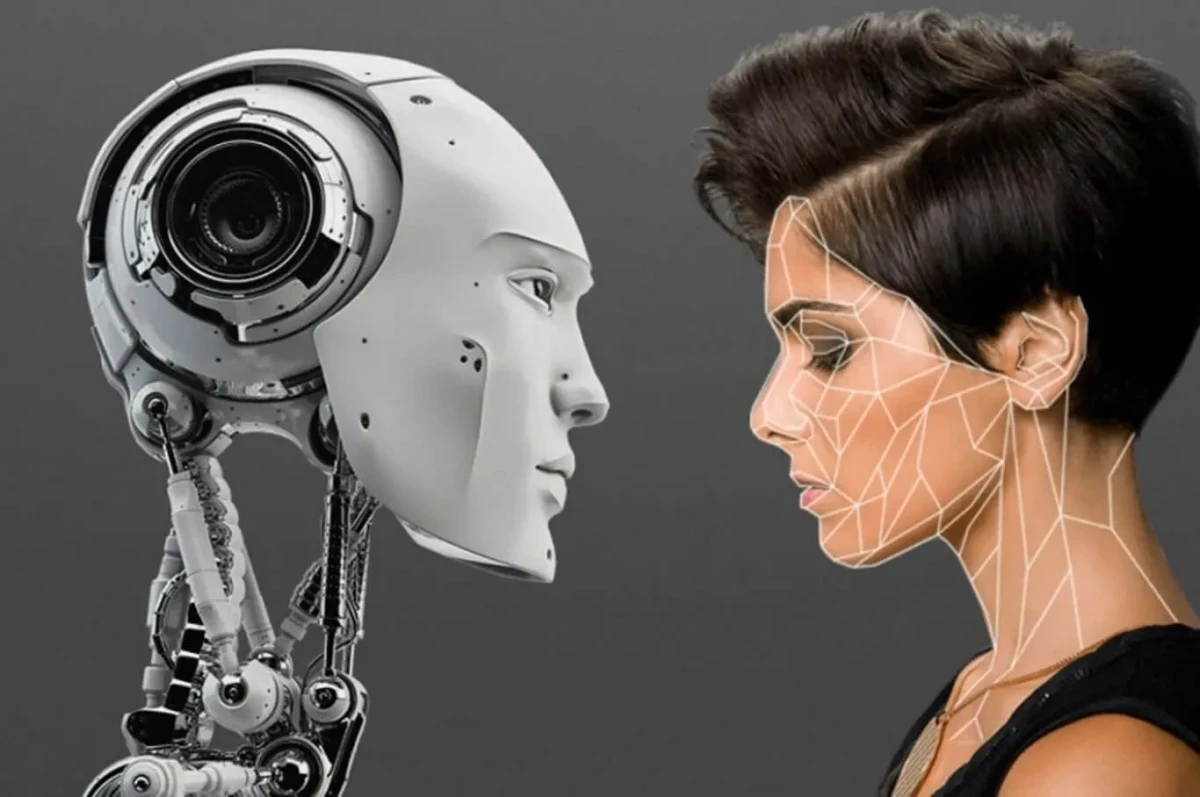
People can see anger, joy, and even affection in the behavior of simple geometric shapes. It is hardly surprising that similar reactions arise when interacting with robots—even if they are not conscious and feel nothing. Yet researchers studying emotional connections between humans and machines still have not agreed on exactly what should be called a robot's emotions. This was the conclusion reached by the authors of a review of 132 scientific papers published in the journal BMC Psychology.
The problem goes beyond terminology. Different studies measure entirely different phenomena, use methods that are not comparable, and sometimes produce contradictory results. As a result, science still cannot give a clear answer to a simple question: why do some people become emotionally attached to robots, while others see them purely as machines?
How geometric shapes taught us to see feelings
One of the best-known experiments demonstrating the human tendency to attribute emotions to inanimate objects was conducted back in 1944 by psychologists Fritz Heider and Marianne Simmel. Participants were shown a short animated film in which triangles and a circle moved around the screen. Despite the absence of faces, voices, or any signs of living beings, viewers interpreted what was happening as a genuine drama: the large triangle seemed aggressive, while the small triangle and the circle appeared to be characters who felt affection for each other.
This feature of human perception manifested itself long before modern robots appeared. In the 18th century, Jacques de Vaucanson's mechanical flute player, which simulated breathing using artificial lungs and a metal tongue, struck audiences as an almost living being. And in the early 2000s, people attributed loneliness to Kismet—a robotic head with a movable face, designed for social interaction by researcher Cynthia Breazeal.
In all these cases, people were responding less to the object's actual feelings than to their own interpretation of its behavior. The brain recognizes familiar social cues and fills in the picture: if something moves in a certain way, looks at us, or responds to our actions, we tend to interpret this as an expression of personality and emotion.
But this is precisely where a scientific problem arises: researchers do not always understand exactly which phenomenon they are studying.
Three different phenomena hidden behind one word
The authors of the new review found that the term “emotions” is used in at least three different senses in human–robot interaction research.
The first is the emotions a person attributes to the machine itself. For example, a user may decide that a robot is sad, happy, or afraid.
The second is the emotions a robot outwardly expresses. These may take the form of movements, vocal intonation, facial expressions, or other cues that imitate human emotional behavior. Such expressiveness, however, does not mean that the machine is actually experiencing anything.
The third is the person's own emotional response to the robot. A user may feel affection, irritation, anxiety, or attachment regardless of the feelings the device displays.
These are three different subjects of study, but scientific publications often conflate them. Some authors do not define emotions at all, while others use their own definitions that are difficult to compare.
“The term ‘emotion’ does not have a single meaning in the literature on human–robot interaction, giving rise to conceptual confusion,” the researchers note.
A similar ambiguity was found in the use of the concept of anthropomorphism—the tendency to assign human traits to inanimate objects. It can describe either a robot's appearance or a person's psychological response.
In the first case, it refers to design: a machine may have a face, eyes, a human voice, and gestures. In the second, it refers to how inclined the user is to see it as a living being with intentions and feelings.
The distinction is fundamental. A humanlike appearance alone does not guarantee emotional attachment. Moreover, studies of its effects have produced conflicting results. By contrast, according to the review, an individual's tendency to humanize surrounding objects is much more consistently associated with emotional responses to robots.
Why research still does not provide a reliable answer
The problem lies not only in definitions, but also in how scientists measure emotional connections with machines.
Most of the studies reviewed rely on questionnaires: participants are asked to describe their feelings, attitudes toward a robot, or impressions of interacting with it. Such data are useful, but they primarily reveal how people interpret their own experiences.
Behavioral responses and brain activity are studied much less frequently. The scientific picture is therefore largely based on participants' subjective answers rather than on comparisons across different measurement methods.
As a result, two studies may nominally examine emotional attachment to robots while actually investigating different things. One measures affection for a device with a humanlike appearance, another measures the ability to recognize the emotions it expresses, and a third measures a user's willingness to perceive the machine as a social partner. Comparing such findings directly is difficult.
The review's authors call on the scientific community to agree on basic terminology and describe the methods used more precisely. They also propose testing the accumulated findings through meta-analyses—statistical pooling of data from multiple studies that would make it possible to identify consistent patterns and distinguish them from chance differences.
Robots do not have to be alive to evoke real feelings
Clarifying terminology matters beyond academic research. Companion robots and social devices are gradually becoming part of everyday life, and understanding people's emotional responses to them is taking on practical importance.
If researchers define attachment, anthropomorphism, and emotional expressiveness differently, developers struggle to understand which features genuinely help people interact with robots and which merely create an illusion of social contact. Findings from individual experiments are also difficult to apply to real products and other settings.
Meanwhile, the central paradox remains unchanged: a person can experience entirely genuine emotions toward an object that itself feels nothing. A robot does not need to be conscious to evoke affection, anxiety, or attachment. Its behavior need only resemble familiar social cues.
A likely explanation lies in the way human perception works: we constantly try to recognize the intentions and emotions of those around us. This ability helps us navigate the social world, but sometimes leads us to see life where there is none. And as more machines communicate with us, move alongside us, and respond to our actions, it will become increasingly important to understand where a device's actual properties end and human interpretation begins.