make preferable
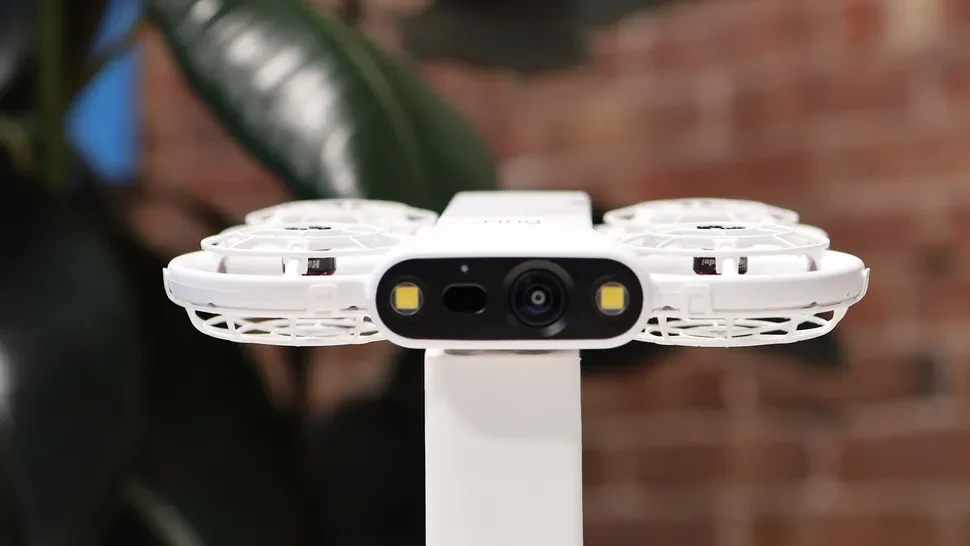
Amazon-owned Ring is preparing to launch Drone Cam, a home security drone—a compact device that moves independently from room to room, checks suspicious areas, and streams video to an app. At the same time, the company is reviving the idea behind the Amazon Astro mobile robot, introducing a new version designed to protect small businesses.
A drone that knows your home's layout
Ring Drone Cam is the result of nearly a decade of work on a flying video surveillance system. The company's previous attempts never reached customers: development of the first project began in 2016, and according to Ring founder Jamie Siminoff, finished devices were ready to launch in 2021. However, the launch was scrapped because of design compromises, limited flight time, and privacy concerns. Another attempt in 2025 also failed to reach a commercial launch.
Ring ultimately reconsidered its entire approach to the device. Rather than building a complex autonomous robot with numerous sensors, the company decided to make the drone as light as possible and move most of the computing to the cloud. Fewer sensors and onboard capabilities mean lower power consumption and less weight.
As a result, Drone Cam weighs around 160 grams. It has front-facing and downward-facing cameras, while its onboard functions are limited to basic tasks such as landing and connecting to Wi-Fi. It is controlled by AI Pilot, a cloud-based system that works with the Ring app.
Before using it, owners will need to guide the drone through their home so it can create a detailed map of the rooms. Ring calls this a digital twin of the home. The system will be able to account for the layout of rooms and obstacles, then direct the device to the desired location.
For example, if a Ring sensor reports an open back door or a window left open, the user can select the corresponding location on the map. The drone will take off from its charging station on its own and head there to inspect the area.
According to Siminoff, AI Pilot can navigate around people and other obstacles, but its capabilities have limits: for example, the device cannot yet independently plot an alternative route if a group of people blocks its path.
Loud noise is part of the security system
One of Drone Cam's unusual features is how noisy it is. Ring does not consider this a drawback: on the contrary, the loud sound is intended to make people in the home aware of the drone's presence. Siminoff explains that the device should not sneak up on anyone unnoticed.
It is primarily intended for use when the owners are away. However, the drone could also be useful at night: if a sensor detects movement downstairs while residents are asleep upstairs, the device can check what is happening. The company expects the noise itself to help deter intruders.
Drone Cam is not designed to go outdoors, but it can inspect the area outside a window. For example, if a Ring video doorbell detects someone at the front door, the drone can take off and aim its LED floodlights outside.
The app will also allow users to schedule automatic patrols of the home, including between floors: the device can navigate stairways. However, its navigation depends on Wi-Fi. If the internet connection drops, the drone is supposed to land wherever it is, provided it is safe to do so.
The design includes protective guards around all four propellers. These are intended to reduce the risk of injury if the device accidentally collides with someone. Ring also promises the same level of video data protection as its video doorbells, including two-factor authentication and encryption. Recording stops when the drone lands, and the camera is additionally covered when it is on the charging station.
The device's main limitation is battery life. It can fly for about five to eight minutes on a single charge, while a full recharge takes between 40 minutes and an hour. However, the company expects typical patrol flights to be much shorter, with the drone returning to base after checking the required area.
Ring Drone Cam will go on sale in the United States on January 27 for $249.99. Only a dark gray version will be available at launch. The company has not yet announced plans to enter other markets.
Amazon Astro returns as Ring Rover Cam
Ring also unveiled another device: Ring Rover Cam, a mobile robot for indoor security. It is based on Amazon Astro, a home patrol robot released in 2021 and discontinued in 2024.
Ring reworked the original design and added a light tower. Although it can be used in homes, the new device is primarily aimed at small and medium-sized businesses. Its price reflects that positioning: Ring Rover Cam will cost $999.99.
The robot can independently map a space and patrol it. During a demonstration, it patrolled a room set up to resemble an Amazon warehouse. A single patrol can last up to 30 minutes.
To monitor its surroundings, Rover Cam is equipped with a retractable periscope camera that rises to around 1.2 meters. The new light tower projects light onto the ceiling: if the owner loses sight of the robot, they can locate it by the blue circle of light. In an emergency, the device sounds a piercing siren, and the blue light changes to a rotating red signal resembling an ambulance's flashing beacon.
Ring Rover Cam will go on sale in the United States on December 16, ahead of the drone.
Both new products show how Ring is trying to expand conventional video surveillance beyond fixed cameras and sensors to devices that move independently around the area they protect. But they take different approaches. Drone Cam is designed for brief checks of specific areas of a home, while Rover Cam is intended for longer patrols of commercial premises.