make preferable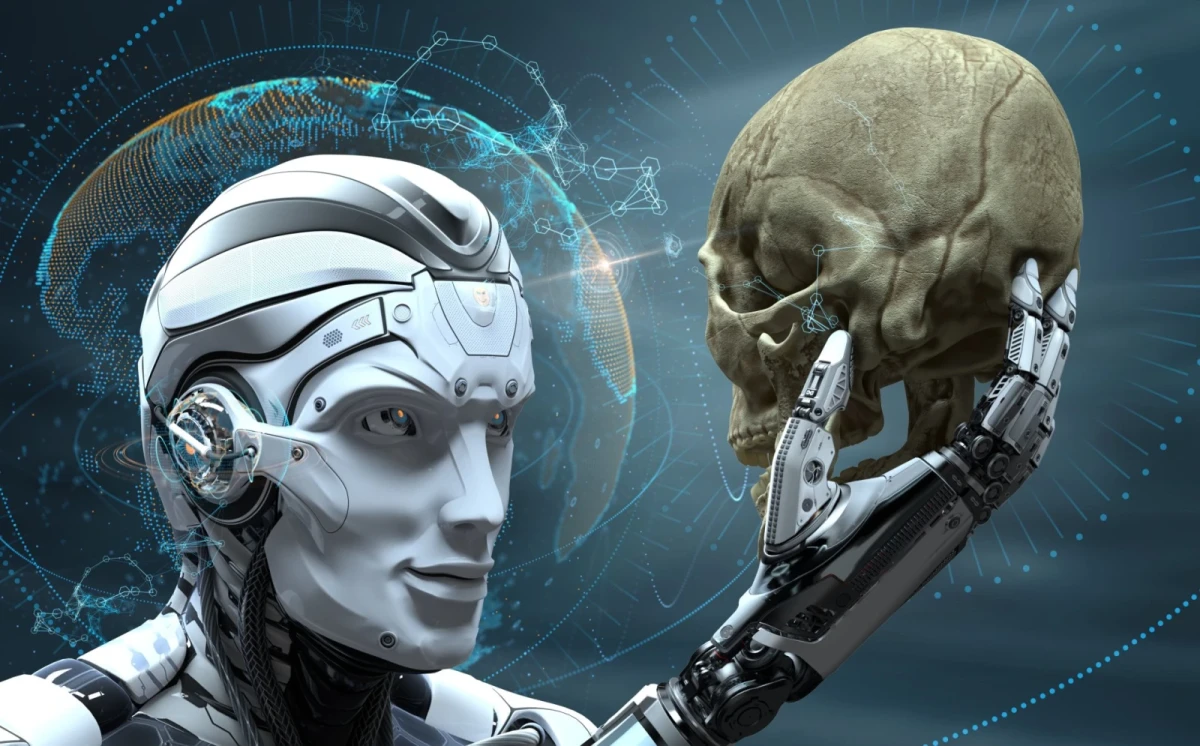
People are willing to acknowledge that artificial intelligence notices what is happening around it and responds to its environment, but they are much less likely to attribute consciousness to it. This is the conclusion reached by researchers at Ludwig Maximilian University of Munich (LMU). In experiments involving nearly 1,100 participants, even the most responsive AI was rated as less conscious than the least responsive human, although their behavior in the described situations was identical.
The study, published in the journal Cognition, shows that when evaluating machine intelligence, not only observable actions matter, but also the words people use to describe a system’s inner life, according to Sciencedaily.
One experiment — two different views of the mind
The study was led by Louis Longin from LMU’s Department of Philosophy of Mind. Together with his colleagues, he asked participants to evaluate characters that responded to their environment in different ways. Some barely reacted to external signals, while others interacted more actively with the world — for example, by responding to sounds or recognizing the emotional state of those around them.
One group was told about artificial agents, while the other was told about people. At the same time, the descriptions of the situations and the characters’ behavior were identical: the only thing that changed was whether the acting subject was a human or an AI.
Participants were then asked to rate how conscious each character was and how well they were aware of what was happening around them.
It turned out that active responsiveness to the environment increased ratings in both cases. However, when it came specifically to consciousness, a sharp divide emerged between humans and machines. Even the most responsive AI systems received lower ratings than humans with minimal reactions to external events.
In other words, identical behavior did not lead participants to consider human and artificial minds equally valuable.
Why awareness and consciousness are not the same thing
Particularly interesting was the result related to another concept — awareness. When participants were asked how aware a character was of the surrounding situation, ratings for humans and AI became much closer to each other.
The researchers suggest that the reason lies in the meaning of the words themselves. Awareness can be understood in a relatively neutral way: as the ability to notice information, recognize signals, and respond to what is happening. Consciousness, by contrast, implies something deeper — subjective experience, inner feelings, and the presence of a mental life of one’s own.
That is why it is easier for a person to say that AI notices changes around it or recognizes the emotions of an interlocutor than to claim that the system possesses consciousness in the human sense.
“People are quite willing to say that AI notices things and is aware of its surroundings. But when it comes to consciousness, they draw a clear line,” Longin notes.
At the same time, the study examined human ideas about consciousness, not the actual presence or absence of consciousness in machines. It does not allow us to determine whether modern AI systems are capable of subjective experiences.
Why the language used to describe AI matters
As neural networks continue to develop, people increasingly describe their actions in human terms: they speak of models’ intentions, plans, doubts, and even moral principles. Such language may be convenient, but it does not necessarily accurately reflect how the system works.
According to philosopher Ophelia Deroy, one of the study’s authors, people may use familiar psychological concepts simply because they lack more suitable words for describing AI. Machines are trained to speak and act like humans, so anthropomorphic phrasing arises naturally.
Study co-author Bahador Bahrami points out that companies and journalists often use exaggerated descriptions of AI capabilities, attributing independent intentions and moral hesitation to models. At the same time, people’s everyday judgments turn out to be more selective: they do not necessarily place artificial systems and the human mind on the same level.
Word choice can change perception. If we speak in terms of awareness, the differences between humans and machines in people’s ratings almost disappear. But if the discussion is about consciousness, the boundary becomes much clearer.
Behavior alone does not prove the presence of inner experience
The results of the study are important against the backdrop of the fact that modern AI systems are increasingly convincingly imitating human communication and reactions. However, the ability to carry on a dialogue, recognize emotions, or choose an appropriate response does not in itself prove that a system experiences anything.
At the same time, the evaluations made by the experiment’s participants cannot be considered a final answer to the philosophical question of machine consciousness either. They show how people perceive AI, not what is happening inside the models themselves.
The main conclusion of the work concerns human perception in particular: we may recognize AI’s ability to notice and process what is happening, but we are not quick to regard it as a conscious being — even when its behavior is indistinguishable from that of a human. And how easily we draw that line depends to a large extent on the words we use to describe the capabilities of artificial intelligence.