




 make preferable
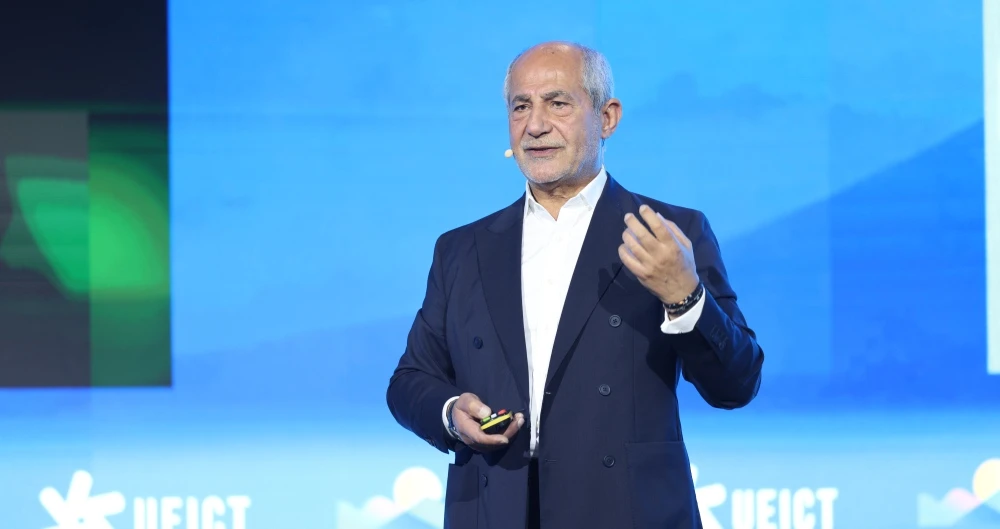
The rapid growth of artificial intelligence is changing not only the scale of the global semiconductor industry, but also the rules of competition within it. It is no longer enough for countries to invest in chip manufacturing: they need to find their own technological niches, meet the industry's growing demand for energy and skilled workers, and create conditions that attract large-scale investment. SEMI Europe President Laith Altimime made these remarks while outlining the key opportunities and risks facing the global industry.
A global industry where Nvidia's success cannot be replicated
Altimime stressed that the semiconductor industry is undergoing an accelerated transformation driven by artificial intelligence. He said growth has far exceeded earlier forecasts: while the global semiconductor industry was previously expected to reach $1 trillion by 2030, estimates have now been revised substantially, with figures of $2 trillion by 2030 or $3 trillion by 2035 under discussion. This growth requires not only increased chip production, but also the expansion of the entire AI infrastructure: high-performance computing, memory, advanced chip packaging technologies, equipment, and system design.
At the same time, Altimime cautioned countries and regions against trying to copy the most successful technology companies. In particular, he described Nvidia as an indispensable player in modern artificial intelligence infrastructure thanks to its position in the production of data center chips. However, in his view, trying to create a domestic copy of Nvidia would be a serious mistake. It would be far wiser to seek out emerging technological niches where such entrenched dominance has yet to develop.
He sees physical AI—technologies that embed artificial intelligence in real-world objects and production processes—as one such opportunity for Europe. Unlike cloud computing, where the United States and China dominate, Europe has a well-developed industrial, automotive, medical, and aerospace base that could give it a strong position in this field. This could also present an opportunity for Armenia: Altimime specifically highlighted the prospects for edge and embedded AI, as well as the need to move from designing individual chips to designing entire systems.
Energy could become a constraint on AI development
Altimime identified energy consumption as one of the most serious challenges facing the semiconductor industry and AI infrastructure. According to an estimate he cited, data centers already consume around 2% of the world's electricity. If the industry continues to grow at its current pace, its energy demand could increase severalfold by 2035.
This creates not only a technological problem, but also an economic one. Growing demand for computing capacity is accompanied by rising energy costs and geopolitical uncertainty. According to Altimime, some investors are already beginning to slow project implementation as they seek to assess and reduce the associated risks.
“Energy is absolutely essential to sustaining this exponential growth,” he stressed.
The head of SEMI Europe mentioned nuclear power as one possible response to growing electricity demand. Yet the problem extends beyond the cost of electricity: the rapid expansion of data centers can put pressure on power grids, meaning ordinary consumers will also feel the effects of capacity shortages.
Altimime also listed other factors that could disrupt the industry's development: cyber threats, tariff barriers, sanctions, geopolitical conflicts, and shortages of skilled professionals.
The semiconductor industry remains global, and no single country or region controls the entire supply chain. This is precisely why trade restrictions and political tensions between major powers have such a significant impact on it.
Investments now require government-level guarantees
Another change that Altimime associates with the period following the COVID-19 pandemic is the shift from primarily corporate agreements to government involvement in major investment projects.
Where companies once could negotiate directly at the executive level to establish production facilities, the construction of fabs and data centers now increasingly involves heads of state and government.
The reason, he said, lies in the scale of the investments and the associated risks. Reaching an agreement with a company or receiving promises from local partners is no longer enough for an investor. Guarantees are needed that the country will provide water, electricity, skilled workers, education, housing, and transport infrastructure.
“No CEO can guarantee all these conditions. But when the head of government provides such guarantees, the investment becomes more viable,” Altimime explained.
Competition to attract technology manufacturing facilities therefore depends not only on tax incentives and labor costs, but also on the government's ability to ensure long-term conditions for businesses to operate.
Talent is not just about training, but also about retention
The head of SEMI Europe also singled out the shortage of skilled workers. He said that even large-scale investment in manufacturing and computing infrastructure will not deliver results without professionals capable of developing technologies and keeping the entire system running.
This should involve more than training new specialists at universities. Altimime believes schoolchildren also need to be introduced to the semiconductor industry so they understand its role and can choose their career paths earlier.
Another important issue is retaining professionals who have already been trained. SEMI Europe has launched an initiative aimed at identifying and supporting high-potential young professionals under 30. According to Altimime, companies were initially reluctant to participate in the program, but after three years the number of applications and nominations had grown significantly.
He emphasized that strong employees become a kind of ambassador for their companies and the industry's future leaders. Investment should therefore be directed not only toward attracting new employees, but also toward retaining the most promising professionals.