make preferable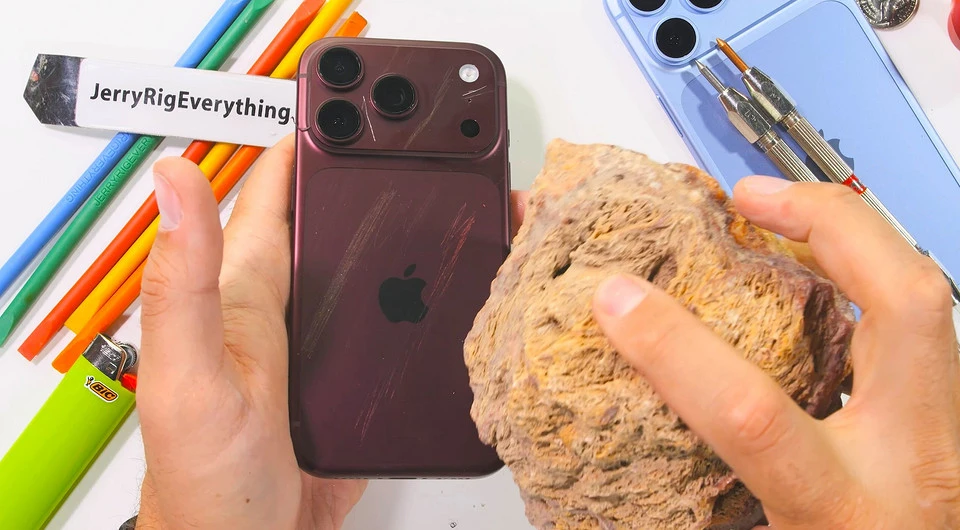
The new iPhone 18 Pro was put through one of the most famous durability tests by JerryRigEverything. The smartphone was subjected to scratches, open flame, and an attempt to bend the body, while its new hardware elements were also examined under a microscope — the variable-aperture camera and the Face ID sensor located under the display. The flagship suffered no serious damage.
Ceramic Shield 2 withstood scratches and fire
Externally, the iPhone 18 Pro does not differ much from the previous generation, so most of the testing went without surprises.
Zack Nelson tested the front panel with Ceramic Shield 2 for scratch resistance. The glass passed the test, and in most cases the marks on the back panel left after contact with keys and coins could be removed.
The screen was then exposed to an open flame. No irreversible damage remained after this test.
The most telling test was the body bend test. The burgundy iPhone 18 Pro withstood the pressure without critical damage — the body did not break and did not lose functionality.
Face ID really is visible under the display
What turned out to be far more interesting than the smartphone’s durability was what could be seen inside its construction.
Nelson examined the Face ID sensor moved under the display under a microscope. Under certain lighting and viewing angles, its structure becomes visible through the screen. At the same time, the effect is much less pronounced than on some early smartphones with under-display cameras.
This means that placing the Face ID components under the display did not make them completely invisible under all conditions; however, in normal use the corresponding area of the screen should remain virtually unnoticeable.
The most interesting detail is the new camera
The main 48 MP camera of the iPhone 18 Pro with a variable aperture deserves special attention. Nelson examined it under a microscope and showed the mechanism that physically changes the size of the aperture opening.
This is an important difference from traditional smartphone cameras with a fixed aperture: the lens design here really does include a moving mechanism that allows the amount of incoming light to be changed.
This camera remains one of the main hardware innovations of the iPhone 18 Pro alongside the new A20 Pro processor. Nelson has already promised to separately take apart how it works, so the current durability test was likely only a first look at the new design.
In the end, the iPhone 18 Pro did not present any unpleasant surprises in the durability tests. The front glass withstood scratches and fire, and the body handled a serious bend load. But the main result of the test was not yet another confirmed margin of durability, but the opportunity to see how Apple changed the smartphone’s internal design for the sake of under-display Face ID and the variable-aperture camera.