make preferable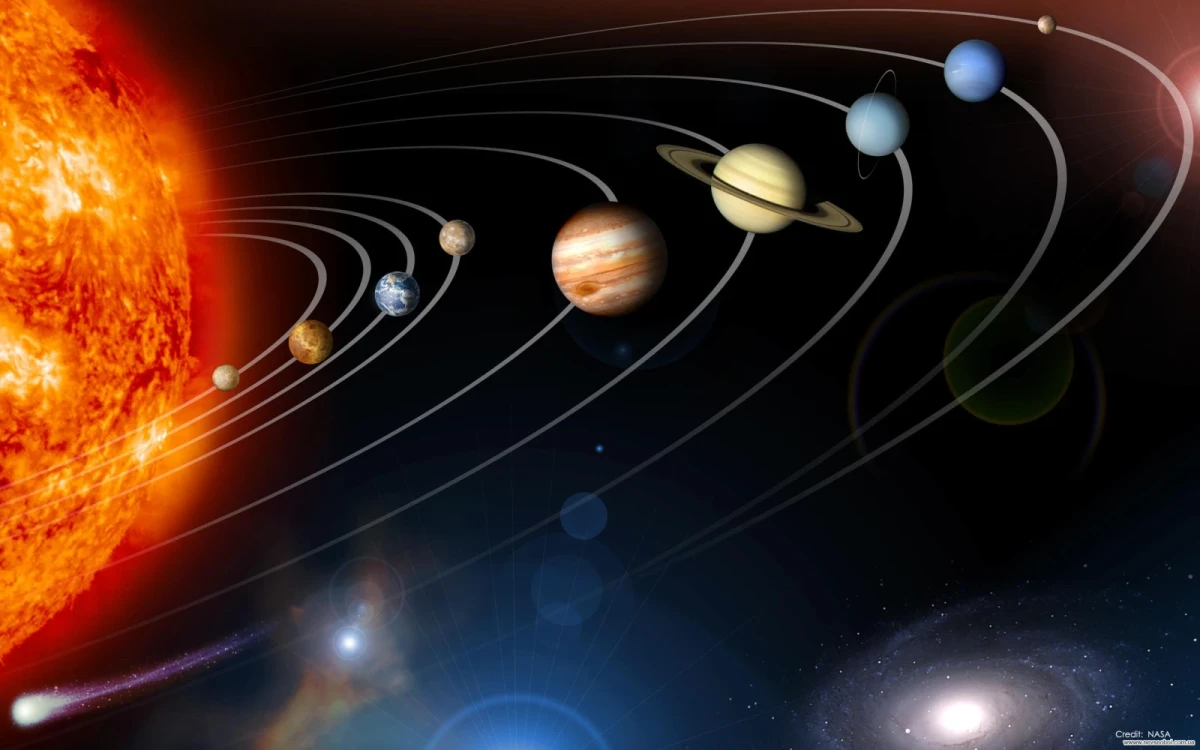
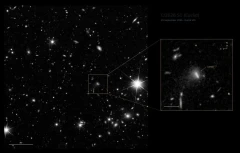
The James Webb and Hubble space telescopes discovered 27 previously unknown trans-Neptunian objects — small icy bodies that orbit the Sun beyond Neptune. All of them are less than 40 km in diameter, and the smallest is about 10 km across. Observations revealed an unexpected feature: even the smallest objects retained signs of their origin, although scientists expected that numerous collisions should have altered their surfaces long ago.
The study became the deepest observation of a remote region of the Solar System. The two telescopes effectively worked together: Hubble helped study the color and composition of the objects, while Webb’s infrared vision made it possible to determine their sizes more accurately.
Small objects should have looked different
Trans-Neptunian objects are remnants of the early Solar System. Some of them formed far beyond Neptune’s orbit and have barely changed their trajectories since then. Such bodies are located in the Kuiper Belt and move along relatively calm, nearly circular orbits.
Others formed closer to the Sun — between what would later become Uranus and Neptune. As the planets grew, gravitational interactions pushed some of these bodies far outward. They are now found in the so-called scattered disk and travel along elongated orbits that are strongly inclined relative to the plane of the Solar System.
Scientists call the first objects “dynamically cold” and the second “dynamically hot.”
According to models of Solar System formation, small bodies should have been especially heavily affected by collisions. Impacts and destruction should have mixed the surface material and changed its composition — and therefore its color.
The new observations showed the opposite.
Even after collisions, the surface barely changed
The 27 detected objects turned out to be so small that their surfaces, judging by the observations, still bear signs of the conditions in which they formed.
What is especially surprising is that this applies not only to the calm objects of the Kuiper Belt. Even the “hot” trans-Neptunian bodies, which over billions of years were thrown onto highly elongated and inclined orbits, preserved the chemical features of their birthplace.
According to David Trilling of Northern Arizona University, these objects continue to preserve information about their origin, despite the fact that their orbits have been completely mixed over time by gravitational interactions.
Researcher Anastasia Morgan, who led the analysis of the objects’ color and composition, noted that scientists expected to see a different picture: numerous collisions should have changed the surfaces of small bodies. Instead, the smallest objects seem to have retained a “memory” of the process of their formation.
Do asteroids collide less often, or are their surfaces tougher than thought?
The observations leave scientists with at least two possible explanations.
The first: significantly fewer collisions occur in the distant outer part of the Solar System than existing models suggest. But this agrees poorly with the estimated number of objects in that region.
The second: collisions really do happen, but somehow they do not alter the surfaces of small trans-Neptunian bodies as strongly as expected.
Which of these options is correct remains unknown. In any case, the results show that ideas about how small icy bodies change on the outskirts of the Solar System need to be revised.
Webb saw what cannot be determined from ordinary light
The James Webb telescope proved especially important for determining the sizes of the discovered objects.
In visible light, the brightness of a trans-Neptunian object depends not only on its size but also on the reflectivity of its surface. That is why a small body with bright ice can appear brighter than a larger but darker object.
In the infrared range, the situation is different: an object’s emission depends much more strongly on its size. This allowed researchers to determine the diameter of all 27 bodies more accurately.
And here another surprise emerged: there were fewer very small trans-Neptunian objects than models of their formation predict.
Moreover, the size distribution turned out to be surprisingly similar in the “cold” and “hot” populations, even though they formed in different regions of the early Solar System. This may mean that the process of planetesimal formation was less sensitive to conditions in the protoplanetary disk than previously thought.
The telescopes saw the almost impossible
Observing these objects is extremely difficult. Their apparent magnitude lies roughly in the range from 24.1 to 29.3. Researchers compare such a task to trying to see a swarm of fireflies on the surface of the Moon from Earth.
That is exactly why the joint observations by Hubble and Webb became the deepest study of the outer Solar System to date.
Both telescopes effectively peered into a region containing some of the faintest and most distant objects accessible to observation. And instead of the expected picture — heavily collision-altered fragments — they saw small bodies that somehow preserved traces of their distant past.
The results of the two studies were published on September 8 in The Astronomical Journal. One paper is devoted to the color and composition of trans-Neptunian objects, the other to their size distribution.