make preferable
German and Japanese astrophysicists analyzed 20 years of archival data from the INTEGRAL gamma-ray telescope and discovered possible signs of antimatter annihilation beyond our galaxy. If the interpretation is confirmed, this would be the first such detection in the history of observational astronomy.
What exactly was found
Thomas Siegert from the University of Würzburg and Hiroki Yoneda from Kyoto University compiled detailed maps of the 511 keV annihilation line — gamma-ray emission that occurs when a positron meets an electron. In the full INTEGRAL dataset (2002–2025), faint signals were detected from two unexpected regions: the high-velocity gas cloud "Complex C," falling toward the Milky Way's disk, and the Magellanic Stream — an extended ribbon of gas trailing behind the Magellanic Clouds.
Neither of these regions produces a significant number of positrons on its own. This means that the particles apparently left the galaxy before annihilating in intergalactic gas. The signal from "Complex C" reached a significance of 4 σ — close to the discovery threshold (5 σ), but does not yet exceed it.
Why this matters
Thomas Siegert commented that this would be the first detection of extragalactic positron annihilation, adding that in itself it would mean the positron content of the Milky Way significantly exceeds what is observed "inside."
According to the authors' estimates, our galaxy may produce about 10¹⁴ positrons per second — 2–3 times more than current models suggest. If these figures are confirmed, ordinary astrophysical sources may be insufficient. In that case, scientists would have to consider more exotic scenarios, including the possible annihilation of light dark matter particles.
What's next
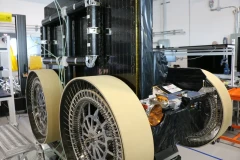
The COSI space telescope (NASA), scheduled for launch in 2027, should help test the hypothesis.
In brief
Astrophysicists have detected possible signs of positron annihilation beyond the Milky Way in data from the INTEGRAL telescope. The signals originate from the gas cloud "Complex C" and the Magellanic Stream. If confirmed, this would be the first case of recording extragalactic antimatter annihilation. The results indicate that our galaxy may produce more positrons than previously assumed, requiring new explanations. The work was published in the journal Astronomy & Astrophysics.