make preferable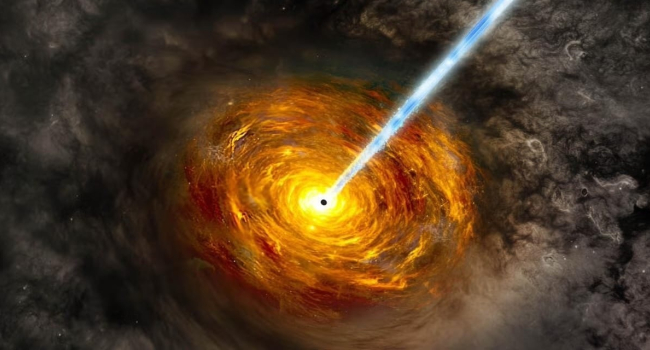
An international group of astronomers using the Euclid space telescope has discovered 31 ancient quasars at once. Two of them set a new record: their light reached us from an era when the Universe was only 670 million years old — less than 5% of its current age.
What quasars are and why they matter
A quasar is an ultra-bright core of a distant galaxy, at the center of which lies a supermassive black hole actively accreting matter. A colossal amount of energy is released in the process, making quasars visible at enormous distances and serving as important "beacons" of the early Universe.
One of the study's authors, Joseph Henawi from the University of California, Santa Barbara, noted that these monsters, with masses hundreds of millions of times that of the Sun, somehow already existed when the Universe was in its infancy, adding that there is as yet no good explanation for how they managed to grow so quickly.
How they were found
The discovery was made possible by the European Euclid space telescope, which conducts observations in the infrared range from orbit. This made it possible to penetrate through the infrared glow of Earth's atmosphere and cover vast areas of the sky.
The two most ancient quasars have redshifts of 7.69 and 7.77. This means their light has been traveling to us for over 13 billion years. The discovery more than doubled the number of known quasars from this era — a time when the Universe was undergoing the epoch of reionization: radiation from the first stars and quasars ionized the neutral hydrogen that filled space.
What's next
Machine learning algorithms were used for the search, analyzing tens of millions of sources. The researchers' next goal is to discover a quasar with a redshift above 8, meaning one that existed in the first 630 million years after the Big Bang.
In brief
Astronomers using the Euclid telescope have discovered 31 ancient quasars, two of which are the most distant known to date. Their light began its journey when the Universe was only 670 million years old. This important discovery helps to understand how supermassive black holes formed so quickly in the early Universe. The work was published in the journal Astronomy & Astrophysics.