make preferable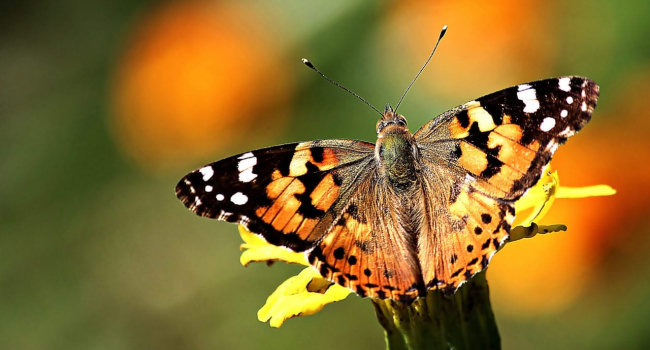
Butterflies appeared on Earth much earlier than many people think. These elegant insects have existed for about 190 million years — roughly at the same time as the dinosaurs and long before flowering plants appeared. This was shared by Maria Kombarova, Scientific Secretary of the Environmental Protection Department at Perm Polytechnic University.
From inconspicuous ancestors to diversity
The first butterflies were small and rather modest in appearance. Their caterpillars fed on leaves and plant roots, while adults either continued eating plant food or lived so briefly that they had no need to feed at all. Some descendants of these primitive forms have survived to this day — these are the primitive toothed moths with wingspans of just a few millimeters.
The true flourishing of butterflies occurred in the Cretaceous period, when flowering plants appeared on the planet. They began producing nutritious pollen and sweet nectar. Insects gradually adapted to this new food source, and co-evolution began.
Plants developed nectaries and aromatic glands to attract pollinators, while butterflies evolved proboscises of varying lengths, perfectly suited to flowers of different shapes. Today, there are approximately 175,000 butterfly species on Earth.
How butterflies adapt to conditions
The wing coloration of the same species can change noticeably depending on the season. This is due to the production of the pigment melanin. In cold weather, its synthesis intensifies — wings become darker and better absorb solar heat. In warm seasons, the coloration, conversely, becomes lighter. This mechanism is clearly visible in the Camberwell beauty, a butterfly widespread in Russia.
Some species have successfully adapted even to urban environments. A classic example is the peppered moth. In industrial areas with polluted air, darker individuals are more common, as they are better camouflaged on soot-covered tree trunks. This phenomenon is known as industrial melanism.
Interesting facts about butterflies
Scientists remind us that butterflies are best not touched by hand. Touching damages the delicate scales on their wings and can disrupt the fine vessels through which hemolymph circulates — the insect equivalent of blood. Particularly vulnerable are individuals that have just emerged from their pupae and have not yet fully spread their wings.
Interestingly, butterflies have taste receptors on their legs. With their help, the insect determines in fractions of a second whether a plant is suitable for laying eggs and whether the caterpillars will be able to feed on its leaves.
Butterflies in world cuisine
In many Asian and African countries, butterflies and their caterpillars are eaten. According to Maria Kombarova, about 20,000 tons of these insects are consumed annually in India alone. In Thailand and China, products made from caterpillars are ingredients in various dishes, including baby food.
In brief
Butterflies appeared about 190 million years ago, even before flowering plants, and were then small and inconspicuous. Their rapid development began in the Cretaceous period due to co-evolution with flowers. Today, about 175,000 species are known. These insects are remarkably adaptable: they change coloration by season, adapt to urban environments, have taste receptors on their legs, and are even used as food in some countries. At the same time, touching them by hand is not recommended — their fragile wings can be damaged.