make preferable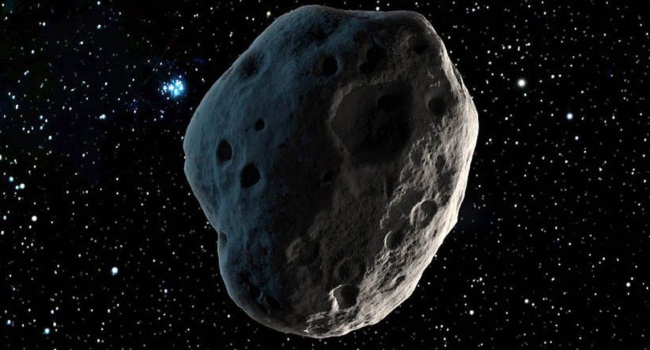
A new mathematical model will make it possible to plan missions to multiple moving celestial bodies much more efficiently, saving time, fuel, and money.
Space.com reports that selecting an optimal route for a spacecraft that needs to visit several asteroids has long been considered extremely difficult. Asteroids are constantly moving along their orbits, distances between them change, and therefore travel time and fuel consumption also vary. Now, an international team of mathematicians has proposed a working solution to this problem.
From the “travelling salesman” to asteroids
Researchers Isaac Rudech from the Polytechnique Montréal and Michael Römer from the University of Bielefeld reformulated the classic Traveling Salesperson Problem for space applications. They called the new model the Asteroid Routing Problem (ARP).
They defined the ARP as the question of in which order a spacecraft should visit multiple asteroids in order to minimize total travel time and fuel consumption. This requires calculating the optimal launch time and trajectory between each pair of objects.
The researchers explained that their study is of a fundamental nature, as they are developing a mathematical framework that space agencies could use for mission planning, according to their comments to Space.com.
Lambert’s problem and decision diagrams
The main difficulty lies in the fact that calculating precise timing and fuel costs between two moving bodies requires solving the so-called Lambert problem. It was formulated in the 18th century by Swiss mathematician Johann Heinrich Lambert and later mathematically developed by Joseph-Louis Lagrange.
When there are many objects, the number of possible route combinations grows explosively, making calculations computationally prohibitive even for powerful computers. To overcome this limitation, the researchers used decision diagrams, an advanced version of decision trees.
In such a diagram, all paths that lead to the same final state in terms of time and space are merged into a single node. This significantly reduces the number of times the Lambert problem needs to be solved.
Impressive results
According to the authors, their approach produces solutions that are on average about 20% better than standard methods. For larger-scale problems, the improvement can be similarly significant. These percentages take into account both total mission duration and fuel consumption.
The researchers emphasize that even a 1% improvement would already represent a meaningful saving in time, cost, and fuel.
Application to real missions
So far, missions visiting multiple asteroids are rare. NASA successfully sent the Dawn (spacecraft) probe to Vesta and Ceres. The Lucy (spacecraft) mission is currently in flight; after passing through the main asteroid belt, it is heading toward the Trojan asteroids of Jupiter.
The researchers noted that it would be interesting to apply their model to Lucy’s mission to evaluate its optimality. However, they emphasized that ARP is a simplified model that does not include all aspects of real astrodynamics. More detailed factors would need to be considered for precise mission planning.
Possible Earth applications as well
The method may also be useful beyond space exploration. Similar problems arise in planning bus routes, logistics chains, and maritime transport, where conditions constantly change due to weather, traffic, or other variables.
The study was published on April 2 in the INFORMS Journal on Computing.
In brief
A Canadian–German team has developed an efficient algorithm for solving the Asteroid Routing Problem (ARP), which optimizes spacecraft routing between moving asteroids. By using decision diagrams and computing Lambert’s problem more efficiently, the researchers achieved routes that are on average 20% better in terms of time and fuel consumption compared to existing methods. The new mathematical framework could help space agencies plan complex multi-target missions more economically and open the way to more ambitious Solar System exploration.