make preferable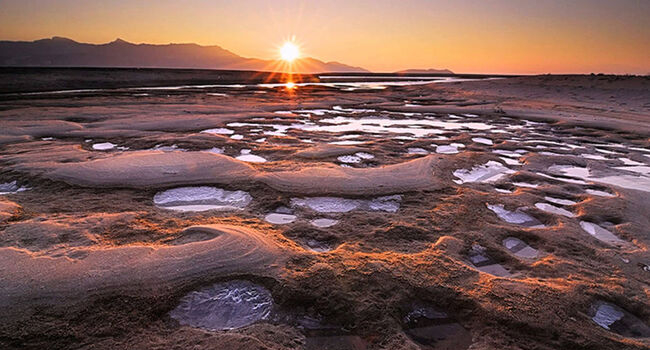
NASA’s Curiosity rover has recorded record concentrations of iron, manganese, and zinc discovered simultaneously in Mars’ Gale Crater. According to scientists, this is the most compelling evidence ever obtained that a shallow lake once existed on the slopes of Mount Sharp — even during the period billions of years ago when the planet was gradually losing its water.
The study's results, published this week in the Journal of Geophysical Research: Planets, are based on data from the ChemCam laser instrument installed on the rover. The instrument utilizes laser-induced breakdown spectroscopy: a laser beam vaporizes the rock, and the resulting plasma is analyzed for its elemental composition.
A Lake Where No One Expected It
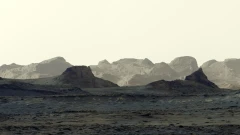
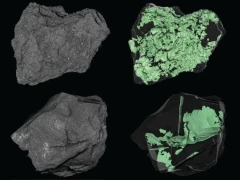
The metal-rich minerals were discovered inside well-preserved ripple marks within the Amapari Marker Band — a thin, dark rock layer about 20 centimeters thick that stretches over more than 1,500 square kilometers across the crater floor. Curiosity first photographed this formation in November 2022 while climbing Mount Sharp. The ripple textures, created by water waves, represent some of the strongest evidence of surface water obtained during the rover’s nearly 14 years of operation on Mars.
What surprised scientists most was the location of the find. The lake formed high on Mount Sharp in rocks deposited during an era when Mars was transitioning from a warmer, wetter world to the cold, arid planet it is today. "Ancient Mars was significantly wetter, and lakes in craters were common then. It seems that as Mars became drier and colder, lakes formed less frequently and existed for very short periods," said Patrick Gasda, a scientist with the ChemCam team and a researcher at the Los Alamos National Laboratory.
Redox Metals and the Question of Life
On Earth, metal-rich lake deposits formed through redox (oxidation-reduction) reactions are almost always associated with microbial life. Some microorganisms use iron and manganese directly as energy sources, making the Amapari Marker Band an especially intriguing target for astrobiological research.
The discovery suggests that even as Mars was drying out, isolated bodies of water persisted in certain locations where microbial life could theoretically have survived. Earlier studies published in the journal Earth and Planetary Science Letters suggested that the lake might have formed from melting ice at the crater's edge flooding the basin, with dissolved metals concentrating as the water evaporated.