make preferable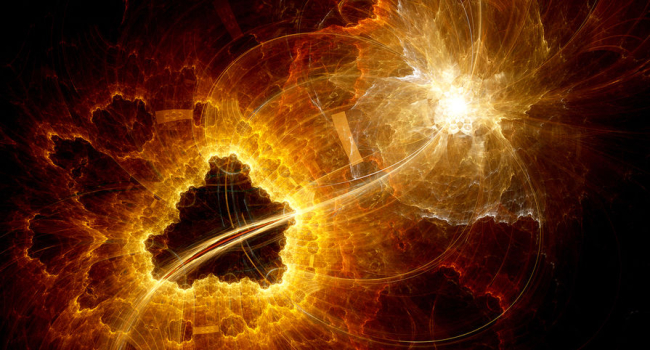
The international collaboration behind the Dark Energy Spectroscopic Instrument (DESI) has completed its five-year mission and produced the most detailed three-dimensional map of the Universe ever created. The map, built from data on 47 million galaxies and quasars, has already delivered its first surprising results and is prompting scientists to reconsider the standard cosmological model.
What DESI Is and Why Such a Map Is Needed
Dark Energy Spectroscopic Instrument (DESI) is a unique instrument installed on the Mayall Telescope at Kitt Peak National Observatory. It is equipped with 5,000 optical fibers that simultaneously collect light from thousands of galaxies, measuring their redshift and distance from Earth.
The project’s main goal is to trace how the expansion rate of the Universe has changed over the past 11 billion years in order to better understand the nature of Dark Energy—the mysterious force responsible for accelerating cosmic expansion.
Klaus Honscheid, the lead scientist responsible for DESI operations, stated that the instrument exceeded all expectations and that the ambitious observation program was completed on time and within budget.
Unexpected Results
After analyzing data from the first year of observations in 2024, scientists noticed hints that dark energy may be weakening over time. If this trend is confirmed using the full dataset, it could mark a major turning point in cosmology.
Natalie Palanque-Delabrouille, one of the key participants in the collaboration and a scientist at the Lawrence Berkeley National Laboratory, stated that this could become the most exciting discovery in cosmology since the original discovery of dark energy.
According to the standard Lambda-CDM Model (Lambda Cold Dark Matter), dark energy should remain constant as a cosmological constant. The new DESI data challenge this assumption and may require new explanations for the accelerated expansion of the Universe.
The Scale of the Work
Over five years, Dark Energy Spectroscopic Instrument (DESI) collected data on 47 million galaxies and quasars, as well as more than 20 million nearby stars. This is six times more than originally expected when the project began in 2021. The team overcame significant challenges, including the COVID-19 pandemic and a 2022 wildfire that destroyed part of the infrastructure at Kitt Peak National Observatory.
Palanque-Delabrouille emphasized that one of the most impressive aspects of the project was the remarkable unity of the large collaboration: more than 900 scientists, including about one-third graduate students, worked toward a shared goal despite distance and external challenges.
What Comes Next
Scientists now have access to the complete five-year dataset. In the coming months and years, they will analyze it in detail to confirm or refute the hypothesis that Dark Energy weakens over time. The results are already being published in two papers in the journal Astronomy & Astrophysics.
In Brief
The international Dark Energy Spectroscopic Instrument (DESI) collaboration has completed the most detailed 3D map of the Universe, incorporating data on 47 million galaxies and quasars. Even analysis of the first year of observations suggests that Dark Energy may be weakening over time—potentially the most significant cosmological discovery since dark energy itself was first identified. If confirmed, the standard Lambda-CDM Model may require major revision. DESI will continue its work, providing scientists with new data to better understand the evolution of the Universe.