make preferable
NASA’s Curiosity rover continues to deliver surprises from Gale Crater. A team of astrobiologists from NASA’s Goddard Space Flight Center has identified organic molecules in Martian rocks at concentrations that are difficult to explain without biological processes. The findings were published in the journal Astrobiology.
What Was Found in the Mudstone
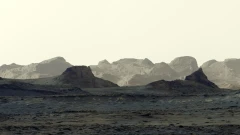
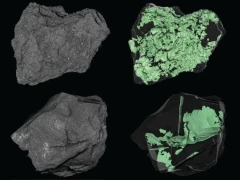
The discovery involves long-chain alkanes — large organic compounds made up of extended carbon chains. They were detected in mudstone samples from the Yellowknife Bay area, which Curiosity explored back in 2014–2015. These rocks are about 3.7 billion years old, formed during a period when Mars was significantly warmer, wetter, and had a denser atmosphere — conditions potentially suitable for life.
Alkanes themselves are not direct evidence of biology; they can form through non-biological processes such as volcanic activity, hydrothermal reactions, or even delivery by meteorites. However, the key factor here is concentration.
Concentrations That Are Hard to Explain Without Life
The researchers estimated the original alkane content by accounting for molecular degradation caused by cosmic radiation and surface processes over billions of years. Their calculations suggest that at the time the sediments were buried — likely beneath water or silt — concentrations may have reached 120–7,700 parts per million, more than 2,000 times higher than current levels.
Even the lowest estimate (120 ppm) far exceeds what could reasonably be explained by meteorite-borne organics or photochemical reactions in ancient Mars’ atmosphere. A hydrothermal origin also appears unlikely, as the surrounding rock geochemistry does not match conditions capable of producing such quantities of alkanes.
On Earth, similar concentrations of long-chain alkanes are typically associated with biologically derived sediments — for example, ancient lake and marine deposits where microorganisms actively generated organic matter.
What the Researchers Say
The scientists emphasize that they are not claiming to have found definitive traces of Martian life. Unknown chemical mechanisms cannot yet be ruled out. However, they argue that, among currently available explanations, a biological origin appears the most plausible.
The study complements recent discoveries by the Perseverance rover, including unusual rocks rich in organic material in Jezero Crater. Together, these findings strengthen the case that signs of ancient life on Mars may have been preserved to this day. Final conclusions, however, will require samples to be returned to Earth. The Mars Sample Return mission, though delayed, remains a NASA priority.
In Brief
Astrobiologists at NASA’s Goddard Space Flight Center have detected long-chain alkanes in rocks from Gale Crater at estimated original concentrations of 120–7,700 ppm. Such levels are difficult to explain through meteorites, atmospheric chemistry, or hydrothermal processes and are typical of biogenic sediments on Earth. While not direct proof, the discovery is considered indirect evidence of possible ancient life on Mars around 3.7 billion years ago. Confirmation will require Martian samples to be analyzed on Earth.