make preferable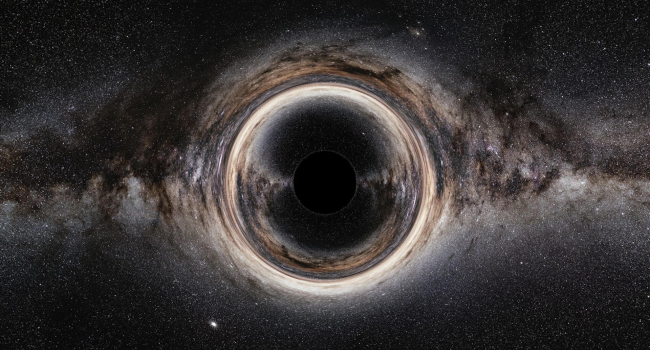
An international team of astronomers, led by researchers from Waseda University and Tohoku University, has discovered an unusual quasar in the early Universe hosting one of the fastest-growing supermassive black holes. Observations with the Subaru Telescope revealed a rare combination of properties that contradict several theoretical models, according to a study published in The Astrophysical Journal.
A Quasar from the Universe’s “Childhood”
The quasar is observed roughly 1.8 billion years after the Big Bang. Its central supermassive black hole is accreting matter at a rate 13 times faster than the theoretical Eddington limit, a threshold determined by radiation pressure that normally blows away infalling gas and limits growth.
Typically, during super-Eddington accretion, X-ray emission from the black hole’s corona diminishes, and the formation of relativistic jets is suppressed. In this case, however, both processes are strong: the quasar emits intensely in X-rays and produces a powerful radio jet.
Why This Is Surprising and What It Means
The object is likely experiencing a brief accretion surge due to a sudden influx of gas. The corona (source of X-rays) and the jet have not yet shut down, even though the growth is occurring at extreme rates. Such a phase is probably very short-lived, which explains why similar quasars are extremely rare.
The strong jet actively influences the surrounding galaxy, potentially suppressing or stimulating star formation and regulating the evolution of the entire system.
According to lead author Sakiko Obuchi, further searches for similar objects in survey data will help determine how common these extreme growth phases are and what role they played in forming supermassive black holes in the early Universe.
In Brief
Astronomers have identified a quasar from 1.8 billion years after the Big Bang, whose supermassive black hole grows 13 times faster than the Eddington limit, while shining brightly in X-rays and launching a powerful radio jet—a combination that challenges most models. This phase is likely a short-lived burst of super-accretion caused by a sudden inflow of gas. The discovery is crucial for understanding how black holes reached enormous masses so early and how they influenced galaxy evolution.