make preferable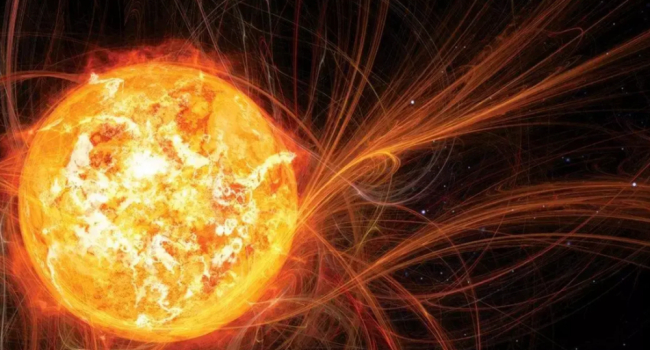
The powerful geomagnetic storm that struck Earth in mid-January 2026 has come to an end. This was reported by the Academician E.K. Fedorov Institute of Applied Geophysics (IPG). The event lasted 42 hours and, in terms of intensity, came close to historical maximums.
What Happened During the Storm
The storm began after Earth was hit by a coronal mass ejection produced by a powerful X-class solar flare. The peak of geomagnetic activity reached level G4, which is classified as a “very strong” storm on the five-point scale. This led to serious disruptions in shortwave radio communications, especially at high latitudes, as well as disturbances in satellite operations and radio-frequency navigation systems.
One of the most striking effects was the aurora. For several days in a row, bright auroral displays were observed over Russia and Europe. In some cases, the aurora was recorded even at mid-latitudes, which is a rare occurrence for storms of this kind.
On the night of January 19, just before the geomagnetic storm reached its peak, Earth experienced an S4-level radiation storm, the most powerful of the 21st century so far. The flux of solar protons exceeded 10,000 units, setting a record for the last two solar cycles.
Impact on People and Technology
Nathan Eismont, a leading researcher at the Space Research Institute of the Russian Academy of Sciences, explained that geomagnetic storms of this magnitude can affect the well-being of people who are sensitive to space weather. Possible symptoms include headaches, blood pressure fluctuations, and sleep disturbances. However, this applies only to a minority of the population.
The impact on technology was more noticeable. There were disruptions in communications, potential instabilities in power systems, and navigation errors. Satellites in low Earth orbit experienced increased radiation exposure, but their shielding and protective systems prevented any serious failures.
In Brief
The G4-level geomagnetic storm, triggered by a powerful X-class solar flare, lasted 42 hours and has now ended. Its intensity approached historical records. Disruptions in radio communications and navigation were recorded, along with exceptionally bright auroras, visible even at mid-latitudes. The accompanying S4 radiation storm became the strongest of the 21st century. For most people, the storm passed without noticeable effects, though space-weather-sensitive individuals may have experienced discomfort. This was one of the most significant geomagnetic events of early 2026.