make preferable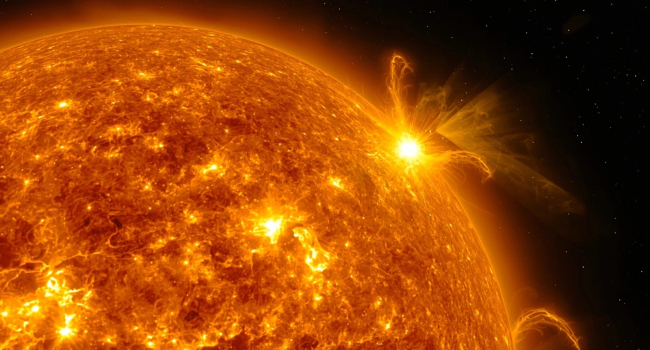
The E. K. Fedorov Institute of Applied Geophysics reported that a strong solar flare was detected in the X-ray range. The event occurred at 23:33 Moscow time on January 15, 2026, and lasted 40 minutes. It was classified as an M1.6 flare.
Connection with an Active Region
The institute explained that this flare was part of the activity of a large active region on the Sun that had been located on the far side of the star in recent days. Earlier, scientists had reported that at least two very powerful flares, presumably of class X, had occurred there. On January 12, researchers from the Space Research Institute of the Russian Academy of Sciences warned that this region would move into Earth’s view within a couple of days, after which a detailed analysis of the processes would become possible.
Now the active region is already partially visible, and the M1.6 flare is one of the first confirmations of its strength. A full forecast of geomagnetic conditions for the coming week will only be possible once the region is completely turned toward Earth.
What This Means for Earth
M-class flares are capable of causing moderate geomagnetic disturbances, especially if they are accompanied by coronal mass ejections. At present, the impact of this particular event on Earth is not considered significant, but observations are continuing. Such flares can lead to radio communication disturbances at high latitudes, fluctuations in power systems, and the appearance of auroras.
In Brief
On January 15, 2026, at 23:33 Moscow time, an M1.6-class solar flare occurred and lasted 40 minutes. It is associated with a large active region that is now moving fully into Earth’s view. Earlier, at least two very powerful flares, presumably of class X, had already been recorded in this region. A complete assessment of its impact on geomagnetic activity will become possible after detailed analysis. For now, no serious consequences for Earth are expected, but monitoring continues.