make preferable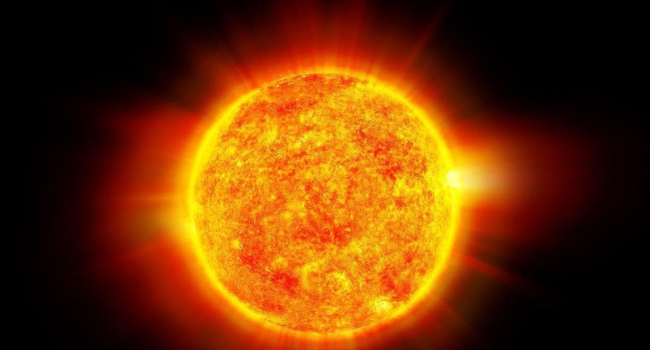
The Laboratory of Solar Astronomy of the Space Research Institute of the Russian Academy of Sciences reported an unusually high level of geomagnetic activity in the first days of 2026. According to the scientists, the rate at which disturbances are increasing exceeds the record values of recent decades, which may indicate a potentially very active year in solar dynamics.
Record disturbances: 8 storms in 13 days
Since the beginning of January, geomagnetic storms and disturbances have been observed on 8 out of 13 days, which is noticeably higher than the average values of 2025. The laboratory noted in its Telegram channel that such a pace of growth is rare for recent decades.
The researchers emphasized that drawing global conclusions and making forecasts for the entire year based only on the first 13 days would be incorrect. However, they pointed out that these early data already suggest that the records of the previous year could be surpassed in the coming year.
This means that the Sun may be entering a phase of increased activity, although more observations are required to make firm conclusions.
A large active region is coming into view
On January 12, astronomers recorded a large active region on the Sun. Over the previous four days, an area on the far side of the Sun was observed where at least two powerful flares had occurred, presumably of class X, the highest level.
Specialists explained that within the next two days this region would rotate into view from Earth, making it possible to study it in detail. For now, the impact of these flares on our planet is excluded, but further observations will allow scientists to compile a forecast for the week ahead.
Such active regions are sources of solar flares and coronal mass ejections, which can trigger geomagnetic storms. Scientists stress the importance of continuous monitoring in order to predict possible consequences for satellites, power grids, and human health in time.
In brief
During the first 13 days of January 2026, geomagnetic storms were recorded on 8 days, exceeding the average levels of 2025 and matching record rates seen over recent decades. The Space Research Institute considers this an early indication that the coming year may surpass previous records of solar activity. A large active region associated with two presumed X-class flares is rotating into view and will be examined in detail within two days. For now, the impact on Earth remains minimal, but close monitoring is essential for accurate forecasting.