make preferable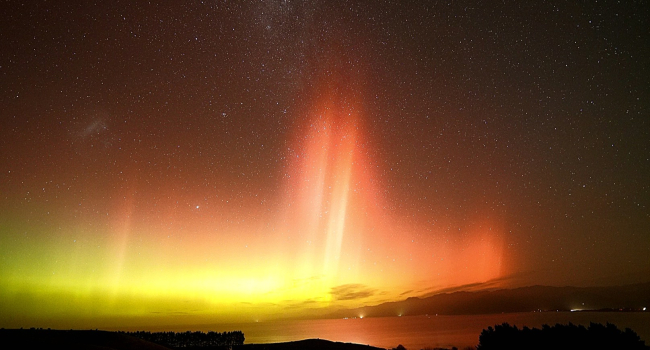
The Laboratory of Solar Astronomy at the Space Research Institute of the Russian Academy of Sciences (IKI RAS) has warned of possible weak geomagnetic storms of G1 level on January 9, 2026. The cause is the passage of a plasma ejection that left the Sun on January 6. This was reported on the institute’s Telegram channel.
Geomagnetic activity forecast
According to scientists’ calculations, a spike in geomagnetic fluctuations is expected around midday. Much depends on the trajectory of the plasma cloud: if it shifts slightly to the left, it will pass Earth without consequences. A shift to the right could strengthen the storm compared with the forecast.
Solar activity at the beginning of 2026 remains low. Since the start of the year, there have been few flares, and there are no signs of increased activity in the coming days. The last notable flare, of M7.1 level, occurred on December 31 and coincided with the New Year countdown for residents of the Russian Far East.
Large explosion on the far side of the Sun
On January 8, coronagraphs recorded a large explosion on the far side of the Sun. Its source is currently inaccessible to direct observation. Two weeks ago, this region was facing Earth, and nothing unusual was observed there apart from a couple of moderately active regions.
Most likely, the flare occurred in a sunspot group located below the equator on the right side of the visible disk. It will become observable in about a week, when the group begins to rotate into view from the eastern limb.
What to expect from a weak storm
The G1 level is the lowest on the five-point scale. Such storms usually cause minor disturbances in high-latitude radio communications, small voltage fluctuations in power systems, and faint auroral activity. For most people they go unnoticed, but sensitive equipment and northern regions may experience some effects.
In brief
On January 9, 2026, Earth may experience a weak G1-level geomagnetic storm caused by a plasma ejection that left the Sun on January 6. The trajectory of the cloud remains uncertain, so it may either miss Earth entirely or produce a slightly stronger effect. On January 8, a major explosion occurred on the far side of the Sun, which will become visible in about a week. Overall solar activity at the start of the year remains low, with no signs of an imminent increase.