make preferable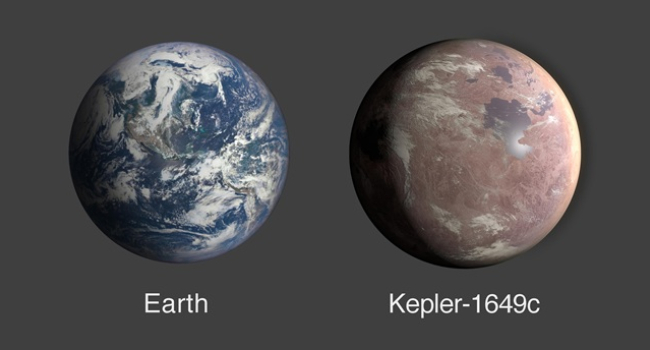
Astronomers continue to search for worlds similar to our own, even if they are hidden thousands of light years away. Thanks to telescopes such as Kepler and TESS, we now know of more than five thousand exoplanets, and among them are some that lie within the so called habitable zone, the region where liquid water could exist and, in theory, life might arise.
Interest in these “Earth twins” is not purely academic. Against the backdrop of climate change and environmental challenges, scientists increasingly reflect on the long term future of humanity. Of course, relocating to another planet remains science fiction for now, but studying these worlds helps us understand how unique Earth is and how best to preserve it.
In catalogs such as the one compiled at the Arecibo Observatory, there are about seventy candidates considered potentially habitable. The selection is strict, taking into account size, temperature, and atmospheric stability. Here are five of the most interesting and well studied examples.
Kepler-186f, the first widely recognized Earth like candidate
One of the first exoplanets to be described as a potential Earth twin. Kepler-186f is located 492 light years away in the constellation Cygnus and orbits a red dwarf star, which is smaller and cooler than the Sun.
The planet is roughly Earth sized, completes an orbit in 130 days, and receives about one third of the energy that Earth gets from the Sun. At noon, the light on its surface would resemble Earth’s light about an hour before sunset. However, the distance is too great for precise measurements. We can only speculate about its mass and atmospheric composition. Life may be possible there, but confirmation will require future telescopes or missions.
Teegarden b, the closest candidate
This exoplanet is one of the nearest known potentially habitable worlds, at just 12 light years away. Teegarden b is also Earth sized and orbits an ancient red dwarf star.
The challenges include likely tidal locking, with one side always facing the star and the other in permanent darkness, as well as stellar flares that could strip away the atmosphere. Even so, its proximity makes it a very promising target for future observations.
Kepler-452b, “Earth 2.0” around a Sun like star
Discovered in 2015, this planet lies 1402 light years away and is often called Earth’s older sister. It orbits a star similar to the Sun, but about 1.5 billion years older.
Its estimated mass is around five times that of Earth, which would result in roughly twice Earth’s surface gravity, making movement more difficult for humans. The planet receives about ten percent more energy than Earth, raising the risk of a runaway greenhouse effect similar to Venus. However, its large mass could help stabilize the climate for another half billion years.
Kepler-1649c, an almost perfect match
Discovered in 2020 during a reanalysis of Kepler data, this planet lies about 300 light years away. Its diameter is nearly identical to Earth’s, and it receives about 75 percent of the solar energy that Earth does, making conditions suitable for liquid water.
The main drawback is its red dwarf host star, whose frequent flares could threaten the planet’s atmosphere. Still, its similarity to Earth makes it one of the strongest candidates.
Gliese 667 Cc, with a possible “habitable strip”
Located 23.6 light years away, Gliese 667 Cc receives about 90 percent of the energy Earth does. With a sufficiently dense atmosphere, surface temperatures could be comfortable.
Tidal locking is likely, creating a permanent day side and a permanent night side. Between them, however, there could be a “habitable strip” with moderate conditions. A thick atmosphere could reduce temperature extremes and expand the habitable region. Its relative proximity raises hopes for detailed study in the coming decades.
In brief
Kepler-186f, Teegarden b, Kepler-452b, Kepler-1649c, and Gliese 667 Cc are five of the most promising Earth like exoplanets where liquid water and life could theoretically exist. They differ in distance, host stars, and environmental conditions, but all lie within the habitable zone. For now, they remain candidates only. Distances are enormous and data are limited, and interstellar travel is still science fiction. For the foreseeable future, the best new home for humanity remains a carefully protected Earth.